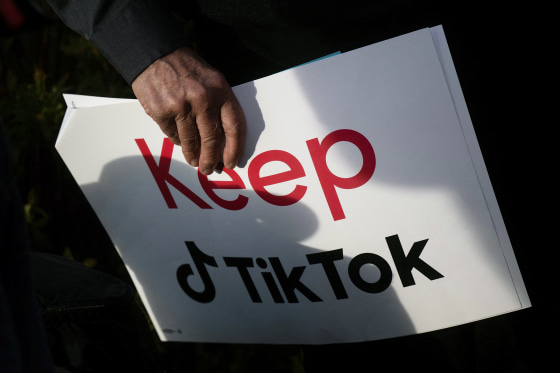
The clock is ticking for American creators who say they are both nervous and frustrated as they prepare for a potential nationwide ban of TikTok next month.
A bipartisan bill President Joe Biden signed this year requires TikTok’s Chinese parent company, ByteDance, to sell the platform to an American company or face a ban — which is set to take effect Jan. 19, the day before President-elect Donald Trump takes office. The Supreme Court said it will take up TikTok’s appeal on Jan. 10.
“So many people have found connection, communities, and people’s livelihoods now have been built from TikTok,” said Jenn Ficarra, a Los Angeles-based writer who used TikTok to help launch a baby-name consulting business as a side hustle. “I’m just really dismayed and annoyed and angry that something that is instrumental to so many people’s livelihoods is being stripped away.”
Lawmakers who pushed for a ban argue that TikTok’s Chinese owner poses a national security threat to the United States. But for many American creators who’ve come to rely on it as their main source of income, losing it would mean scrambling for new ways to sustain their careers and rebuild their personal brands.
In recent weeks, hundreds of TikTok users like Ficcarra have lamented the looming ban, posting videos showcasing their anxiety, anger and grief as they prepare to lose access to it.
“There’s going to have to be sacrifices made, and it obviously does make me worry about everyday life, like groceries, rent, all those sorts of stuff,” said Jonathan Miller, a songwriter and music commentator who has been a full-time creator since 2010.
Creators like Miller — who have amassed followings on TikTok but aren’t necessarily considered household names — hope to pivot to other platforms to make up for the income they expect to lose from the potential ends of their TikTok careers.
In a court filing this month, TikTok claimed U.S. small businesses and social media creators would lose $1.3 billion in earnings within just a month of a shutdown.
TikTok is the most commonly used platform by brands that engage in influencer marketing, according to a recent report by the Influencer Marketing Hub, which also found that 50% of influencer marketers believe TikTok delivers the best return on investment for short-form video content. It has become a giant in the evolving creator economy, which includes millions of social media personalities who make money through brand deals, platform monetization and audience subscriptions. Research from Goldman Sachs last year predicted that the total market opportunity of the creator economy could reach $480 billion by 2027.
Cole Mason, a co-founder of the creator marketing company Pearpop, said he’s optimistic creators will adapt should there be a ban.
“Creators will be a powerful force behind our culture, with or without TikTok,” he said in an email. “Ultimately, where creatives go, audiences and brands follow.”
As they gear up for the reality of losing part of their regular incomes, some TikTok creators have already gotten started on building their followings elsewhere.
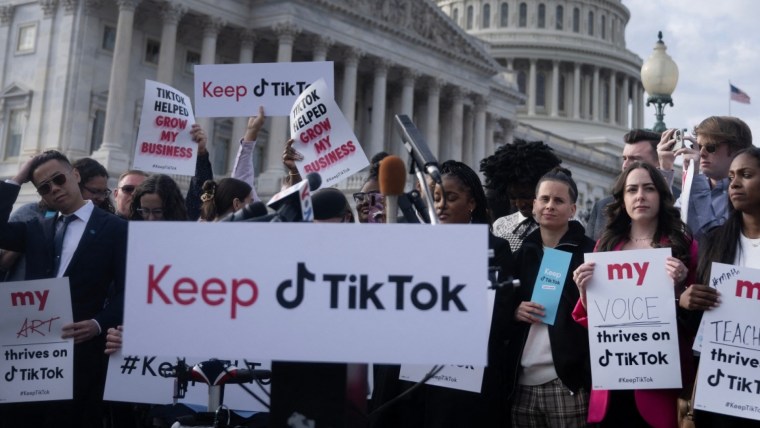
Miller, who has around 230,000 TikTok followers, said he makes the majority of his income through TikTok’s Creator Fund (which pays based on views and engagement) and livestreams. Anticipating a ban, he has been using his TikTok page to cross-promote his YouTube and Instagram accounts. He plans to test new types of content to better cater to those platforms.
Fashion and beauty creator Kalita Hon, who said about 70% of her income comes from TikTok, mainly through brand deals, has a similar strategy. She said she plans to shift her focus to Instagram Reels, with the hope that fashion brands are more likely to move there, as well, in the wake of a ban.
But she said she doesn’t expect to bring her 245,000 TikTok followers with her, because the audience is “very specific” to that platform.
“TikTok has so much culture that’s so specific to the app, because there are certain videos that will go insanely viral and then that will become, like, the next inside joke,” Hon said.
Some creators, like Taylor Pare, argue that if a ban does go into effect, creators whose income came primarily from TikTok should be entitled to unemployment benefits. The app accounts for roughly 90% to 95% of her income, she said.
“Perhaps if you’re making millions of dollars you’re probably set, but I think there’s people that really rely on this and they’ve made this their job,” said Pare, a full-time TikTok creator who has built an audience of more than 90,000 followers talking about dating in New York City. “And if the government feels that we’re not allowed to have this, I feel like there needs to be some compensation or stimulus financially.”

