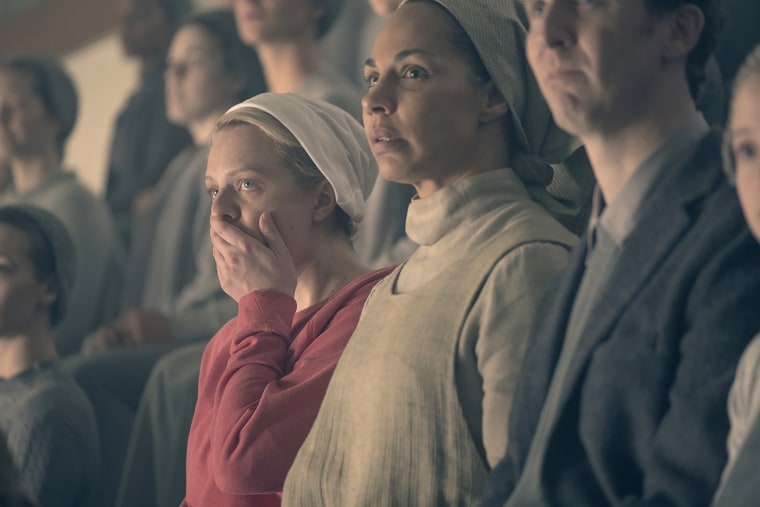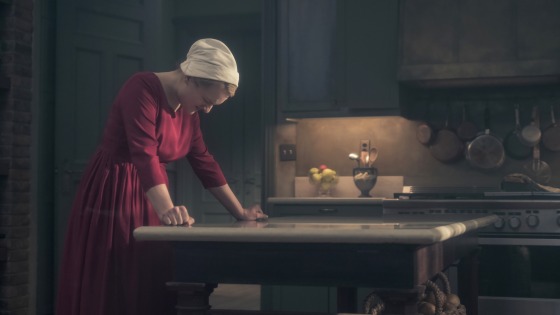
“The Handmaid’s Tale” season two draws to a close just ahead of Thursday’s Emmy nominations announcement, in a finale that showcases both the show’s strengths as well as the inherent weaknesses baked into its premise. But notably, the show uses TV’s typical structure to hammer home a point about how authoritarian regimes lull the public into a sense of normality. While there is much to unpack in the season’s final episodes, this strategy is one of the more interesting uses of TV storytelling currently on the air.
Second seasons are notoriously difficult to pull off. This struggle to keep audiences engaged is a regular feature of dystopian shows, as the fascination with the idiosyncratic world fades and audiences focus more on episode-to-episode plot arcs. Even favorite prestige drama “Game of Thrones” floundered a bit in its second season. Indeed, once the Westeros world was established, the show has had to up the narrative ante every season.
The “Handmaid’s Tale” showrunners are using a very clever parallel technique here, and it’s not something most shows have the self-awareness to attempt.
“The Handmaid’s Tale,” in contrast, spent nearly the entire second season leaning into its audience’s desensitization to the horrors of Gilead. This show is based on a novel about a society that forced women into sexual slavery through ritual rape. And yet, all season long, this reality was mostly glossed over, as were the other horrors of greater Gilead. Once Offred returns to the Waterford house, the audience is encouraged to get caught up in the episode-to-episode minutiae of daily life, all while accepting her life's context as the new normal. This is also how many authoritarian regimes quell rebellion and get their populations to accept the world as it has become. The “Handmaid’s Tale” showrunners are using a very clever parallel technique here, and it’s not something most shows have the self-awareness to attempt. It's also why, despite the show’s flaws, it’s still worth watching.
Related

Ultimately, it took until the tenth installment of a 13-episode season for “the ritual” of the rape ceremony to turn up on camera this season. It was a welcome respite for many fans who found last season’s unrelenting and graphic depictions hard to stomach. There were moments when the terrible nature of Gilead would surface; the terrorist attack on the Red Center, for instance, or the release of the handmaid letters on the internet in Canada showcased moments of resistance. But the majority of the dramatic action concerned the emotional drama between Offred’s forced surrogate-mother status of the coming baby and those around her who consider her unborn child to be their rightful property.
All of this meant that the gut punch, when it did come, felt one hundred times worse. Not only was the scene itself terrible, but it created a sense of guilt in the viewer who for weeks had totally forgotten how terrible this world was to women. And with this sense of complacency also came a feeling of complicity.
(Spoilers below.)