In Argentina’s Patagonia region 95 million years ago, some huge dinosaurs roamed the landscape including fearsome meat-eater Giganotosaurus, at about eight tons, and immense long-necked plant-eater Argentinosaurus, perhaps 70 tons. But this was no mere land of the giants, as a newly described fossil shows.
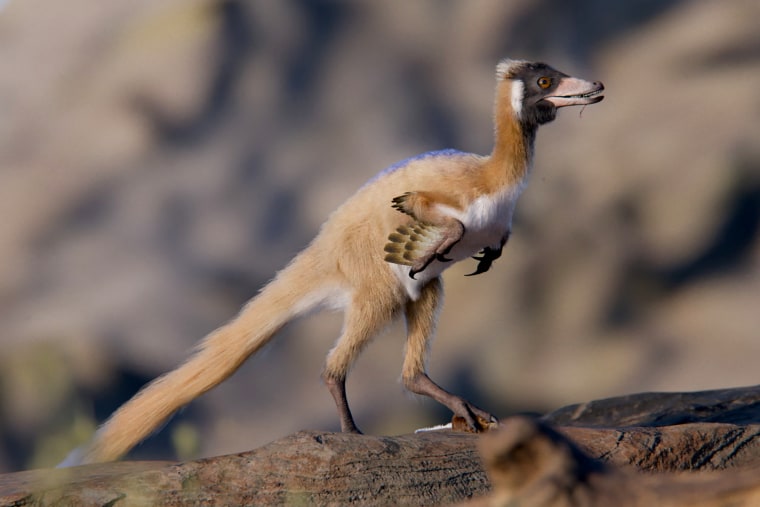
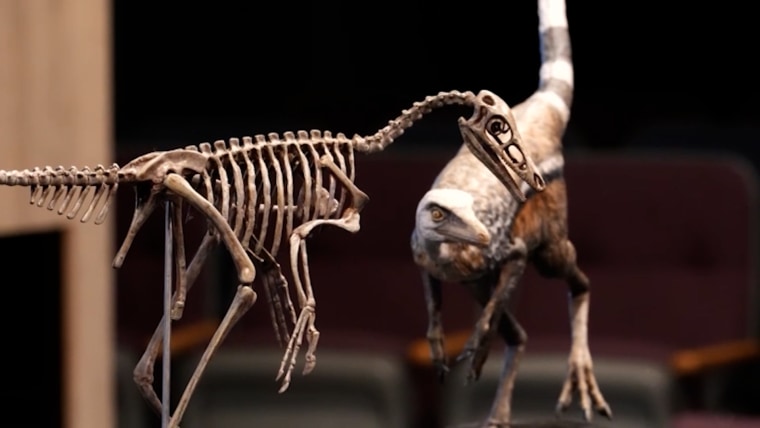
Researchers have found a well-preserved and nearly complete skeleton of one of the world’s smallest-known dinosaurs, named Alnashetri cerropoliciensis. It was about the size of a crow and probably hunted small animals like lizards, snakes, mammals and invertebrates.
The fossil, preserved with the bones positioned as they would have been in life, offers insight into alvarezsaurs, an unusual family of dinosaurs within the group called theropods that spans all the meat-eating dinosaurs.
This specimen, given the nickname “Alna,” was unearthed in sandstone at a site called La Buitrera in northern Patagonia’s Rio Negro Province that has yielded many fossils of small- and medium-sized animals from the Cretaceous Period.
Alna was a small female that lived in a desert environment and died after reaching age four, so almost fully grown. After dying, Alna’s body was quickly covered by a sand dune, accounting for its fine level of preservation.
Apart from birds, which evolved from small feathered dinosaurs, Alnashetri is the most diminutive dinosaur known from South America and rivals the smallest ones discovered globally.
“Alnashetri is truly tiny. Weighing in around 1.5 pounds, it is smaller than a chicken,” said University of Minnesota paleontologist Peter Makovicky, lead author of the research published on Wednesday in the journal Nature. “It wouldn’t even reach knee height on an average adult person.”
Alvarezsaurs were predominantly small, with stubby but powerful forelimbs, long and gracile hindlimbs and lightly built skulls. The researchers suspect Alnashetri was feathered, based on fossils of other alvarezsaurs. Despite some birdlike traits, alvarezsaurs were only distantly related to birds.