Pakistan is joining a growing list of countries acting as go-betweens for the United States and Iran, four sources told NBC News, with two of those sources saying an in-person meeting could be held in the coming days in Islamabad.
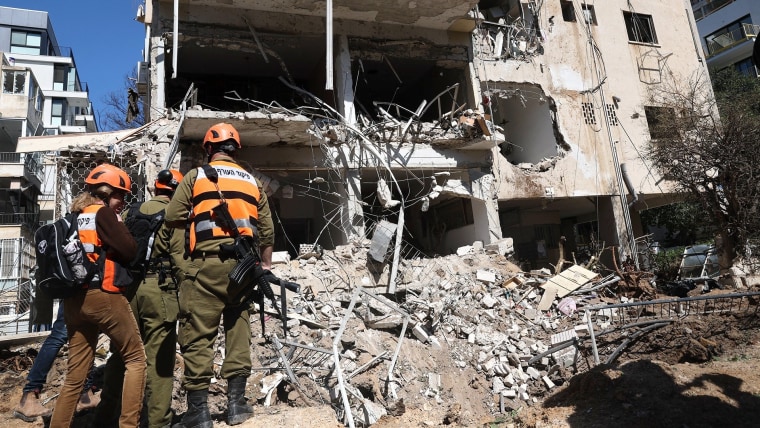
A diplomatic source said Pakistan is in conversations with both the U.S. and Iran and is “well poised to play an active role” in discussions to end the war, which has killed more than 2,000 people and displaced millions as it enters its fourth week. A Gulf official said Pakistan had been passing messages between the two countries for the past two days.
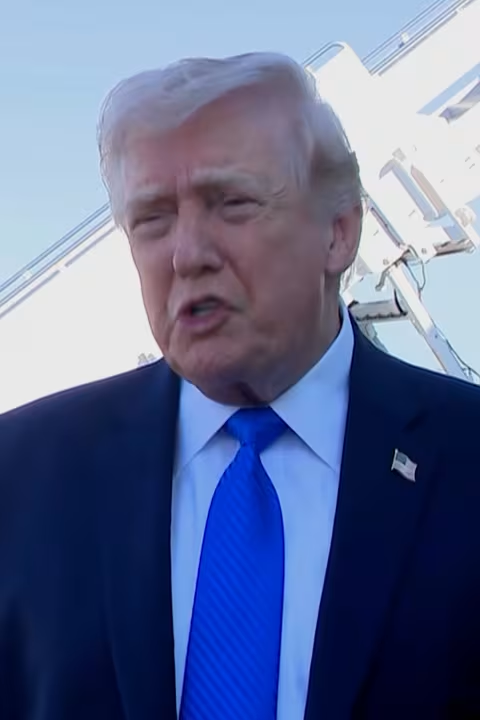
For the first time since the conflict began with U.S. and Israeli strikes Feb. 28, President Donald Trump said Monday that the U.S. and Iran had held “very good and productive conversations” and that the discussions would “continue throughout the week.” The announcement was an about-face from the president’s stark ultimatum over the weekend demanding that Iran reopen the Strait of Hormuz within 48 hours or the U.S. would “obliterate” the country’s power plants.
“We’re doing a five-day period. We’ll see how that goes, and if it goes well, we’re going to end up with settling this,” Trump told reporters of his decision to postpone U.S. strikes on Iran’s energy infrastructure. “Otherwise, we’ll keep bombing our little hearts out.”
Senior Iranian officials including its parliament speaker, Mohammad-Bagher Ghalibaf, denied Monday that negotiations were taking place and accused Trump of trying to “manipulate the financial and oil markets and escape the quagmire in which the U.S. and Israel are trapped.”
But Esmail Baghaei, spokesperson for the Iranian Foreign Affairs Ministry, acknowledged to the official news agency IRNA that Iran had received messages in recent days from “certain friendly states conveying the U.S. request for negotiations to end the war,” and that appropriate responses had been given.

Pakistan, which is embroiled in its own deadly conflict with neighboring Afghanistan, is one of at least three countries — along with Turkey and Egypt — that are acting as intermediaries between the U.S. and Iran, according to a source familiar with the diplomatic efforts.
Iran’s effective shutdown of the Strait of Hormuz, a crucial shipping route along its southern coast that carries about a fifth of the world’s oil, has been devastating for Asia, and especially Pakistan. The South Asian country of about 260 million people relies on Gulf states for the vast majority of its crude oil imports and almost all of its liquified natural gas.
A Middle East diplomat who has been briefed on the possible indirect negotiations between the U.S. and Iran said that “there are talks about talks” and that there might be a meeting in Islamabad, the Pakistani capital.
Asked about a potential meeting between the U.S. and Iran in Pakistan, the diplomatic source said that diplomacy was in “full swing” but that there were multiple proposals and nothing had been confirmed.
The White House did not confirm whether Pakistan was acting as an intermediary with Iran.
“These are sensitive diplomatic discussions and the U.S. will not negotiate through the press,” press secretary Karoline Leavitt said in a statement. “This is a fluid situation, and speculation about meetings should not be deemed as final until they are formally announced by the White House.”
Pakistani Prime Minister Shehbaz Sharif said Tuesday on X that "Pakistan welcomes and fully supports ongoing efforts to pursue dialogue to end the WAR in Middle East, in the interest of peace and stability in region and beyond."
He continued: "Subject to concurrence by the US and Iran, Pakistan stands ready and honoured to be the host to facilitate meaningful and conclusive talks for a comprehensive settlement of the ongoing conflict.
Sharif spoke Monday with Iranian President Masoud Pezeshkian and “underscored the urgent need to work collectively for de-escalation and a return to dialogue and diplomacy,” according to a readout from the Pakistani Foreign Affairs Ministry.
Egyptian Foreign Minister Badr Abdelatty also held separate calls with U.S. special envoy Steve Witkoff and Iranian Foreign Minister Abbas Araghchi on Sunday, along with the foreign ministers of Pakistan, Turkey and Qatar. Abdelatty discussed “potential negotiations” between the U.S. and Iran in a phone call Monday with Witkoff, Egypt’s Foreign Affairs Ministry said Tuesday.
Trump referred to the discussions between the U.S. and Iran as “preliminary” but expressed optimism that the two sides could reach an agreement.
“I think there’s a very good chance we’re going to end up in a deal,” he said. “And so we’re giving it five days, and then we’re going to see where that takes us.”


