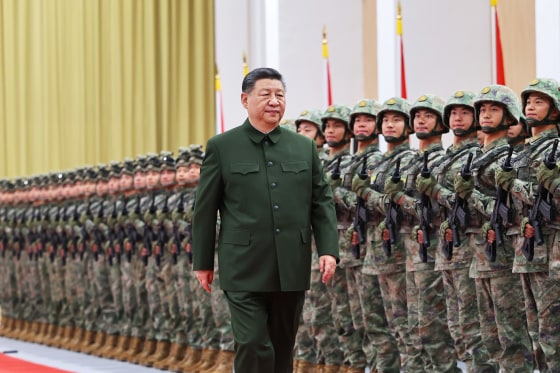
HONG KONG — Chinese President Xi Jinping’s purges of senior military officials run far deeper than previously thought, researchers say, threatening the effectiveness of his People’s Liberation Army.
The crackdown, documented in two new studies released Tuesday, includes the recent ouster of Xi's top two generals.
Purges have been a regular occurrence under Xi, but observers were still shocked last month when it was announced that Gen. Zhang Youxia, the military’s No. 2 official after Xi himself, was under investigation for serious “violations of discipline and law.”
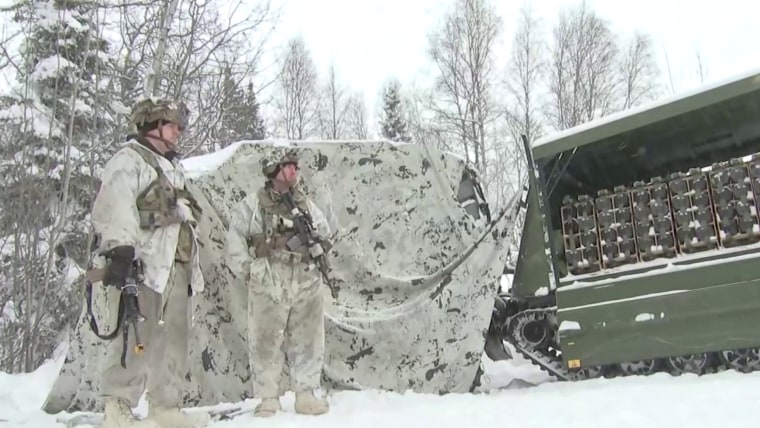
Some 101 generals and lieutenant generals have been purged or potentially purged since 2022, representing 52% of the PLA’s top leadership positions, the Center for Strategic and International Studies, a think tank based in Washington, said in a report released Tuesday.
“This figure is striking and extraordinary, demonstrating the depth of Xi’s campaign and the unprecedented churn in the PLA leadership,” wrote M. Taylor Fravel, director of the Security Studies Program at the Massachusetts Institute of Technology and one of the nine authors of the report.
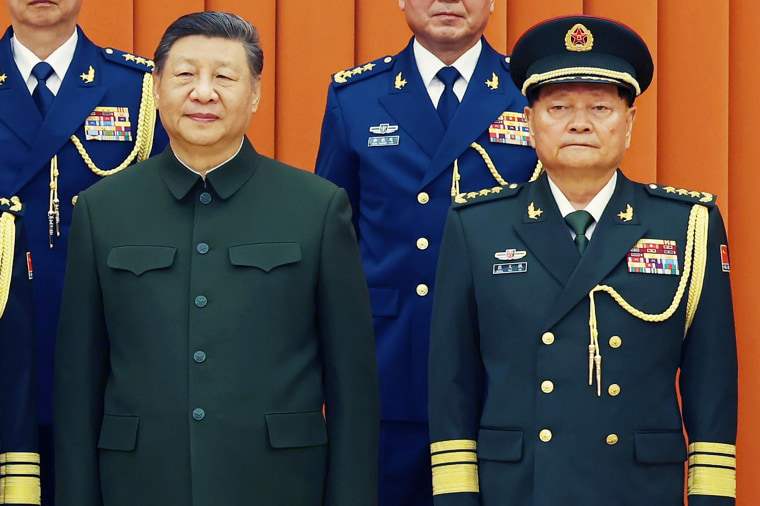
Replacing such experienced leaders will take time, the authors said, raising questions about China’s ability to carry out large-scale military operations such as a potential assault on Taiwan, the Beijing-claimed island.
“Xi’s demonstrated lack of faith in his military is good from the perspective of the United States and Taiwan for deterring an invasion,” wrote co-author Thomas J. Christensen, a professor of public and international affairs at Columbia University, though he noted that it would still be “relatively easy” for China to impose a blockade on the self-ruling democracy.
The Chinese Ministry of Defense did not immediately respond to a request for comment from NBC News.
Of the 101 senior officials, 36 were officially purged while 65 are missing or have been conspicuously absent from important meetings, the researchers said.
According to the report, the purges have affected all four of China’s military forces — the army, navy, air force and rocket force — with the rocket force hit hardest amid an investigation into corrupt procurement processes.
The number of removals has increased since 2022, when there was one, with 62 last year and 11 so far this year.
Those removed included officers Xi had handpicked and swiftly promoted, as well as close allies such as Zhang, a lifelong friend.
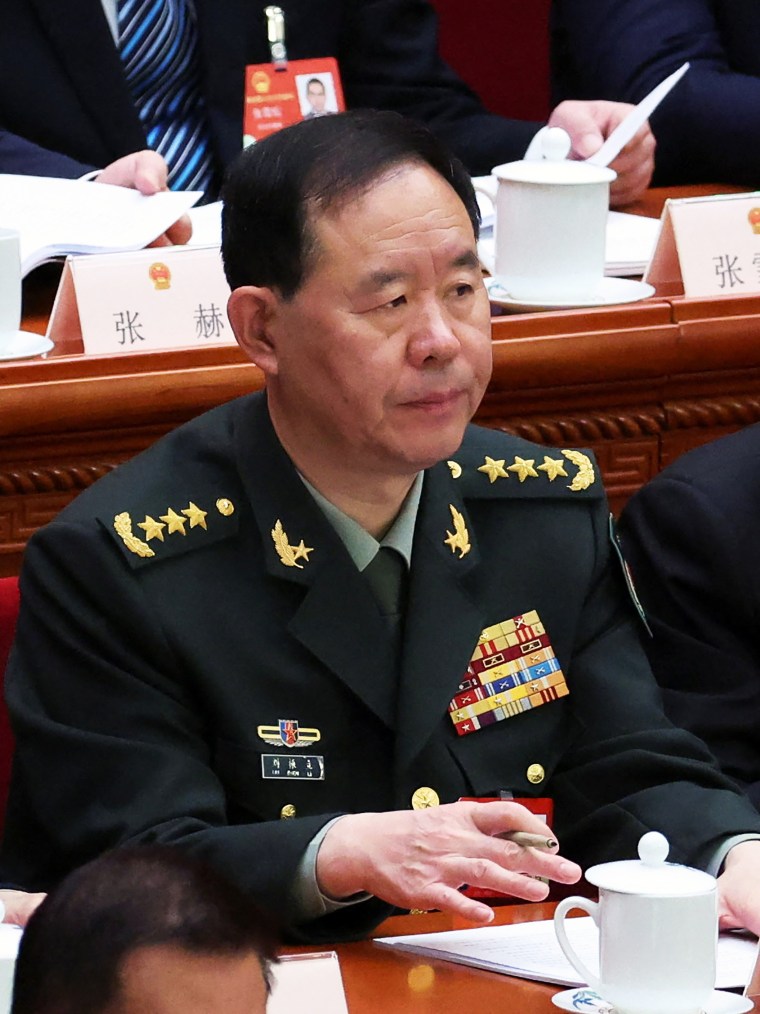
Also removed last month was Gen. Liu Zhenli, who like Zhang was a member of the Central Military Commission, the PLA’s top decision-making body. Of its seven members in 2022, only Xi and one general are left.
Though corruption is typically cited as the reason for officers’ removal, experts say other factors including performance, policy differences or questions of loyalty may also play a role.
Xi made a rare public reference to the purges earlier this month, telling the military in a virtual address that in the past year it had grown stronger in its fight against corruption and that the rank and file were “trustworthy.”
The CSIS report said the leadership purges did not appear to have significantly disrupted the PLA’s normal functions or operations. But they have left a high number of vacancies, with only 11 of 52 key military leadership positions filled.
In a separate report also released Tuesday, the London-based International Institute for Strategic Studies said the purges had left the Chinese military “operating with serious deficiencies in its command structure.”
According to the annual report, a survey of global military forces, the purges are likely not over and are probably having a negative effect on force readiness, Reuters reported. But the report said the effects were “temporary” and that the Chinese military was likely to continue its rapid modernization.
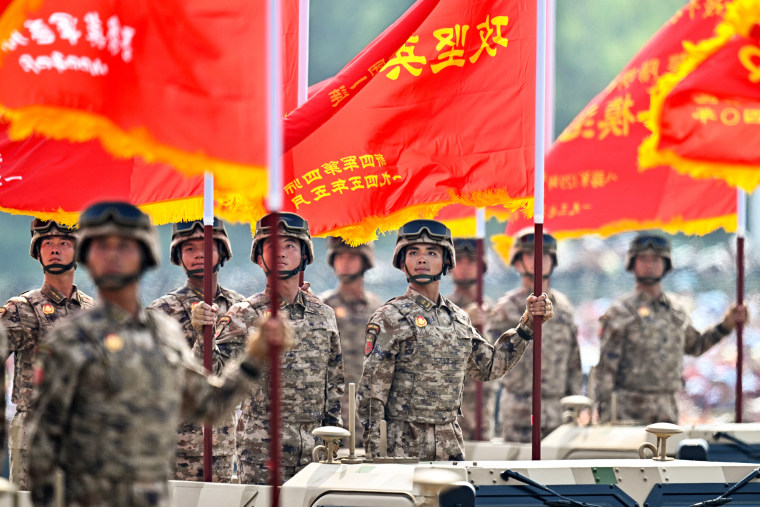
While the purges are likely to have hurt morale and trust, it’s difficult to know to what extent they have actually affected a notoriously opaque military whose last major combat was against Vietnam in 1979, said Drew Thompson, a senior fellow at the S. Rajaratnam School of International Studies at Nanyang Technological University in Singapore.
