Major sticking points
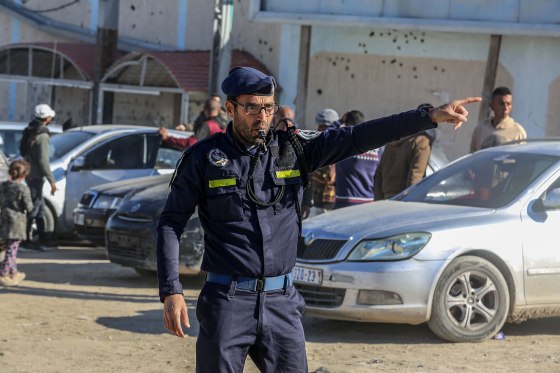
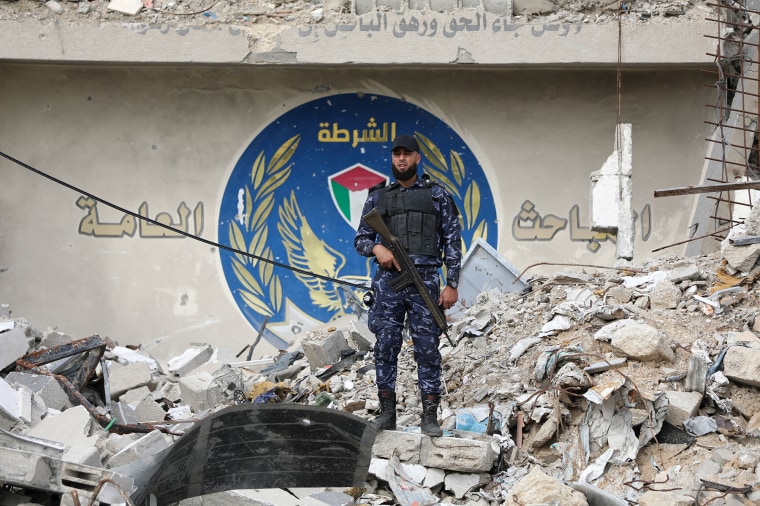
Hamas‘ plans for its police force and workers point to wide gaps between Hamas and Israel, backed by the U.S., as Trump pushes ahead with his plans.
Last week, Trump hosted a signing ceremony to establish his “Board of Peace” that will serve as a transitional administration to set the framework and coordinate funding for the redevelopment of Gaza. The framework includes a provision barring “foreign terrorist organizations” from participating in governance.
Hamas spokesperson Hazem Qassem told Reuters the group was prepared to hand over governance to the 15-member NCAG and its chair, Ali Shaath, with immediate effect.
“We (have) full confidence that it will operate on the basis of benefiting from qualified personnel and not wasting the rights of anyone who worked during the previous period,” Qassem said, referring to the inclusion of the 40,000 personnel.
The four sources said Hamas is open to the NCAG restructuring ministries and sending some workers into retirement. Mass dismissals risked chaos, the sources said.
Hamas and NCAG Chair Shaath have not yet met in person to discuss governance, a Hamas official said. Shaath’s office did not respond to a request for comment.
Another issue was whether Sami Nasman, the former Palestinian Authority general assigned to oversee security under the NCAG, would be able to operate effectively, a Palestinian official said.
Nasman, originally from Gaza, moved to the occupied West Bank after Hamas routed Palestinian Authority forces from the enclave in 2007 following a brief civil war. A Hamas court in Gaza later sentenced him in absentia, accusing him of instigating chaos. Nasman denies this.
Trump’s administration wants to see heavy weapons decommissioned immediately, with “personal arms registered and decommissioned by sector as (the) NCAG police become capable of guaranteeing personal security,” according to a document shared by the White House last week.
A U.S. official said on Tuesday that Hamas fighters would be granted some sort of amnesty.
The militant group is still believed to possess rockets, which several diplomats estimated to number in the hundreds. It is also estimated to possess thousands of light weapons, including rifles.
Hamas recently agreed to discuss disarmament with other Palestinian factions and with mediators, sources said. However, two Hamas officials told Reuters that neither Washington nor the mediators had presented the group with any detailed or concrete disarmament proposal.
A Palestinian official close to the disarmament talks said the U.S. had approached Hamas to explore potential disarmament mechanisms involving parties including Israel, Qatar, Egypt and Turkey.
“Hamas has spoken about the possibility of neutralizing arms, which could be achieved if there is a truce, and it is ready for a long-term ceasefire — five years or a little longer,” the official said.
“But Hamas strongly believes that a serious political negotiation process must begin on Palestinian statehood, whereby weapons and fighters would come under the authority of the State of Palestine,” the official said.