Ayatollah Ali Khamenei, who reigned as Iran’s supreme leader for the past 36 years, was killed in a sweeping U.S. and Israeli attack on the country Saturday. He was 86.
President Donald Trump announced his death on social media and state TV later confirmed it.
To Khamenei’s critics, he was a despot who consolidated power over nearly four decades, bolstered the Islamic Revolutionary Guard Corp to become the most powerful military and economic force in the country, and clung to power in his final days with a brutal crackdown on anti-government protesters that killed thousands.
To his supporters, he will be revered as a martyr who stood up to the aggression of the U.S. and Israel, which he said should be wiped off the map.
His death leaves a nation that he ruled with an iron grip for decades unmoored, possibly heading to a period of great turmoil. Two opposing factions, the protesters pushing for greater freedom and the heavily armed security forces confronting them, are now vying for power while American and Israeli bombs continue to fall.
“Khamenei, one of the most evil people in History, is dead,” Trump posted Saturday on Truth Social.
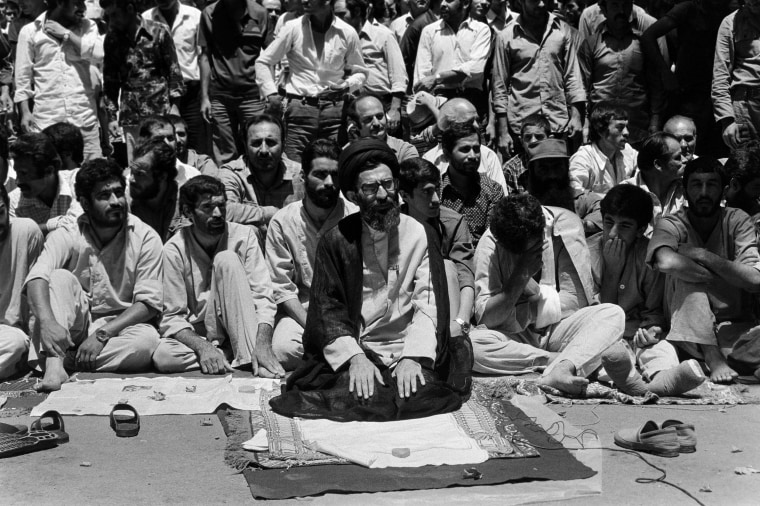
Ayatollah Ali Khamenei at the University of Tehran in 1980. To his supporters, he will be revered as a martyr who stood up to the aggression of the U.S. and Israel, which he said should be wiped off the map. Michel Artault / Gamma-Rapho via Getty Images
Khamenei was born April 19, 1939, and had a Spartan upbringing as the son of an Islamic scholar in the holy city of Mashhad, home to Iran’s most prominent religious shrine.
“We had a hard life. Sometimes for supper we had nothing but bread with some raisins,” Khamenei is quoted as saying in a biography on his official website.
He followed in his father’s footsteps, beginning his clerical studies as a child before attending the Shiite seminary in Najaf in neighboring Iraq at age 18. He returned to Iran one year later under pressure from his father to study in Qom, the Iranian seat of Shiite scholarship and a rival to Najaf.
It was in Qom that Khamenei met Ayatollah Ruhollah Khomeini and got swept up in anti-monarchy fervor against Shah Mohammad Reza Pahlavi, which led to multiple arrests in the 1960s and the 1970s. According to his official biography, he was tortured in detention at the hands of the SAVAK, the notorious secret police.
Khamenei’s relationship with Khomeini grew even closer after the ouster of the shah, or king, in 1979, and he was president from 1981 to 1989, at the height of the war with neighboring Iraq, when tens of thousands of Iranians were killed.
His rise among the revolutionary clergy had also been noticed by groups opposed to the Islamic Republic, who tried to assassinate him in 1981. A bomb placed in a tape recorder exploded as he was speaking at a mosque, paralyzing his right arm for the rest of his life.
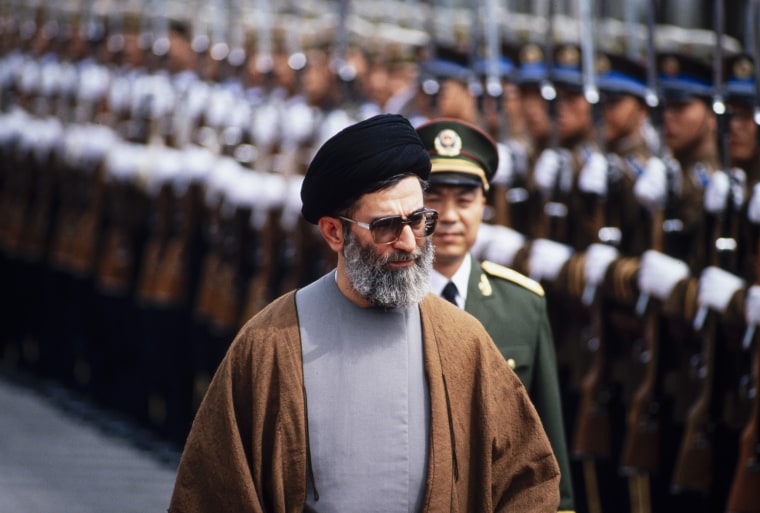
Khamenei during a welcoming ceremony in Beijing on May 11, 1989. He was president at the height of the war with neighboring Iraq, when tens of thousands of Iranians were killed.Forrest Anderson / Getty Images
After the 1989 death of Khomeini, who was the first supreme leader of the Islamic Republic, Khamenei was not considered his natural successor. He was named as a candidate by a potential rival, Ayatollah Akbar Hashemi Rafsanjani, and won the support of other clerics.
Over the next decade, Khamenei positioned the Islamic Revolutionary Guard Corps and its top commanders as not only the top military force in the country, but also the top economic power. The Revolutionary Guard oversaw vast foundations that controlled large parts of the economy.
In return, those Revolutionary Guard commanders became Khamenei’s loyal inner circle, helping quell domestic unrest and exporting the Islamic Republic’s revolutionary ideology across the region, in Lebanon, Gaza, Iraq and Yemen.
The first real challenge to his political power as supreme leader came with the election of reformist President Mohammad Khatami, also a cleric, in 1997. Khatami pushed for more social freedoms, and for a number of years Khamenei tolerated the changes pushed by the reform movement.
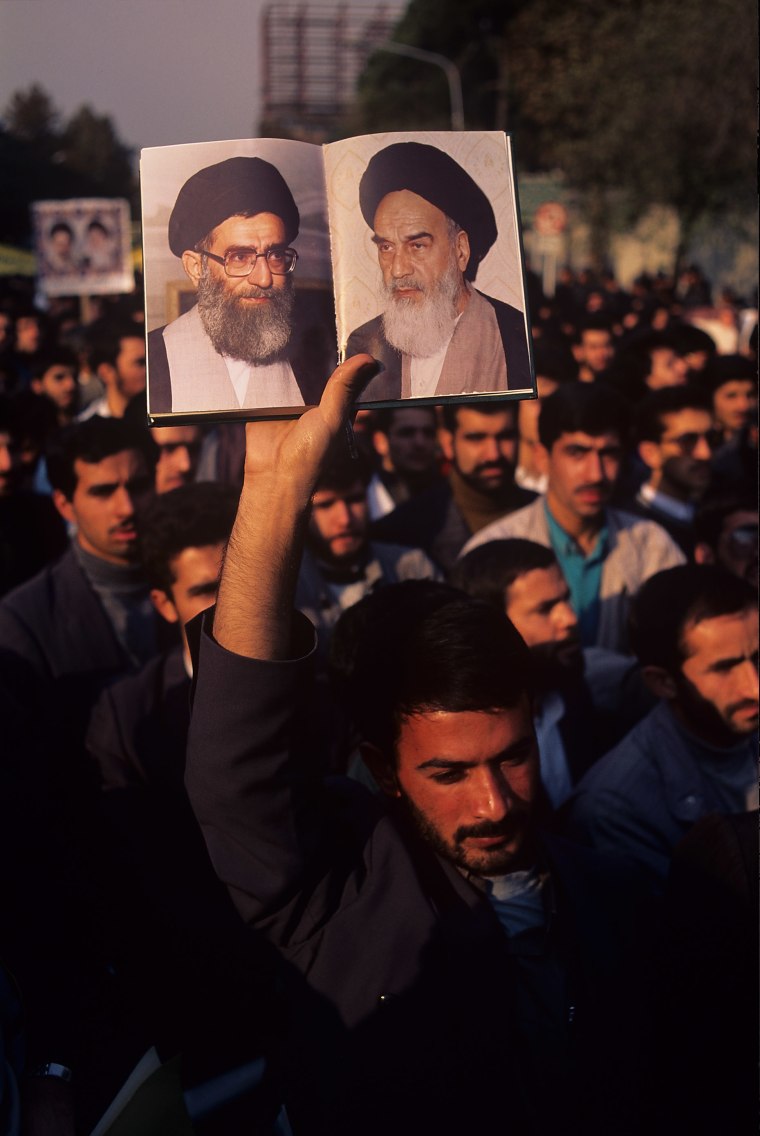
A demonstration outside the German Embassy in Tehran in 1997. After Khomeini died in 1989, Khamenei positioned the Islamic Revolutionary Guard Corps and its top commanders as not only the top military force in the country, but also the top economic power. Kaveh Kazemi / Getty Images
But each time the push for increased freedom and change spilled out into the streets in the form of protests — in 1999, 2009, 2019 and 2022 and in the past two months — Khamenei responded with killings and mass arrests. Human rights groups documented the torture of detainees after each crackdown.
When the U.S. invaded Iraq in 2003, Khamenei sensed an opportunity to follow up on his years of anti-American rhetoric and tasked the foreign services branch of the Revolutionary Guard, the Quds Force, to work with like-minded Shiite militias to target American troops.
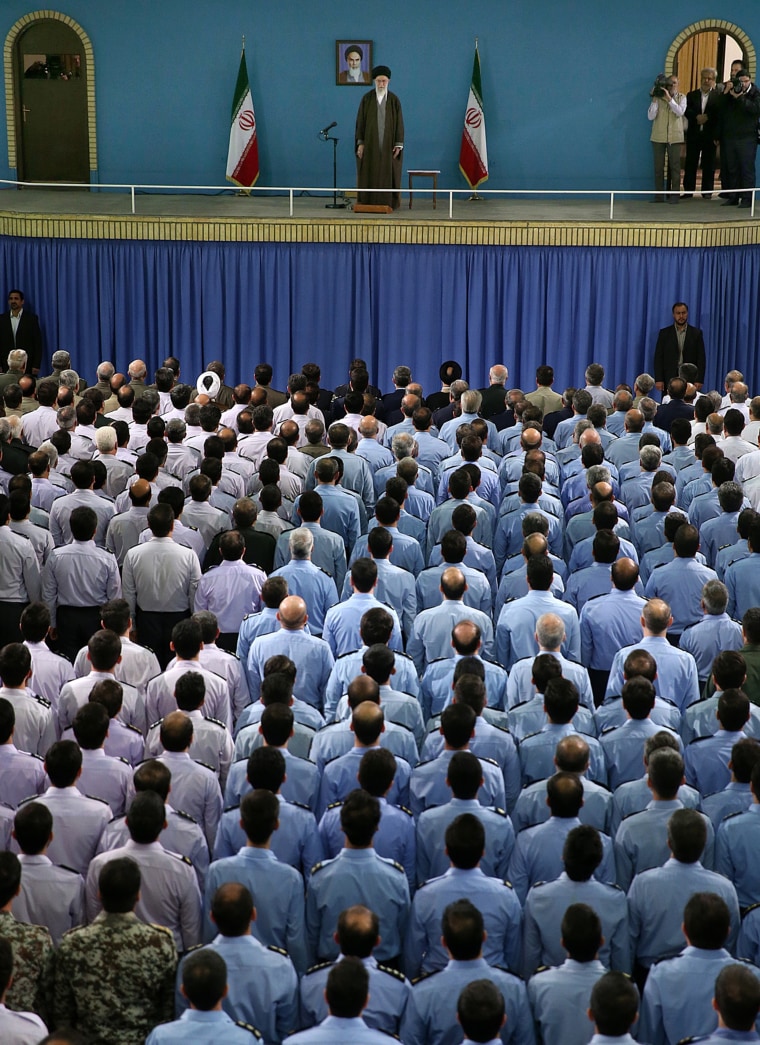
Khamenei addressed military personnel during Iran Army Day in Tehran in 2015. When President Donald Trump pulled out of a nuclear agreement three years later, Khamenei seemed to harden his anti-American worldview, arguing that the U.S. could not be trusted.Anadolu / Getty Images
The improvised explosive devices used by the Iraqi militias, with the help of the Revolutionary Guard, maimed and killed dozens of Americans in Iraq, a point that Trump highlighted in recent weeks in discussing his dislike for the regime.
Still, Khamenei also showed a pragmatic side when he agreed to a nuclear deal with the U.S. and European powers, known formally as the Joint Comprehensive Plan of Action, in 2015, an agreement that limited Iran’s nuclear program in exchange for lifting sanctions.
When Trump pulled out of the agreement in 2018, Khamenei seemed to harden his anti-American worldview, arguing that the U.S. could not be trusted.
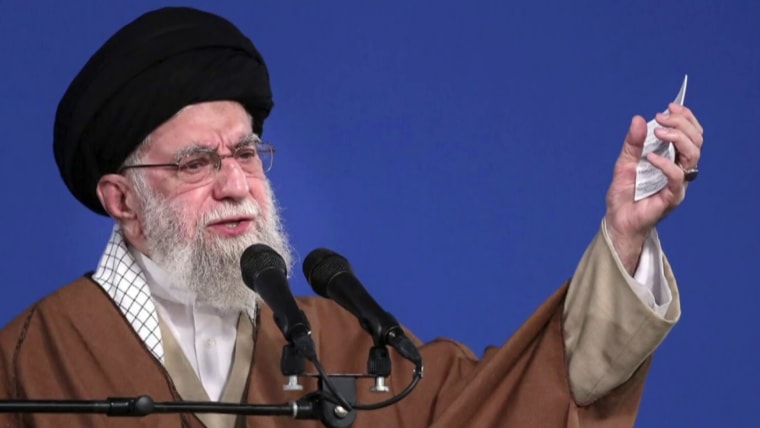
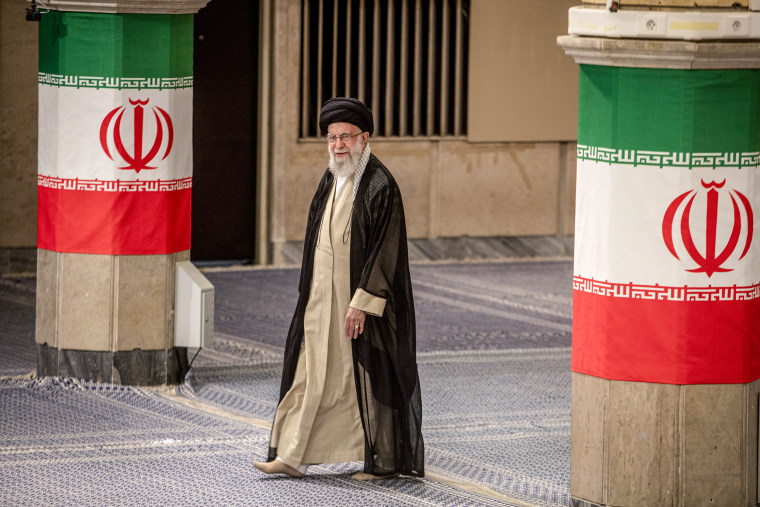
Khamenei in Tehran in 2024. Trump said Tuesday in his State of the Union speech that Iran had killed at least 32,000 protesters in the government's most recent crackdown.Majid Saeedi / Getty Images
The most serious challenge to his power came in late December in what initially appeared to be relatively innocuous protests about the economic situation in the country at the bazaar in Tehran and other locations around the country. But as the crackdown began, the anti-government chants and the size of the crowds increased and spread.
Khamenei and his top Revolutionary Guard commanders clearly sensed the threat: The internet was cut on Jan. 8, and, over the next 48 hours, Iranian security forces carried out the most brutal crackdown in Iran’s modern history.