
UNITED NATIONS — Britain, France and Germany launched a 30-day process to reimpose U.N. sanctions on Iran over its nuclear programme on Thursday, according to a letter sent by the three nations to the U.N. Security Council seen by Reuters.
The trio, known as the E3, has taken the step over accusations Iran has failed to abide by a 2015 deal with world powers that aimed to prevent it from developing a nuclear weapon.
What is the 2015 nuclear deal?
Many countries have suspected Iran of pursuing nuclear weapons, which Iran denies.
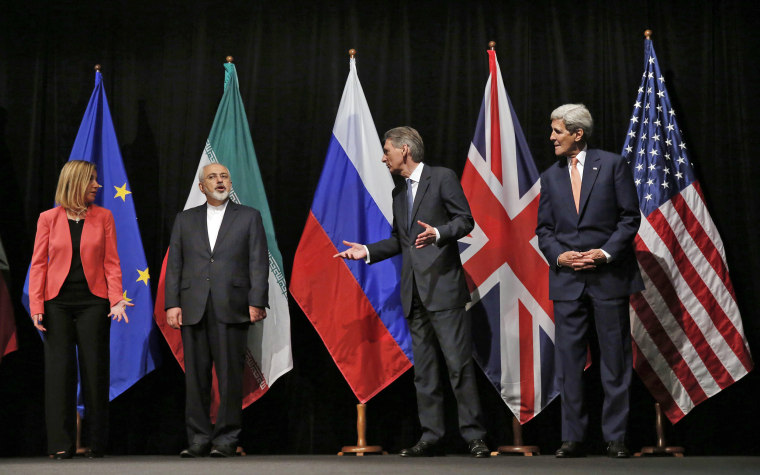
Iran reached a deal in 2015 with Britain, Germany, France, the U.S., Russia, and China — known as the Joint Comprehensive Plan of Action (JCPOA) — that lifted U.N., U.S. and European sanctions on Tehran in return for curbs on its nuclear program.
The U.N. Security Council enshrined the deal in a resolution in July 2015. That resolution — and the ability of any parties to the nuclear deal to trigger a “snapback” of sanctions on Iran - is due to expire on October 18.
What is snapback?
Under the 2015 agreement, there is a process known as snapback that would reimpose U.N. sanctions on Iran.
If the parties cannot resolve accusations of “significant non-performance” by Iran, this process can be triggered at the 15-member U.N. Security Council.
Now that the process has been initiated, the Security Council must vote within 30 days on a resolution to continue Iran‘s sanctions relief, requiring at least nine votes in favor and no vetoes by the United States, Russia, China, Britain, or France to pass.
Such a resolution is destined to fail. If nine or more council members vote in favor of extending sanctions relief, Britain and France could use their veto to block the resolution.
All U.N. sanctions on Iran will be reimposed in late September — 30 days after the snapback process was triggered — unless the Security Council takes other action.
What sanctions would be reimposed
Under snapback, measures imposed by the Security Council on Iran in six resolutions from 2006 to 2010 will be restored.
These include:
- An arms embargo
- A ban on uranium enrichment and reprocessing
- A ban on launches and other activities with ballistic missiles capable of delivering nuclear weapons, as well as ballistic missile technology transfer and technical assistance
- A targeted global asset freeze and travel ban on Iranian individuals and entities
- Authorization for countries to inspect Iran Air Cargo and Islamic Republic of Iran Shipping Lines cargoes for banned goods
Could a snapback be avoided?
France, Britain, and Germany have offered to extend the snapback mechanism for a limited time.
“Such an extension would be granted to provide additional time for negotiations with the aim of concluding a new agreement, while maintaining the possibility of resorting to the reestablishment of relevant sanctions against Iran to prevent nuclear proliferation,” they wrote in a letter to the Security Council this month.
If Iran agreed, the Security Council would have to adopt a new resolution.
In an unexpected move, Russia and China circulated a draft resolution to the Security Council on Sunday that would extend the nuclear deal until April 18, 2026. However, their text includes language that a senior Russian diplomat, speaking on condition of anonymity, told Reuters would block the E3 from reimposing U.N. sanctions on Iran. It was not immediately clear when the draft resolution could be put to a vote.
That's the U.S.' rule?
Calling it “the worst deal ever,” U.S. President Donald Trump quit the nuclear pact in 2018, during his first term, and restored all U.S. sanctions on Tehran. In response, Iran began moving away from its nuclear-related commitments under the accord.
