TEHRAN, Iran — The U.S. and Iran may hold diplomatic talks in Istanbul on Friday as President Donald Trump weighs a possible military strike on the Islamic Republic, four senior Middle East diplomats and a U.S. official told NBC News.
Other countries in the region are also expected to participate in the talks, the sources said.
White House special envoy Steve Witkoff and Iranian Foreign Minister Abbas Araghchi would be part of the delegations, according to four of the sources.
Iran is ready to negotiate with the U.S. and is optimistic that a deal can be reached if the goal is to get to a place where the country is devoid of nuclear weapons, two government officials in the Islamic Republic told NBC News on Monday. Iranian President Masoud Pezeshkian said Tuesday that he instructed the country’s foreign minister to “pursue fair and equitable negotiations” with the U.S.
NBC News reached out to the White House and the State Department, as well as the individual embassies of the Middle Eastern countries that may participate in the talks, who did not immediately respond to request for comment.
Three of the Middle East diplomats who discussed the possible meeting cautioned that details are still being arranged and that they could change.
"It’s not set in stone," one of the diplomats said. A U.S. official said that the parties are working toward setting up the meeting in Istanbul as soon as Friday but that the details have not been finalized.
Regional diplomats are also expected to participate, according to three of the sources.
Two senior Middle East diplomats said the negotiations are being led by Turkey and backed by Qatar and Egypt.
Another senior Middle East diplomat said foreign ministers of Saudi Arabia, Qatar, the United Arab Emirates, Egypt, Pakistan and Oman have also been invited. This diplomat said the talks could address Iran’s nuclear program and U.S. demands for curbs on Iran’s missile program.
If the discussions between the U.S. and Iran take place Friday, it would mark the end of a busy week for Witkoff, who is set to meet with Israeli Prime Minister Benjamin Netanyahu in Israel on Tuesday and travel to Abu Dhabi for meetings with Ukrainian and Russian delegations Wednesday and Thursday, according to two U.S. officials.
An Israeli official said Witkoff and Netanyahu would focus on Iran and Gaza during their meeting. They did not offer further details.
Tensions have ramped up after the USS Abraham Lincoln and several American guided-missile destroyers moved into the Middle East within striking range of Iran.
It is unclear whether President Donald Trump will decide to use force. He said “we’ll find out” when he was asked Sunday whether Iran’s supreme leader, Ayatollah Ali Khamenei, was correct to predict that a U.S. attack on the country would spark a regional war.
Asked about the remarks by a reporter, Trump said he was hopeful that a deal could be struck, while cautioning that the U.S. has “the biggest, most powerful ships in the world over there.”
“We don’t make a deal, then we’ll find out whether or not he was right,” said Trump, who pulled the U.S. from the Iran nuclear deal in 2018, during his first presidential term. Known as the Joint Comprehensive Plan of Action, the deal offered Iran relief from sanctions in exchange for limiting its nuclear program. But Trump, a longtime critic of the deal, said the U.S. gave up too much for too little.
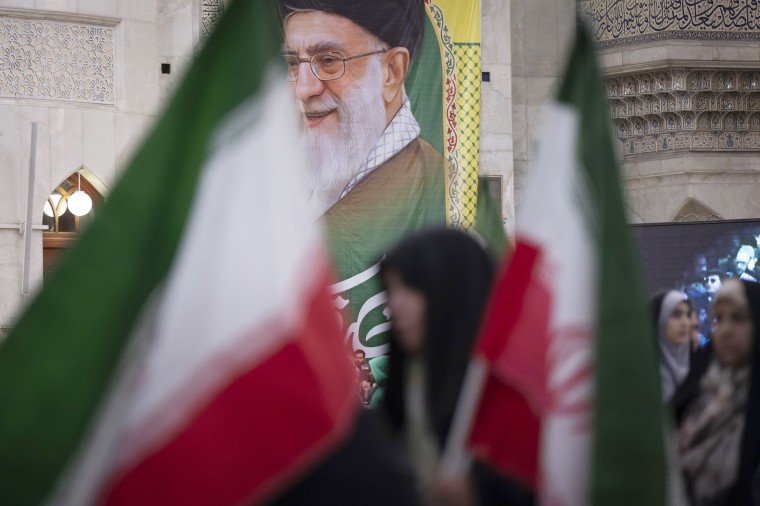
Khamenei told a crowd at his compound in Tehran earlier Sunday that “the Americans must be aware that if they wage a war this time, it will be a regional war.” He said the U.S. was interested in Iran’s oil, natural gas and other mineral resources, adding that it wanted to “seize this country, just as they controlled it before.”
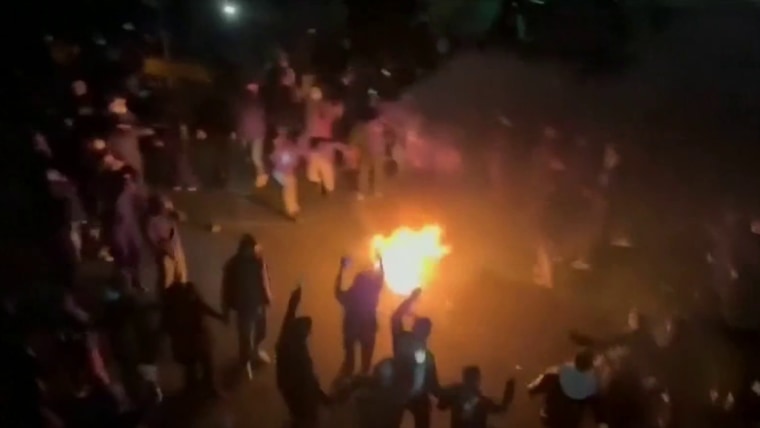
Meanwhile, the mood is tense on the streets of Tehran after recent protests rocked the capital, as well as other cities across the country.


