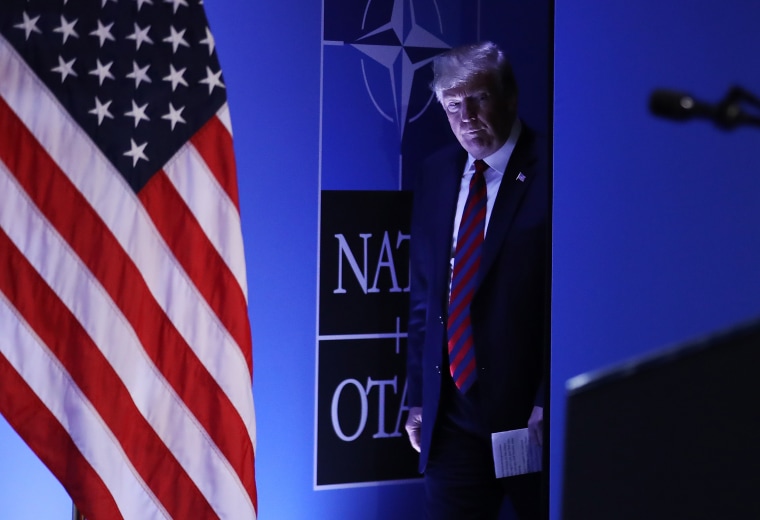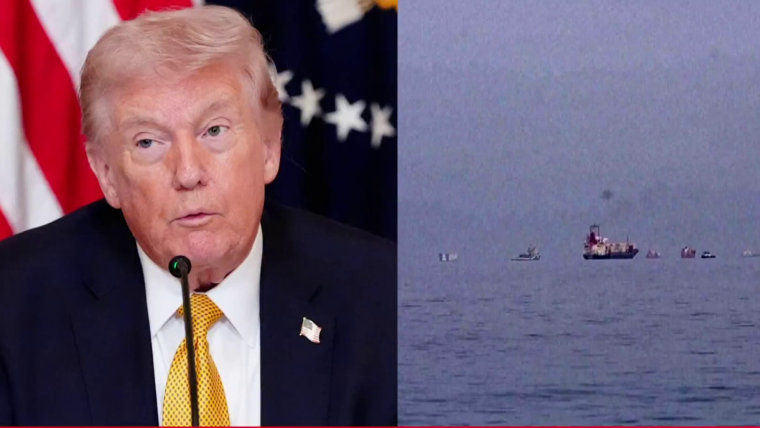
LONDON — President Donald Trump has berated and threatened America’s NATO allies. Now he wants these same countries to help unblock the Strait of Hormuz — and their response has not exactly been enthusiastic.
“This is not our war, we have not started it,” German Defense Minister Boris Pistorius told reporters Monday.
That appeared to sum up the mood among U.S. allies, with leaders from Berlin to London expressing reservations about Trump’s demands and indicating they had no immediate plans to provide military support to reopen the crucial waterway.
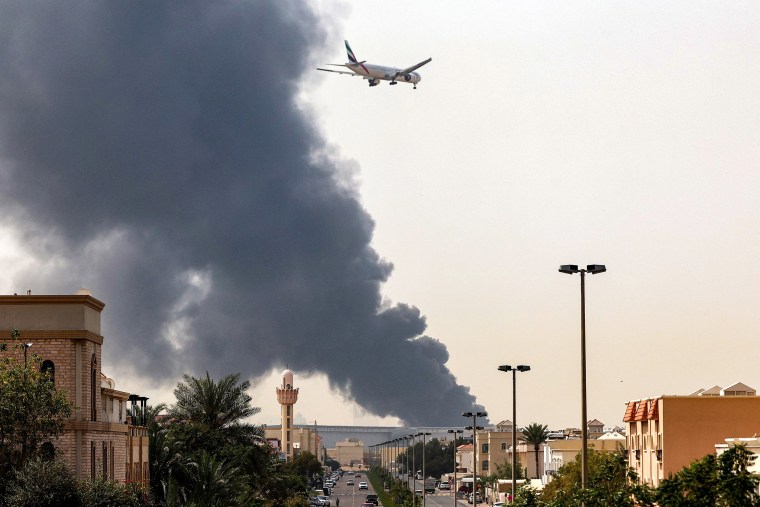
Iran effectively closed the trade route in response to the American-Israeli assault launched last month. This sent global oil prices surging and threatened an international economic shock, something economists had warned about before the war began.
Trump called upon "countries of the world that receive oil through the Hormuz Strait" to "take care of that passage," as he put it in a post Sunday on Truth Social. In an interview with the Financial Times the same day, he went further, warning that NATO would have a “very bad future” if its members did not help free up the strait.
It was “a bit rich” for Trump to be asking help from countries he had previously insulted, former Estonian President Toomas Hendrik Ilves told NBC News in a telephone interview Monday.
Earlier, Estonian Foreign Minister Margus Tsahkna called on Trump to provide more information. Europe needed to understand Trump’s “strategic goals. What will be the plan?” he asked.
Though often wary of risking the president's ire, many European governments have been reluctant to be pulled into the war with Tehran.
Some, such as the leftist government of Spain, outright refused the Hormuz demand.
“Spain will never accept any stopgap measures” to keep the strait open, Defense Minister Margarita Robles said, “because the objective must be for the war to end, and for it to end now.”
Even in Italy, whose Prime Minister Georgia Meloni has previously cast herself as something of a Trump whisperer, the government declined to get involved.
Foreign Minister Antonio Tajani told reporters that “diplomacy needs to prevail.”
In Britain, Prime Minister Keir Starmer has been criticized by Trump for not taking part in the initial attack on Iran.
Starmer told a news conference Monday he was “working with all of our allies, including our European partners,” to “restore the freedom of navigation” as quickly as possible.
“Ultimately, we have to reopen the Strait of Hormuz to ensure stability on the market,” he said. “That is not a simple task.”
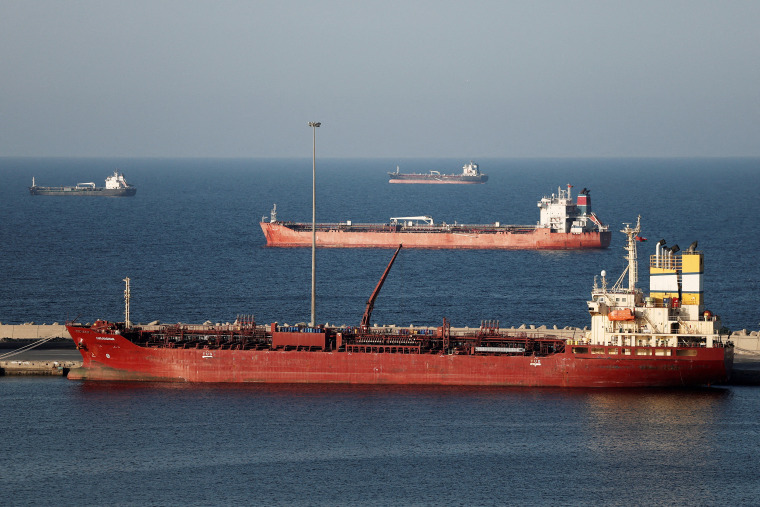
But Starmer made it clear that he would not be drawn into “the wider war,” and that any Hormuz mission should be a broader effort — including the U.S. and Gulf states — rather than something for NATO.
Meanwhile, Japan and Australia said they had no plans to send ships to aid Trump’s request.