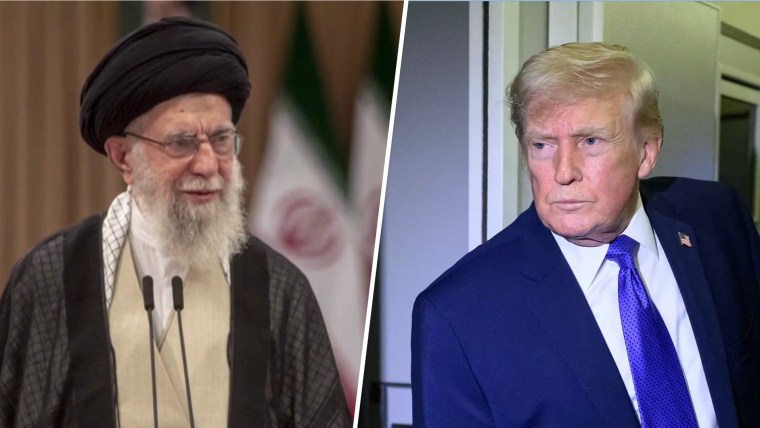
The United States and Iran have reached an understanding on the “guiding principles” in nuclear talks, Tehran’s foreign minister said Tuesday, though he cautioned that work still needs to be done to reach an agreement and head off the threat of an American military attack.
“I believe we made good progress,” said Abbas Araghchi, the head of the Iranian delegation in Geneva. “The path toward an agreement has started but we will not reach it quickly,” he told state media after hours of indirect talks, adding that the two sides would separately work on draft texts before a new round of negotiations.
His comments were echoed by a U.S. official who told NBC News that “progress was made, but there are still a lot of details to discuss.”
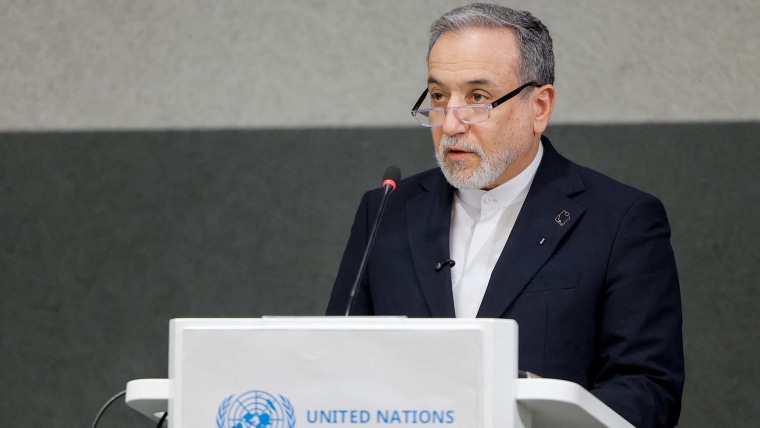
Trump’s special envoy, Steve Witkoff, and son-in-law Jared Kushner have been leading the U.S. delegation at the talks which are being mediated by Oman. The Iranian delegation “said they would come back in the next two weeks with detailed proposals to address some of the open gaps in our positions,” the U.S. official said.
The positive comments from Tehran came as a massive American military buildup was accelerating, as President Donald Trump seeks to pressure the Islamic Republic into a new nuclear deal in the wake of its deadly crackdown on nationwide unrest.
Trump has said “regime change” in Tehran may be the best thing that can happen, but Iranian Supreme Leader Ayatollah Ali Khamenei said Tuesday that any U.S. attempts to depose his government would fail.
Just as the talks got underway in Geneva, Iranian state media reported that parts of the strategic Strait of Hormuz would close for a few hours due to “security precautions” while Iran’s elite Revolutionary Guard conducts military drills there.
Tehran has threatened to shut down the strait to commercial shipping if it is attacked in the past, a move that would choke off a fifth of global oil flows and drive up crude prices.
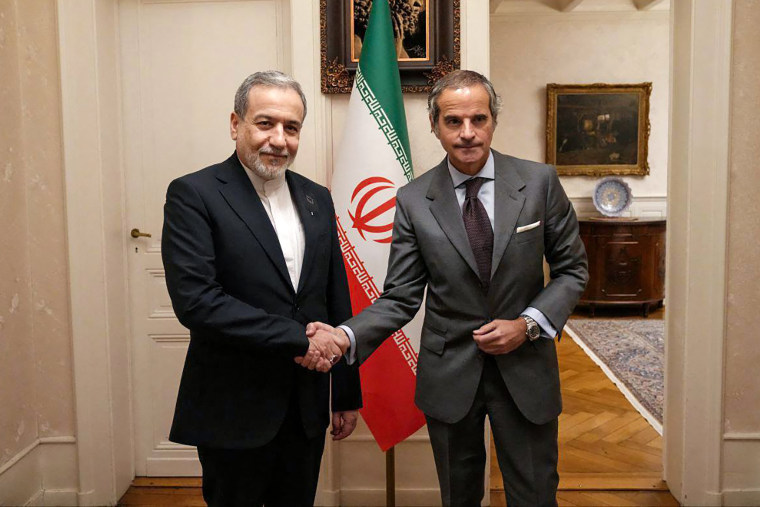
“We have entered certain details related to both the lifting of sanctions and nuclear subjects,” Iranian Foreign Ministry spokesperson Esmaeil Baghaei told state media before they ended. “We are ready to continue these talks as long as it takes, the issues are complicated. There is no trust between the two parties, we have to continue the negotiations in these conditions,” he added.
Baghaei has said Tehran’s views on the nuclear issue, the lifting of economic sanctions and a framework for any understanding have been conveyed to the U.S. side.
Trump said Monday that he would be involved “indirectly“ in the Geneva talks and that he believed Tehran wanted to make a deal.
“I don’t think they want the consequences of not making a deal,” Trump told reporters aboard Air Force One. “We could have had a deal instead of sending the B-2s in to knock out their nuclear potential. And we had to send the B-2s.”
The U.S. joined Israel last June in bombing Iranian nuclear facilities.
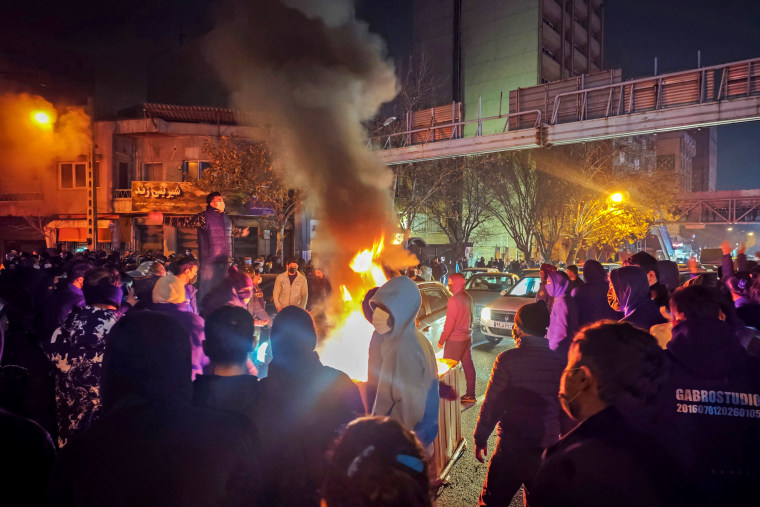
Since the June strikes, Iran’s rulers have been weakened by street protests, suppressed at a cost of thousands of lives, against a cost-of-living crisis driven in part by international sanctions that have strangled the country’s oil income.
Just after the talks started, Iranian media cited 86-year-old Khamenei as saying Washington could not force out his government. The republic has been ruled by clerics since the 1979 Islamic Revolution.
“The U.S. President says their army is the world’s strongest, but the strongest army in the world can sometimes be slapped so hard it cannot get up,” he said, in comments published by Iranian media.
Washington has sought to expand the scope of talks to nonnuclear issues, such as Iran’s missile stockpile. Tehran says it is willing only to discuss curbs on its nuclear program — in exchange for sanctions relief — and that it will not give up uranium enrichment completely or discuss its missile program.
Khamenei reiterated Iran’s position that its formidable missile stockpile is nonnegotiable and that their type and range have nothing to do with the United States.


