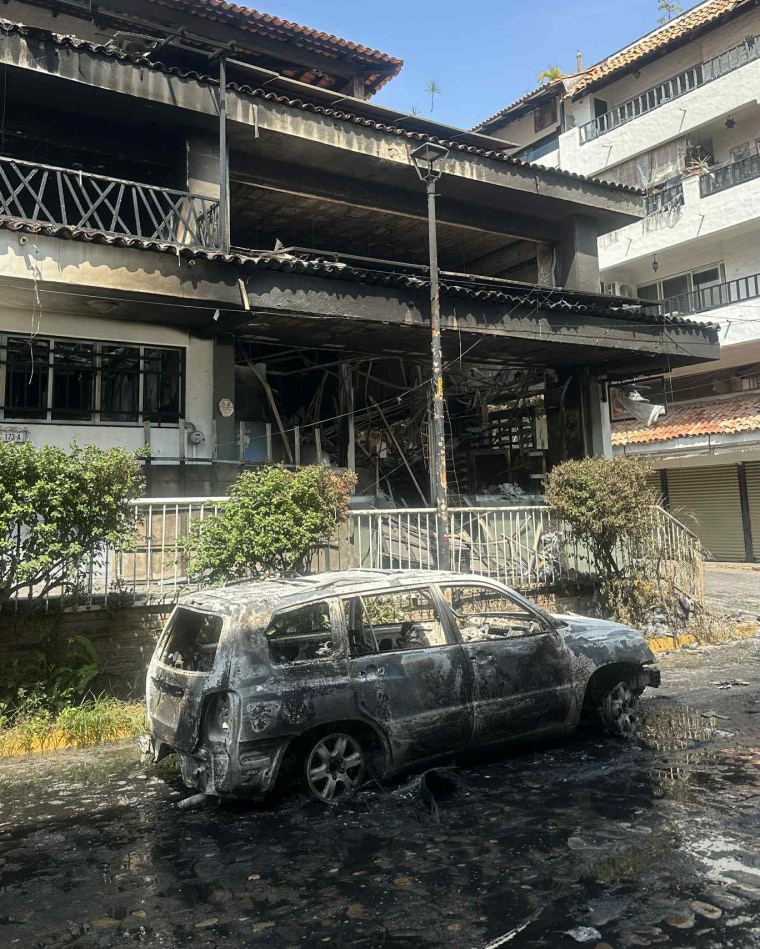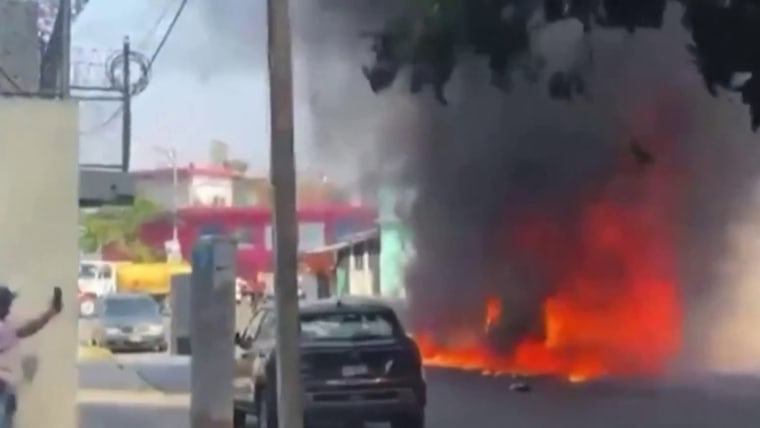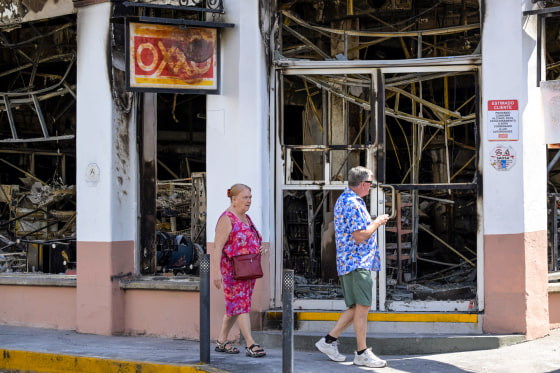
For Americans who call Puerto Vallarta home, the violence over the weekend was an explosive reminder that they live in a country that is also home to some of the world's most powerful drug cartels.
But they’re not about to give up their place in the sun.
Charity Palmatier, who lives year-round just outside the scenic city in a beachside development with other expats from the United States and Canada, dismissed the Jalisco New Generation Cartel's torching of buses and cars Sunday to protest the killing of its leader as “performative.”
“The cartels like to make statements,” Palmatier, 57, who has lived in the area for nearly a decade, told NBC News on Tuesday. “They have temper tantrums when one of their big guys gets captured or killed.”
The violence erupted after drug kingpin Nemesio Ruben Oseguera Cervantes, aka “El Mencho,” died following a shootout with the Mexican military about 180 miles east of Puerto Vallarta.
There had been a $15 million reward for the capture of the head of a cartel that is one of the main suppliers of cocaine to the U.S. market and which earns billions from the production of fentanyl and methamphetamines.
Palmatier noted that while vehicles and some businesses were set ablaze and masked gunmen raided some residences and menaced people on the street, “no citizens were injured or killed.”
“It’s not the Wild West down here,” she said. “It’s much more safe than you would think.”
Karen Davis-Farage, who divides her time between homes in Vallarta, as the expats call it, and New York City and Los Angeles, admitted that she booked a plane ticket to get out of town after a restaurant on the first floor of the building where she lives was set on fire.
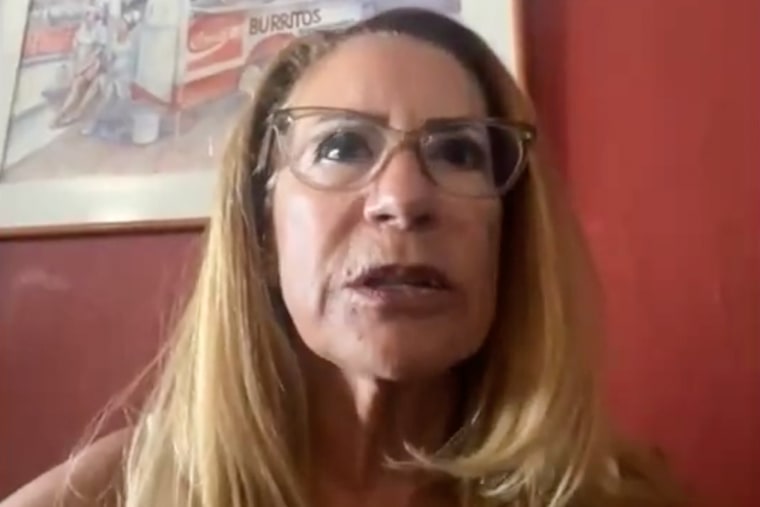
“The cartel was driving up on motorcycles, they had these bags, and they were telling people to get out of the cabs, or get out of the car, or get out of a bus, and they were throwing these bags into the vehicle which was then lighting them on fire,” Davis-Farage, 70, said. “Those were going on all over the city. You couldn’t count all the plumes that were going on in the air.”
But after it was over and she was able to go outside and see the damage, she canceled her flights back to the U.S. She said the threat appeared to be over.
“Everybody is safe and sound,” she said of her friends in Puerto Vallarta.
The State Department on Tuesday lifted its shelter-in-place warning for U.S. citizens in the Mexican state of Jalisco, which is where Puerto Vallarta and another resort city that experienced violence, Guadalajara, are located.
Some 1.6 million U.S. citizens live in Mexico, according to government figures from 2024, many of them expats who spend the winters there, although the number of Americans living there year-round is also growing.
Mexico City is the most popular destination for American expats, according to Mexico News Daily, which cited government figures.
But the coastal cities in Jalisco are increasingly becoming a magnet for Americans in search of sunshine, a lower cost of living, as well as a slower pace of life, according to various websites like Viva Tropical that are aimed at expats.
Tourist visits — and eventually a new home
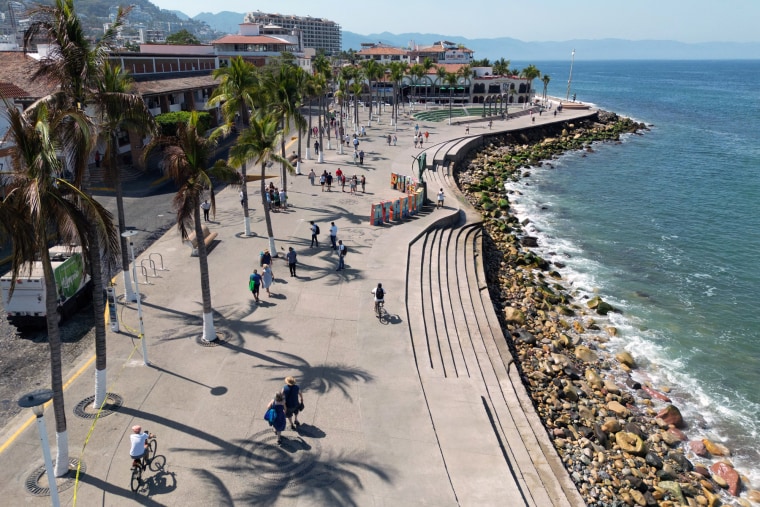
Both Palmatier and Davis-Farage said they started visiting Puerto Vallarta while still in college, drawn by the city’s colonial charm, its spectacular beaches and artsy vibe.
“It’s very mystical,” Davis-Farage said. “From the mountains to the ocean, it’s so beautiful, so vibrant. There’s a lot of creative people who come here and stay here from around the world.”
Palmatier said she lives in an expat bubble where she doesn't need to speak Spanish well to get by. But, she said, the Mexican friends she's made have been very warm and welcoming.