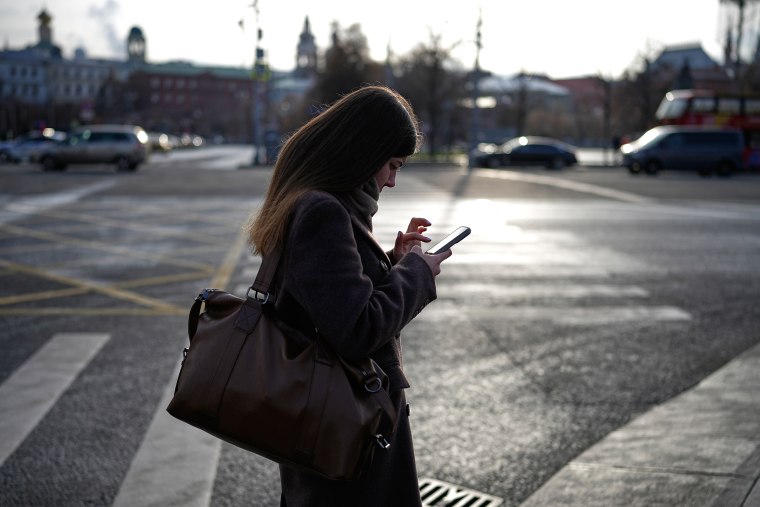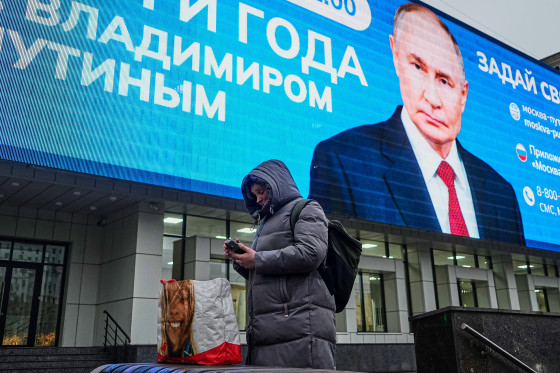
Russians have put up with drone attacks, rising prices and a crackdown on free speech. But now, they are increasingly being asked to go without the internet on their phones, fraying nerves and leaving many feeling disconnected after four years of war in Ukraine.
Mobile internet outages have become part of the norm across the country, a measure authorities say is necessary to prevent attacks by Ukrainian drones, some of which use the technology for navigation.
But Russians who spoke to NBC News, experts and even the country’s hard-line pro-war bloggers have questioned this justification. Ukrainian drones continue to reach their targets inside Russia, even while users as far away as Kamchatka — some 4,350 miles from the Ukrainian border — are told “security concerns” are to blame for their lack of connectivity.
The outages have left ordinary Russians frequently unable to use their phones on the go — to make calls, order a taxi or pay for groceries. They have affected small businesses and left some people resorting to carrying cash or staying home for reliable Wi-Fi.

Parents of children with diabetes have told Russian media they are unable to use phone applications to monitor their blood sugar levels during blackouts.
It’s not just outages that are causing consternation.
Russian authorities have increasingly enforced a so-called “white list” — a limited registry of government-approved websites that people can still access on their phones during outages, severely limiting the kind of information they get.
It comes against the backdrop of increasing restrictions on what Russians can do online, in a wider crackdown on free speech since the Kremlin’s invasion — bans on Instagram and Facebook, YouTube slowdowns, restrictions on foreign messaging apps such as WhatsApp and Telegram, as well as virtual private network services many Russians use to access censored content online.
All those interviewed by NBC News said they were wary of speaking to foreign media about a sensitive security topic, and did not want their personal details shared, fearing possible repercussions.
While the outages have not caused a mass outpouring of anger, some have tried to rally against the measures.

Anastasia, from the Tver region northwest of Moscow, said she had intended to join a protest for internet freedom in November that ultimately did not go ahead. She was fed up, she said, because outages leave her frequently unable to use messaging or taxi apps or navigation maps on her phone. Even some of the websites on the “white list” don’t load during these blackouts, she said.
Anastasia said that on one occasion, her mother, a disabled pensioner, was left unable to pay for her groceries because card machines at her local store wouldn’t work without a mobile connection. She had to walk to the nearest postal office, some distance away, to get cash. “Since then, she has been keeping some cash around. But it’s inconvenient — we live in the 21st century,” Anastasia said.
The official explanation aside, Anastasia said, she thinks the Kremlin is using the outages to prepare the Russian public for a “North Korea-like” model of the internet, heavily censored and restricted.
“I think authorities want to do something similar in our country,” she said.
Some government officials have urged residents to treat the outages as an opportunity for a “digital detox,” while a senior lawmaker for information policy told the state news agency Tass last month that the outages should be seen as a welcome break from “endlessly watching useless videos.”
The governor of Oryol region, Andrey Klychkov, said the inconvenience is nothing compared to the “heroism” of Russian soldiers in Ukraine.

Increasingly, regional authorities have signaled that the outages don’t have an expiry date and could last until the war ends.
“This is quite a desperate tactic because you are accepting mounting economic loss and disruption of civilian life,” said Bob Tollast, a land warfare expert at the Royal United Services Institute, a defense and security think tank in London. Many Ukrainian drones have multiple navigation methods, such as GPS, to mitigate the impact of the outages, he said.