Dozens of young people wave their phone flashlights and sing along with a teen as she belts out lyrics and plays her keyboard outside a subway station.
It’s a scene that regularly plays out in cities around the world. But the singer in this widely shared video is now behind bars.
Diana Loginova, the 18-year-old student and street musician, has emerged as an unlikely — and perhaps unwilling — voice of defiance in wartime Russia.
Known by her stage name Naoko, the teen gained popularity over the summer with viral videos taken around St. Petersburg of her band Stoptime performing songs by musicians who have spoken out against Vladimir Putin’s war in Ukraine. Inevitably, in a country where nearly all forms of dissent have been crushed, Russian authorities quickly took notice.
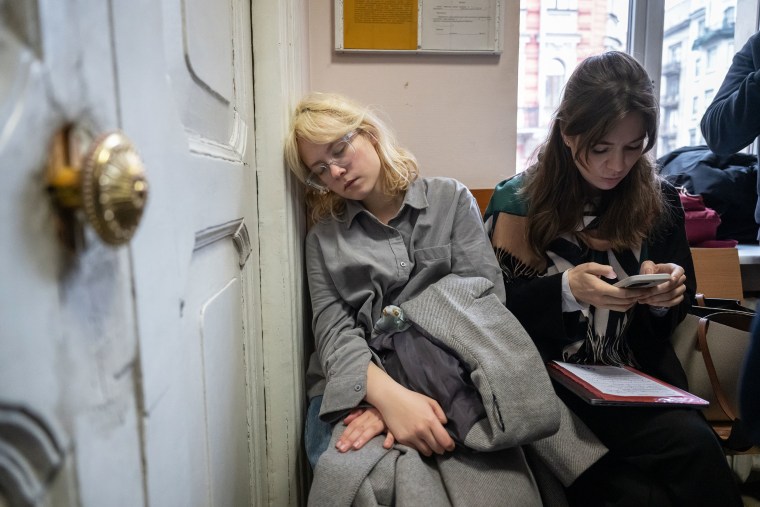
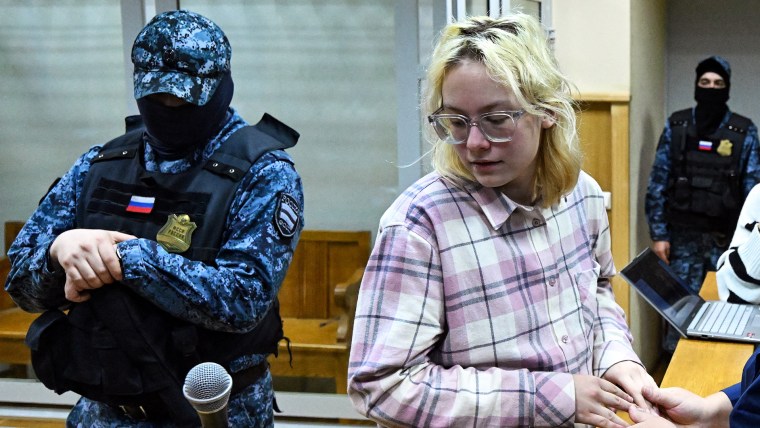
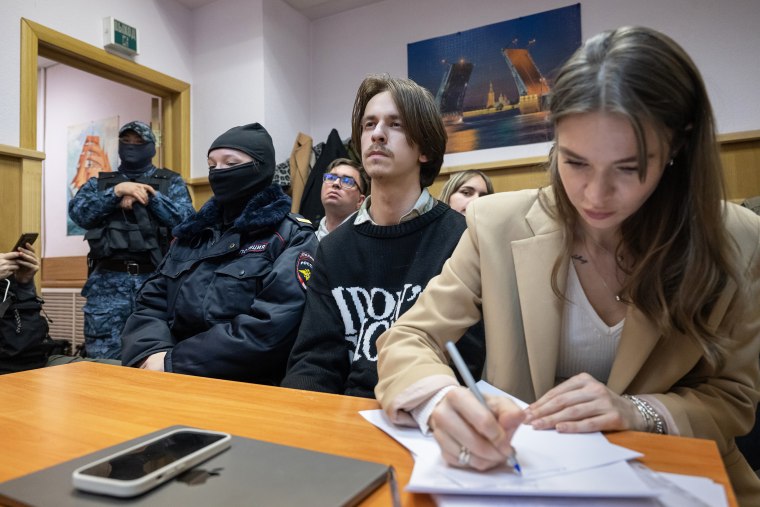
Naoko was first detained last month for organizing a “mass simultaneous gathering of citizens” during a performance, which authorities said disrupted public order, and was sentenced to 13 days behind bars. She has since been rearrested twice on the same charges, as well as for petty hooliganism, and put back in prison. Her fellow band members have also served back-to-back sentences, although one has since been released.
“What is happening is what we call carousel arrests,” Dmitrii Anisimov, a human rights activist and spokesperson for the OVD-Info protest monitoring group, told NBC News. “Theoretically, it can continue forever,” he said. In practice, it could mean months in detention, and there is legal precedent for this, he added.
“It looks like Russian authorities want to use the persecution of Naoko, as with many other public cases, to intimidate others,” said Anisimov.
Loginova’s lawyer, Maria Zyryanova, told NBC News she wouldn’t discuss the case while the singer is behind bars. Her current sentence expires Sunday.
Naoko’s case has been extensively covered by Russian state news agencies and exiled independent media, while supporters have spread leaflets calling for her freedom.
In an interview published in August, months before her imprisonment, Naoko said she was “scared” to be detained but felt she “had to do it.”
“I understand that art is now the only language — at least in Russia — through which you can express your thoughts. I’ve chosen it and don’t want to speak any other,” she told St. Petersburg news outlet Bumaga.
Others have taken up that language in Loginova’s absence.
On a bench near the Kiyevskaya metro station in central Moscow, musician Vasily told NBC News that Naoko’s case had “lit a fire” in him, inspiring his own street performances as a way to support the jailed singer.
“Her freedom was taken away for her singing,” said Vasily, whose last name NBC News chose not to reveal for his safety. “That got me mad.”

Valentina, a professional musician from the city of Yaroslavl, about 380 miles southeast of St. Petersburg, has been singing on both the streets and social media in support of Naoko.
Inspired after seeing Naoko’s performances on TikTok, she has been posting videos where she performs the same songs. One gained more than 600,000 views on Instagram, which scared her because she did not want to get on authorities’ radar, said Valentina, who did not want her last name revealed for fear of repercussions. “When I saw the news about Naoko, it felt like my last hope was taken away,” she said. “I did not feel sorry for myself. I just really wanted to help. I thought, ‘Why do I berate people who keep silent and don’t say anything in our country when I am also remaining silent and scared?’”
Loginova is still a child, noted Vasily — himself only 19. “That’s what’s touched people, that this little girl is not afraid to get on the streets and sing the songs of foreign agents.”
He’s referencing the status of exiled singer Monetochka and rapper Noize MC, both slapped with the official designation often reserved for public figures whose views have set them at odds with the Kremlin.