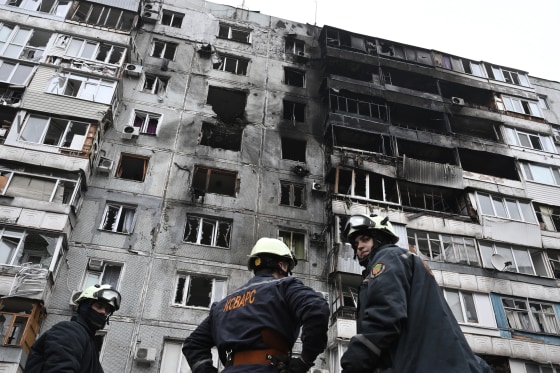
President Donald Trump says that Russia and Ukraine are closer to peace than they have ever been.
Days of intense negotiations ended with the United States, Ukraine and Europe hailing significant progress as Trump pushes for a deal to end the Kremlin's war by Christmas.
Washington and Kyiv appear to have made notable shifts to secure progress but huge questions remain, not least whether Moscow will once again flatly reject the idea of making any significant concessions.
And while the U.S. has now offered Ukraine the robust security guarantees it has long sought, the fate of key territory on the conflict’s eastern front lines remains pivotal, yet unresolved.
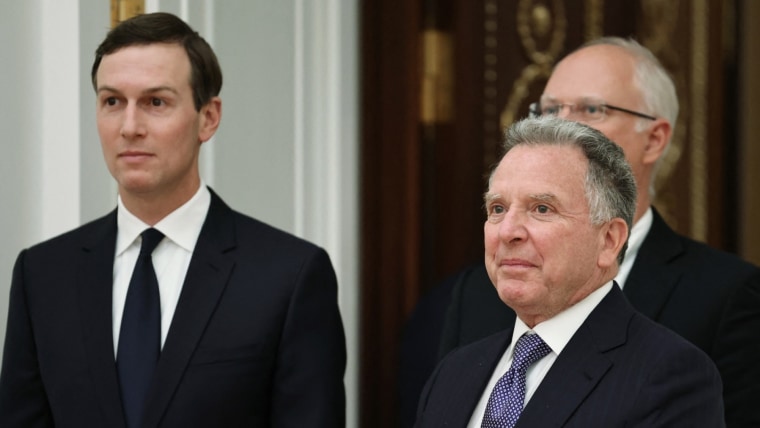
After meetings with Trump’s special envoy Steve Witkoff, son-in-law Jared Kushner and European leaders in Berlin, Ukrainian President Volodymyr Zelenskyy told reporters Monday that Kyiv had now been offered an equivalent of NATO’s Article 5 deterrence mechanism, under which an attack on one member is considered an attack on them all.
This guarantee would be legally binding, he said, voted on and approved by the U.S. Congress.
Zelenskyy said the latest draft was not "perfect" but was "very workable." He abandoned Ukraine's long-held ambition of joining NATO over the weekend, ahead of the talks.
These guarantees are "the biggest win so far for Ukraine and for Europe," a U.S. official told reporters, warning that they “will not be on the table forever.” The official added that they believe Russia will accept it in a final deal.
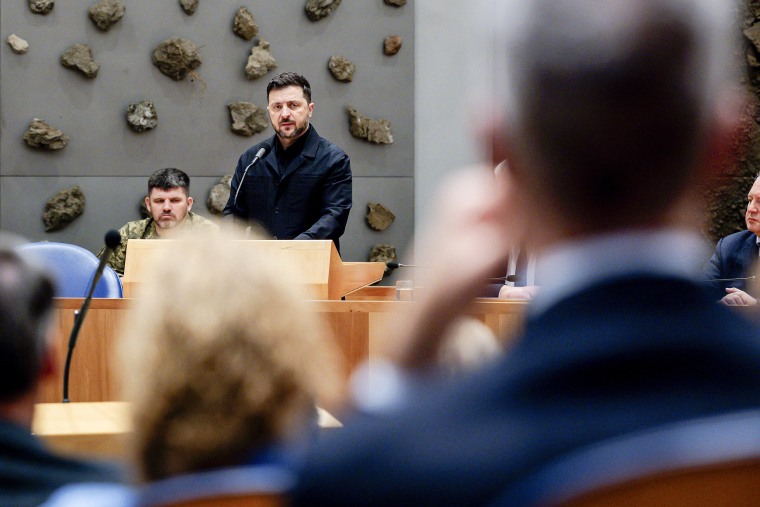
Zelenskyy has maintained that any deal would need to provide concrete security guarantees to prevent future attacks by Russia. It’s a historically sensitive issue for Kyiv since Moscow annexed the Crimean Peninsula in 2014 in violation of the Budapest Memorandum, meant to guarantee Ukraine's post-Soviet sovereignty in exchange for giving up its nuclear weapons.
European leaders suggested their countries could lead a “multinational force” supported by the U.S. that would “assist in the regeneration of Ukraine’s forces, in securing Ukraine’s skies, and in supporting safer seas,” alongside a U.S.-led ceasefire monitoring, verification and deconfliction mechanism.
All of this was discussed on a call with Trump, Zelenskyy said, and the American leader appeared happy with the progress.
“I think we’re closer now than we have been ever,” Trump said Monday.
The White House did not immediately respond to a request for further comment on the status of the talks.
But the Kremlin is unlikely to share in the enthusiasm.
“I think that it’s highly unlikely that Putin will buy into this,” said Christopher Tuck, an expert in conflict and security at King’s College London. “The draft agreement includes clauses that stand in diametric opposition to policy statements made repeatedly by Russia on what it regards as an acceptable basis for resolving the conflict.”
The multinational force is “a clear red line for Putin,” said John Lough, head of foreign policy at the New Eurasian Strategies Centre, a London/Washington-based think tank focused on Russia. The Kremlin will also reject the idea of a U.S.-led ceasefire monitoring and verification mechanism, he said, and will likely ask for restrictions on the kinds of weapons systems available to Kyiv’s forces.
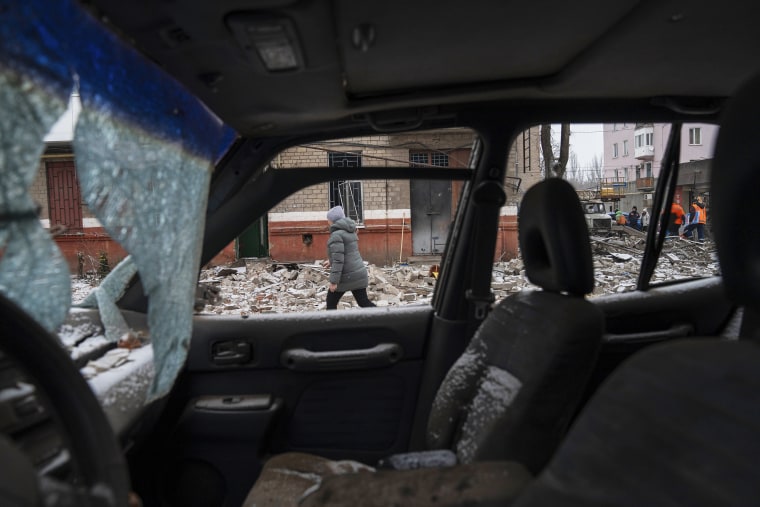
Russian Deputy Foreign Minister Sergei Ryabkov told ABC News on Monday that while he thinks Russia and the U.S. might be “on the verge” of a deal, the agreement can’t include the presence of foreign troops in Ukraine.
“So this is likely to go a few more rounds,” Lough said.


