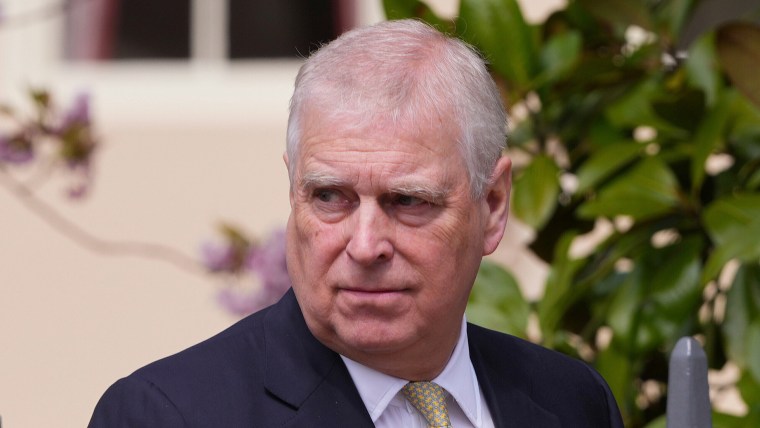
LONDON — King Charles III does not usually sign his name on statements about his brother. Thursday was different.
The king’s response to Andrew Mountbatten-Windsor’s arrest — quick, personal and directly addressing the British public — telegraphed just how serious this crisis is for Britain’s 1,000-year-old royal family.
Charles said there must be a “full, fair and proper” investigation into Mountbatten-Windsor, who has been arrested on suspicion of misconduct in a public office in relation to his friendship with the late convicted sex offender and financier Jeffrey Epstein.
“Let me state clearly: the law must take its course,” Charles said, adding that the investigation would have “our full and wholehearted support and co-operation.” Meanwhile, he added, “my family and I will continue in our duty and service to you all. Charles R.”
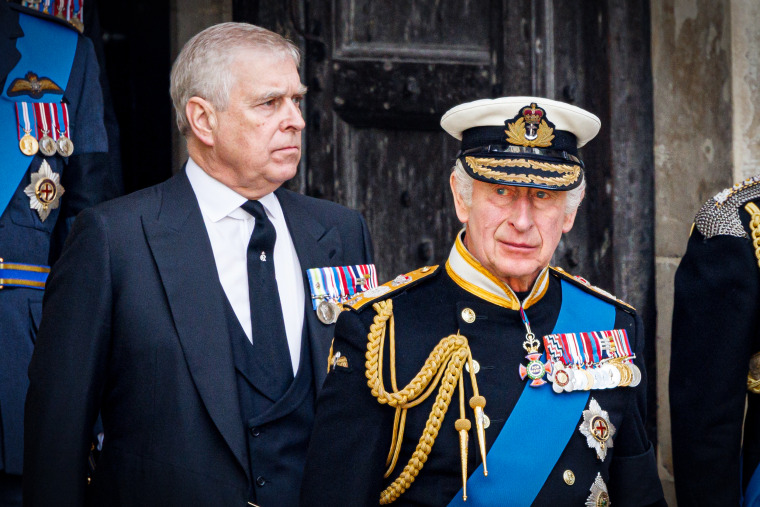
Mountbatten-Windsor has always denied any wrongdoing in connection with Epstein. He has been arrested but not charged with any offense.
Meanwhile, the monarchy's popularity has continued to decline, particularly after the death of the widely beloved Queen Elizabeth II in 2022.
In 1983, 86% of Britons said it was “very important” or “quite important” to continue having a monarchy, according to polling by the nonprofit National Centre for Social Research. Last year, that had dropped to 51%.
“It’s an extraordinary moment, unprecedented in modern times, for the brother of the king to be arrested for a serious criminal offense,” said Craig Prescott, who specializes in the constitutional and political role of the monarchy at Royal Holloway, University of London. “I genuinely cannot think of a parallel close to that.”
Previously, the controversy swirling around Mountbatten-Windsor centered on the accusations of Virginia Roberts Giuffre, who alleged the former prince sexually abused her when she was 17 after she’d been trafficked by Epstein. Mountbatten-Windsor reached a settlement with Giuffre for an undisclosed amount in 2021 but has denied having had sex with her.

His arrest on suspicion of misconduct in public office takes the reputational and constitutional risk for his family to another level. Royal historians have been scouring the records for historical precedent, with many believing the last royal arrest to be of King Charles I, who was beheaded for treason in 1649.
Princess Anne, Charles and Mountbatten-Windsor’s sister, was convicted in 2002 after her dog bit two children in a park. But this was a far less serious offense (misconduct in a public office comes with a maximum sentence of life imprisonment if convicted) and she was never arrested as part of these proceedings.
Ed Owens, a royal author and historian, likened the arrest to a “bomb” that “has gone off at the start of King Charles’ reign and has created a major problem for the new king.”
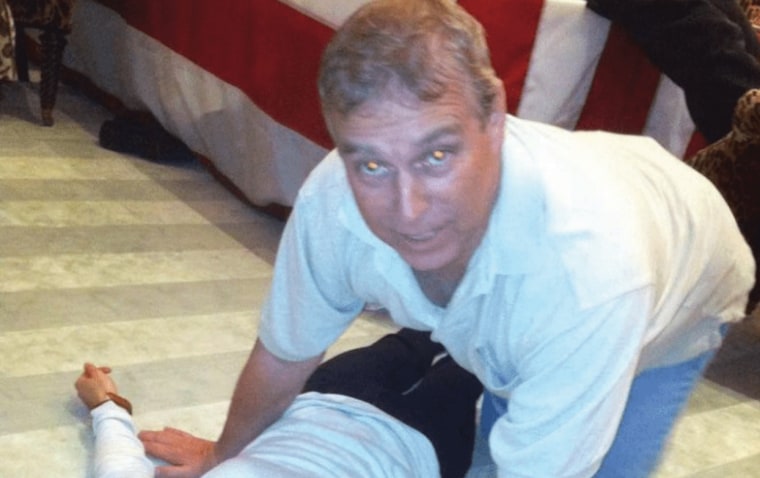
For years, the Firm, as the royal family is sometimes known, has attempted to cauterize the wound created by the Epstein scandal, taking steps to admonish Mountbatten-Windsor as more details about his relationship with Epstein emerged. In 2019, he stepped back from public duties, in 2022 the queen removed many of his patronages and military affiliations, and last year he was stripped of his princely title and ordered to leave his residence.
Despite these attempts “to draw a thick, black line” between the family and the prince, there remains “a very big and open question that might come out in the investigation,” Prescott said.

