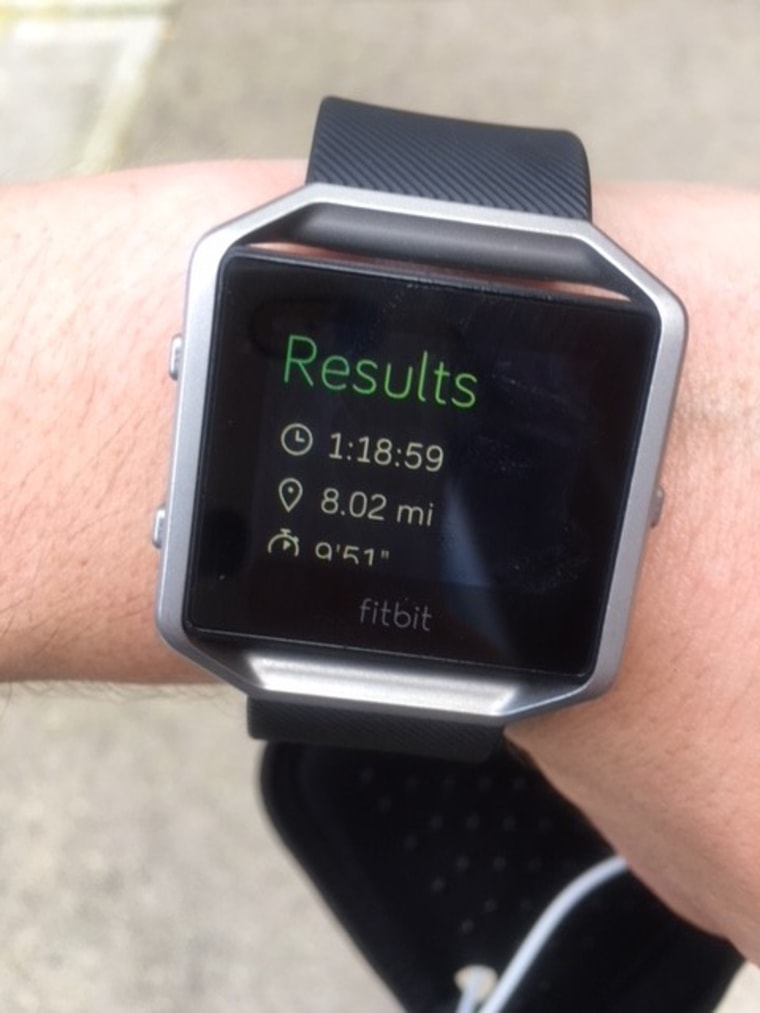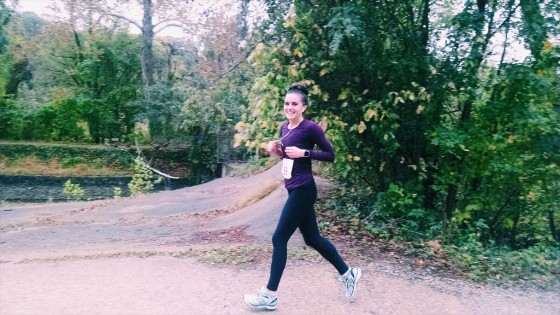
Have you ever scrolled through Instagram on a lazy Sunday morning to find a friend’s post holding a marathon medal (before you've even gotten out of bed) and wondered, could I do that?
You’re not alone.
Each year after the New Year’s festivities conclude, I always make a list of goals. Like many, I don’t always see them through to the next ball drop. There was one goal that always made my list (and inevitably remained there, unfulfilled when the ball dropped yet again the next year): Run a half marathon.
I am an active person, I love to take workout classes (spinning, weight training) and running has always been part of my routine, albeit in low mileage intervals. But the thought of running 13.1 was daunting. Yet, the thought kept creeping up: If all those other people could do it, couldn't I?
This isn’t the first time that I set out to tackle this goal. A few years ago, I started training for a half marathon with a college friend — but I did it all wrong. She was a very experienced runner, and I pushed myself to train at her level. We were running long, fast miles every week on the pavement. I began having terrible shin splints, and later learned that I had a stress fracture. I had ignored the pain for weeks and wound up on crutches. Suffice it to say, I never made it to the finish line.
So I knew that if I was actually going to be successful this time around, I needed to do it the right way.
The prospect of running long miles in the east coast winter was a bit overwhelming (props to all you snow bunnies!) so I waited for the days to get longer and then I started to run a bit more than usual in the spring. I turned my regular three-mile run to four, and upped my mileage by a tiny bit more each week. I wanted to test myself — would a half even be possible for me?

As the winter melted away, I realized it was time to jump in with both feet. On a Saturday in late spring, I pushed myself seven miles and felt great. It felt like such an accomplishment and I liked being outdoors with all that solo time to reflect on the week. Right around the same time, a close family member mentioned she had signed up for her first half marathon. We had talked about doing a race together for years, so what was holding me back? In June, we signed up for a fall race, giving me a few months to train. I have to admit it was a bit unnerving looking at the training I had ahead of me, but I was ready to commit.
By the time the thick August humidity was in full swing, I was comfortably running between 15-20 miles per week (comfortable, but sweaty!). I always logged my long-run miles on Saturdays, and sweated it out for more than 16 weeks of training. Finally, I shakily stepped up to the starting line and trekked those 13.1 miles. Albeit a great experience, I was glad I had researched along the way. As I was training, I tracked down articles online and frequently asked friends and co-workers that had raced for training tips, plus learned some lessons on my own (the hard way). Here are some of the tips and tricks I figured out along the way that may make the training process a little easier (and less daunting!) for other marathon newbies:
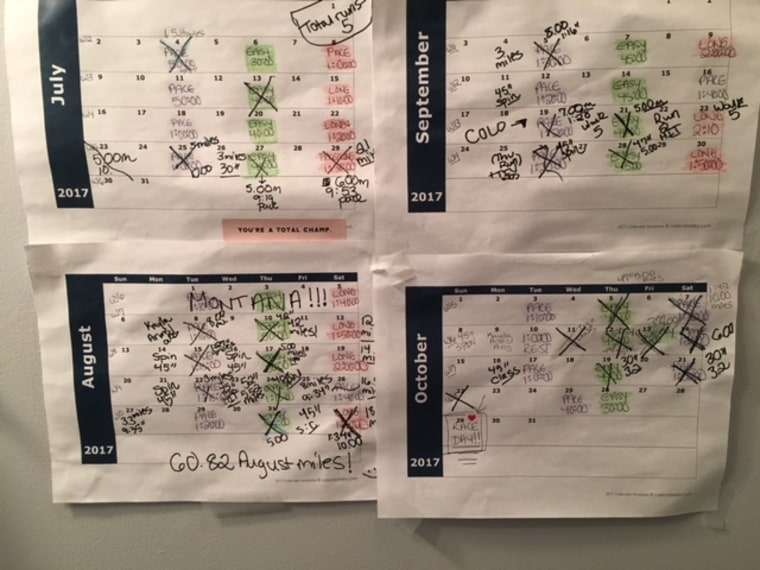
Make a plan — and make it visual
After signing up for the race, I downloaded a free running application on my iPhone. I was about four months away from race day. The app allowed me to enter my race date, number of days each week I prefer to run and experience level. So I had a training plan, but I knew that wouldn’t be enough to keep me motivated. I could easily ignore the app sitting on my iPhone’s home screen. So I printed a physical calendar and marked out my runs for each week. I color coded them according to targeted pace and time. Every time I completed a run, it felt great to put a great big X over it. I also kept track of my cross training this way (spin classes, weight sessions) so I could determine what was working with my half marathon training, and what wasn’t.
Enlist a friend
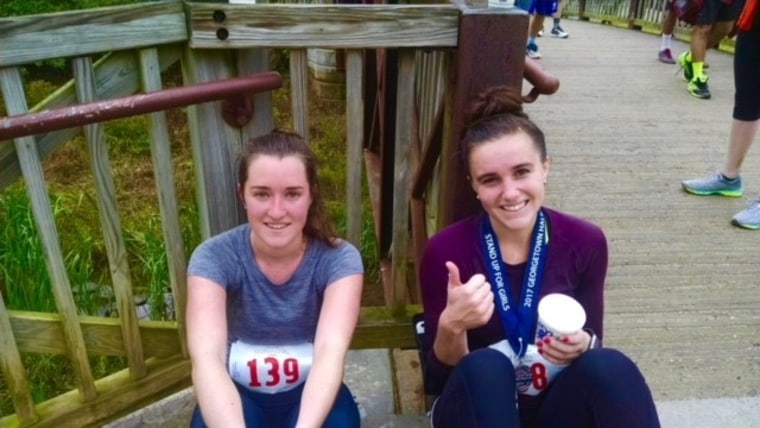
My cousin and I had talked about signing up for a race for years. We always run together on family vacations, and decided we’d have a better chance at success if we took the plunge together. We were at similar training levels when we started (completing five miles was a big challenge for us at first!) and knew we could support one another throughout the process. It made all the difference to have a companion in training. Although she lives in Maryland and I am in New York, I would always text her before and after long runs, which held me accountable, and we spoke in the weeks leading up to the race about our preparation.
Build up your mileage slowly. I repeat: SLOWLY
When I began training for that half marathon a few years ago, I did the complete opposite. Training with a friend who was way more experienced of a runner than I was caused me to push myself too hard. So when I signed up this time around, I was determined to stay healthy during my training. I know firsthand how important it is not to build up mileage too quickly, so I slowly increased my distance in June and July. After every run, I stretched and iced my legs even if they weren’t hurting. While I still had days of muscle fatigue, I was injury-free from my first day of training to the finish line of my race. Moral of the story: Give yourself enough time to train properly so that you can gradually increase your distance.
You WILL skip a run. Don’t let it throw you off track
There were many days when I was working late or simply felt too exhausted to complete my runs. Especially in those early days of training, I had a few moments where I asked myself, “Why am I doing this again?” While it can feel like a lot to have training hanging over your head, it’s also a great motivator to stay committed to working towards your larger goal. But it’s important to acknowledge from the onset that despite your best efforts to stick to the training schedule, there will be times where you inevitably miss a run. Most importantly, know that it’s okay. Don’t let one missed run completely derail your plans or convince you to throw in the towel all together.
Use social media to your advantage
Related

Let’s be honest, we can all get caught up scrolling through Instagram, Facebook and Snapchat for longer than we’d like to admit. But they also can be great sources of motivation, especially when your goals are fitness related. When I started training for my race, I followed a few Olympic runners (it’s a stretch, but it helped!) and fitness accounts. While it may seem silly, it was helpful to know there was a community of men and women out there training along with me. Some days, checking in and seeing another athlete hitting the pavement was all the motivation I needed to get out there and train.
Pick the right race for you
Some half marathons are filled to the brim with thousands of participants, others are much smaller, held in a tiny city or sponsored by a small, local organization. Since I knew I’d be a nervous wreck on the day of my race, both my cousin and I decided we’d rather do a newer, smaller race (we decided to keep the New York City Marathon on the #goals list for now). Our race was fairly low key, but had enough energy and participants to make it feel like a big deal. We also opted for a race in the fall when we knew the heat would die down. On race day, I was very grateful for that decision!