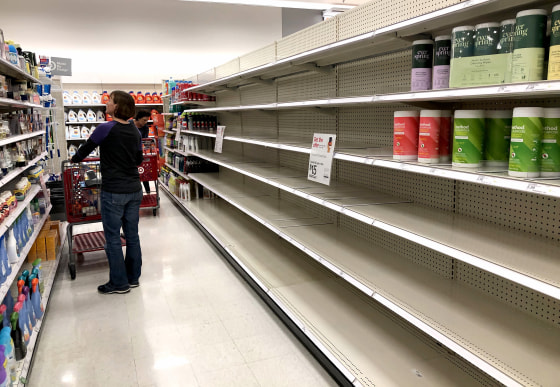
If the mobs crowding local grocery stores this weekend for everything from cleaning wipes and hand sanitizer to pasta, rice and bottled water are any indication, a lot of us are in the throes of coronavirus panic.
“Panic-buying happens when people worry about the scarcity of supplies,” says Steven Taylor, professor and clinical psychologist at the University of British Columbia, who specializes in the psychology of pandemics. “Some people rush to supermarkets and so forth in the hope of getting ahead of the crowd. But in reality, those people are simple panic-buyers who happen to arrive early.”
The problem with panic-buying is that it breeds more panic-buying. “If you see other people stocking their shopping carts in an anxious frenzy, then that can increase the fear or anxiety in other shoppers, leading people to worry about the scarcity of food, medicines or hygienic supplies,” says Taylor. “The combination of fear, urgency and perceived scarcity can lead to things like people fighting over hand sanitizer in the supermarket aisles. This creates a sense of urgency and leads people to over-buy, that is buying more supplies than they really need, just to be on the safe side. This can create real shortages because people buy more than they need. So, the fear of scarcity can create real scarcities.”
Related

Stocking up can be a coping mechanism
Paul Slovic, professor of psychology and president of Decision Research at the University of Oregon, says stocking up on pantry items and other essentials is a way of coping with the uncertainty of COVID-19 and all it will bring. “Control is a very important psychological factor in keeping us calm, if we feel like we can somehow protect ourselves in various ways,” Slovic says. “Buying hand sanitizer is something, we're told, that can help us protect ourselves. Washing our hands and using sanitizer is one of the few things that we're being told that we can do to give us a sense of control over our risk, so it's not surprising then that people are going big time to do this. They don't have many other options.”
Full coverage of the coronavirus outbreak
Panic-buying can ease anxiety, but the effects are typically short-lived, says Taylor. “People who tend to be panic-buyers are likely to worry about other things, like getting infected while traveling the subway or bus,” he says.


