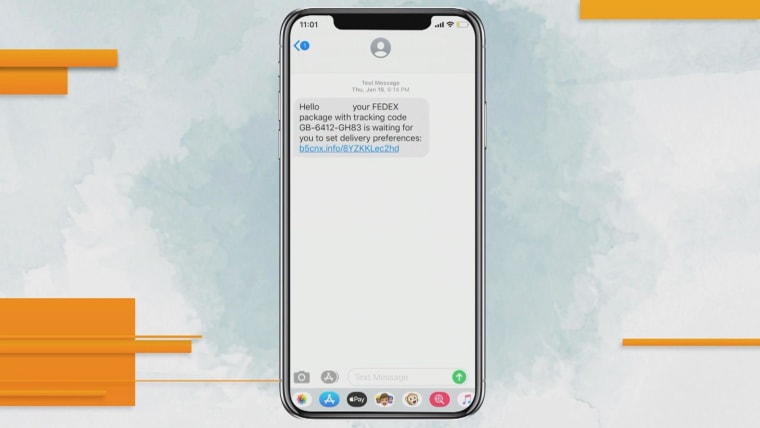
Con artists are professional liars. That’s how they steal your money and personal information.
Imposter scammers lie about who they are — they pretend to be someone you know and are likely to trust. They masquerade as a friend or family member, or someone associated with a well-known business or government agency.
The Federal Trade Commission received 647,000 complaints about imposter scams in 2019 — a 23 percent increase — making imposter scams the No. 1 type of fraud reported to the FTC Consumer Sentinel Network last year. The median loss was $700. Total losses topped $667 million.
“The imposter technique works because [the criminals] are trading on your trust,” said Monica Vaca, an associate director at the FTC. “A lot of people trust the government. They trust a well-known business. They don't expect to be scammed.”
Imposter fraud covers a number of different scams, including:
- Government imposter scams: These fraudsters pretend to be with a government agency such as Social Security, Medicare or the IRS.
- Family emergency scam: The caller claims to be a grandchild or other relative who’s been arrested in a foreign country and needs bail money right away.
- Tech support scam: They claim to be with Microsoft or Apple and have spotted a problem with your computer that needs to be fixed.
- Romance scams: You’ve fallen in love with someone you met online. And even though you’ve never met in person, they need you to send them money right away.
Related

Nearly half (47 percent) of all Americans have been targeted by an imposter scam, according to a recent survey of more than 2,200 adults by AARP. Forty percent said they were contacted by a scammer who pretended to be with the government.
“Government imposter scams use fear to motivate a response,” said Doug Shadel, a state director in Washington with the AARP Fraud Watch Network. “They're not only pretending to be with a government agency, but they’re coming to get you. There's something wrong with your Social Security number or we’re the IRS and you owe back taxes. Fear is an increasingly common tactic because it gets people to act without thinking about it.”
The telephone is still the preferred method for imposters to reach their victims. Eight in ten (79 percent) of the adults surveyed by AARP said they were first targeted and/or victimized by an imposter scam via telephone.
Related

GOVERNMENT IMPOSTER SCAMS HIT RECORD LEVEL
Complaints to the FTC about government imposter scams have increased dramatically during the past year, making it the most common type of imposter fraud.
While some scammers still pretend to be with the IRS, most have switched to something new — pretending to be with the Social Security Administration.
Since everyone has a Social Security number, the opportunity to steal sensitive personal information and money is enormous.
Social Security imposters have two basic come-ons when they call:
- Your account was suspended and the benefits stopped.
- Your Social Security number has been linked to a crime.
“Get a call that says your Social Security number has been associated with criminal activity and that’s very scary, and sometimes people act on that fear,” Vaca told NBC News BETTER.
Related

A VICTIM’S STORY
That’s what happened to Jim, a 77-year old retired school teacher in northeast Wisconsin. The caller claimed to be with the police department in El Paso, Texas.
He told Jim (who asked us not to use his last name) they found an abandoned car containing $233,000 worth of drugs and Jim’s Social Security number was somehow connected to it.
To save the money in his Social Security account and avoid being arrested and extradited to Texas, Jim was told to go to the store and buy gift cards. He was cautioned not to tell anyone about this, not even his wife.
At one point, a co-conspirator pretending to be an FBI agent got on the line. Jim googled the agent’s name and sure enough, he found it.
“It just seemed so real; the whole situation seemed so very real to me,” Jim told NBC News BETTER.
Jim went to two stores and bought Sephora, eBay and Google Play gift cards valued at $6,600. The crooks stayed on the phone with him the entire time.
Jim suspected something wasn’t right. He remembers sweating as he got ready to read the account numbers on the gift cards. But in the end, his fear got him to do as he was told.
“They had me scared to death,” Jim said. “They said I would spend at least 10 days incarcerated in El Paso, if I didn’t cooperate. I was really scared.”
From start to finish, the scammers had Jim on the phone for six straight hours.