
I grew up with a Hispanic mother who didn't teach me the Spanish she grew up speaking. It would appear that her choice not to pass down the language was part of a greater trend. New research shows that second-generation Hispanic immigrants are much less likely to teach their kids the Spanish they were taught than fist-generation immigrants. Surely the decline is at least partly a result of cultural assimilation, but it draws attention to an important matter: the value of knowing a second language. Bilingualism isn’t just beneficial in enabling us to connect with foreigners, it’s great for your brain; one study found that bilingualism helps staves off cognitive decline as we age.
Now, in my thirties, I am determined to learn Spanish. The passion stems in part from the fact that I want to understand this language that has floated untouchably above me all my life. How can monolingual adults such as myself learn a second language (on their own time, from their own home and ideally with little to no money spent)? I consulted experts to find out.
Yes, learning a language when a child is easier, but there’s no cutoff point
Dr. Richard Shuster, a clinical psychologist and the host of "The Daily Helping Podcast" notes that children (up to about the age of 10) have a natural ability to pick up multiple languages, in part because of their brain’s neuroplasticity. Essentially, children are wired to learn and form new neural pathways and unlike adults, children’s brains haven’t formed a cerebral preference over their learning style (whether they learn better by sight or by sound).
“Learning a language as a child takes place without thinking about it really because children have the ability to learn almost equally whether [receiving] information by sound or by sight.” says Dr. Shuster. “Adults can't do that. Some of us learn better visually while others may do better with hearing, but kids typically to both equally well, which is a big advantage. Some research has found that until the age of five, kids can process up to five languages.”
But despite the young child’s advantage in becoming bi- or multilingual, adults shouldn’t misunderstand this to mean they’ve passed some learning cutoff point.
“It was once thought that by a certain age our brains stopped developing, but that’s not at all true,” says Dr. Shuster. “It's just that neuroplasticity doesn’t happen as easily when we’re adults so learning a second language is much more time-intensive.”
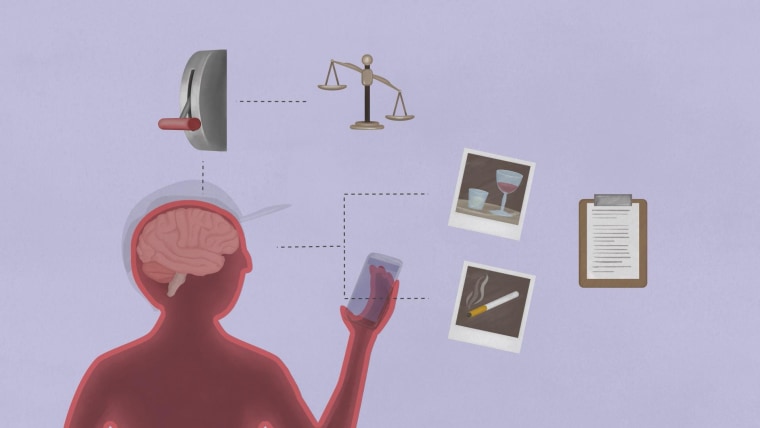
Know your learning style. Are you audio or visual?
First, it’s important to establish whether you’re a visual or auditory learner.
“If you don’t already know, there are lots of places you can go online and take a test, or even ask a psychologist,” says Dr. Shuster. “Knowing how you learn and process information will help you stack the deck in your favor.”
Another quick way to find out your learning style, Shuster mentions, is to assemble a piece of furniture that comes with the manual. Do the written instructions (audio) aide you most, or are the images of the pieces coming together more helpful?
Choose a language with a culture (or a food) that interests you
If you don’t have a specific reason for learning a language, pick one with a culture that interests you.
“When the language you want to learn is also tied into culture, you can get deeper access,” Philip Dunne, SVP, global consumer at Rosetta Stone tells NBC News BETTER. “So, if you’re learning Korean, go to the Korean food trucks, Korean restaurants and any local Korean markets. Learners tell us that this is really beneficial because it lets you immerse as well as practice.”

