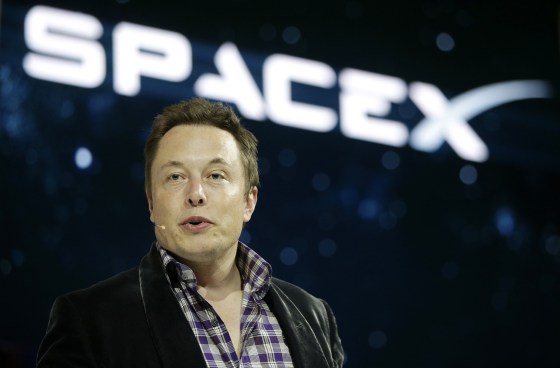
Elon Musk’s move last week to combine SpaceX and xAI has created one of the world’s biggest and most valuable private companies, which analysts say offers a mix of potential growth and financial risk as it heads toward public markets.
The two companies are very different. SpaceX was founded in 2002 and has established itself as the premier nongovernmental space exploration operation. Musk’s xAI venture was started less than three years ago to focus on AI and more recently social media. In another Musk company combo, xAI acquired the social media platform X last March.
Analysts told NBC News that both entities have something to gain from coming together: SpaceX gets an edge ahead of its IPO, and xAI can expand its AI infrastructure while getting a much needed “injection of cash,” as one expert put it.
In his Monday announcement, Musk said the merger will create a company with “AI, rockets, space-based internet, direct-to-mobile device communications and the world’s foremost real-time information and free speech platform.”
Musk added that he wants to create AI data centers in space by “launching a constellation of a million satellites that operate as orbital data centers.”
And Musk is pushing forward on this concept.
Days prior to the merger announcement, SpaceX described the satellite plan to regulators, according to a filing submitted to the Federal Communications Commission and reviewed by NBC News.
“There’s industrial logic behind combining SpaceX, which would launch and design the satellites that would host the compute with xAI, which has experience operating these compute clusters and has the Grok model that would presumably run on it,” said Nick Del Deo, a senior research analyst with a focus on digital infrastructure at MoffettNathanson.
The concept of data centers in space is “conceivable,” Del Deo said in a phone interview, but he predicted it would take “many years before anything substantive happens.”
“A lot of things need to go right for it to work, let alone for it to work at a scale that is relevant compared to terrestrial alternatives,” he said.
Not surprisingly, Musk envisions a shorter timeline. In the announcement, he estimated that in just two to three years, the “lowest cost way to generate AI compute will be in space.” (Musk has been known to set — and miss — ambitions timelines.)
Andrew Rocco, a stock strategist at Zacks Investment Research, told NBC News that he thinks the acquisition makes sense.
“There’s going to be a ton of synergies that it’s going to be a lot smoother for both of these companies,” he said in a phone interview.
“SpaceX, with its massive payload capacity and basically a near monopoly in space — I think it’s going to help Musk’s other companies kind of catch up in the AI data center race and AI training race,” said Rocco.
Beyond the futuristic visions of space-based data centers, there are near-term financial considerations at play, too.
As SpaceX prepares to go public later this year, the merger could be Musk’s way of positioning SpaceX “strategically” to compete with the expected IPOs of two of his biggest competitors, OpenAI and Anthropic, in the AI race, said Ali Javaheri, a senior research analyst at PitchBook.
Del Deo said one “cynical view” of the merger is that SpaceX needs a “sexy narrative” ahead of its IPO “to get investors more excited in the stock and drive the sort of valuation that they’re hoping for.”
Bloomberg reported that the merger would value the combined companies at $1.25 trillion, with the bulk of the valuation — $1 trillion — coming from SpaceX. However, xAI’s value still pumps up SpaceX’s total valuation ahead of it going public.
