
U.S. stocks slid Thursday and the price of oil continued to climb amid ongoing conflict in the Middle East.
After a relatively calm trading session on Wednesday, the price of U.S. crude oil shot higher by more than 8% on Thursday, briefly rising as high as $82 per barrel. Since Sunday, the price of U.S. crude oil has risen 20% to its highest level since July 2024.
The international oil benchmark also rose 4%.
Stocks resumed a sell-off that started earlier in the week. At the closing bell, the S&P 500 was down 0.6% and the Nasdaq composite was lower by 0.3%. The Dow Jones Industrial Average fell more than 1,000 points at one point in the late afternoon but closed lower by 785 points, or 1.6%.
Energy stocks were the best performing S&P 500 sector, while the consumer staples, materials and industrials sectors were the biggest losers.
Retail gas prices also continue rising. The nationwide average price per gallon is now $3.25, up more than 30 cents from Sunday, according to data from price-tracking service GasBuddy.
Those rising prices, sparking fears of renewed inflation, have also driven up Treasury yields. As of late afternoon, the 10-year U.S. government bond yield was above 4.1% and the 30-year yield was above 4.75%. In turn, the average 30-year mortgage rate hit 6.13% earlier Thursday, as the sweeping impact of the Iran war sinks in.
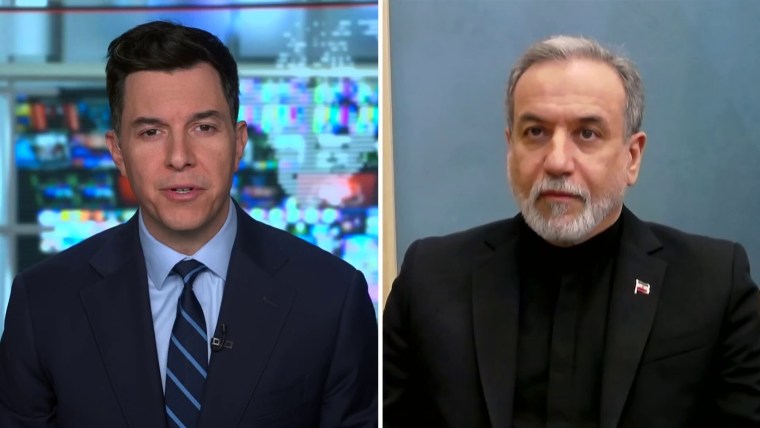
Less than a week since it began, there are few signs that the war the U.S. launched on Iran is slowing. Iranian Foreign Minister Abbas Araghchi told NBC News on Thursday that he is confident Iran could confront the U.S. if it tries to invade.
Some efforts are being made to mitigate economic fallout from the U.S. war on Iran.
On Tuesday, President Donald Trump said he was ordering the U.S. International Development Finance Corp. to offer “political risk insurance and guarantees for the Financial Security of ALL Maritime Trade, especially Energy, traveling through the Gulf.”
Insurance brokers say they are engaging with the administration to try to restart ship traffic off Iran’s coastline, but hundreds of ships remain stuck.
The Strait of Hormuz, off Iran’s southern coast, is a key passage for about 20% of the world’s daily oil supply. Since the U.S. and Israel first struck Iran on Saturday, almost no traffic has passed through the waterway, leading to concerns that it could lead to a global oil supply problem.
Araghchi said that Iran has "no intention" at the moment to close the strait, but added that "as the war continues ... we will consider every scenario." He said that international oil tankers were not a target, either.
Beyond oil, Qatar — which is the world’s No. 2 exporter of liquified natural gas to the world — has halted production due to the effective closure of the Strait of Hormuz and “due to military attacks on QatarEnergy’s operating facilities.”
U.S. natural gas prices have risen about 4% since Sunday as a result, but in Europe natural gas prices have soared more than 50%.