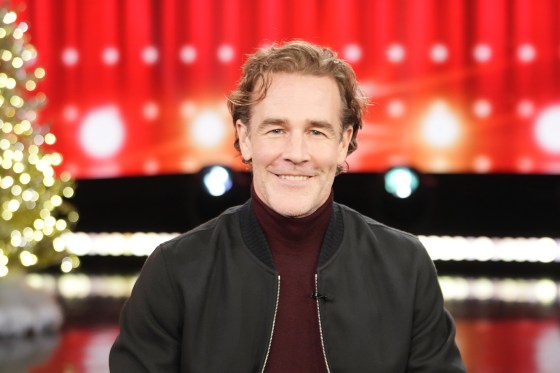
The recent death of the 48-year-old actor James Van Der Beek is again highlighting how colorectal cancer is increasingly killing younger people.
Overall, cancer death rates in people younger than 50 have dropped by 44% since 1990. But after increasing for decades, colorectal cancer is now the leading cause of cancer death in people under 50. Colorectal cancer starts either in the colon or rectum.
“We anticipate that this is going to be a continued trend,” said Van Karlyle Morris, section chief for colorectal cancer at MD Anderson Center in Houston.
Federal cancer screening guidelines and the American Cancer Society recommend that people who have an average risk for colorectal cancer should begin screening at age 45 with a colonoscopy every 10 years, or a stool test every one to three years. Insurance companies use the guidelines to determine whether the screening is covered.
Most colon cancer cases still occur in people over 50. But rates among people in their 20s, 30s or 40s have been climbing dramatically in the last few decades.
Why does screening start at 45?
Colon cancer tends to be a slow growing disease which usually begins with growths, called adenomas or polyps, that can later turn into cancer.
“The fact that trends do not suggest colorectal cancer rates in young people are dropping certainly does open the door for conversations around policy change dropping the screening age again,” said Morris.
The U.S. Preventive Services Task Force, which sets federal guidelines for cancer screening, dropped the recommended age for colorectal cancer screening from 50 to 45 in 2021. Based on a growing body of evidence, the American Cancer Society had been recommending all adults to begin screening at 45 since 2018.
At the time, “there was a lot of pushback from the medical community, they thought it was too young,” said Rebecca Siegel, senior scientific director of surveillance research at the American Cancer Society. “Even today, not everyone is convinced.”
Developing cancer screening guidelines is an incredibly complex task, said Siegel. Experts comb through research, and weigh the benefits of screening against any risks, even one as seemingly small as missing a day of work. They consider granular details such as increasing risk and overall risk — two numbers that are often very different.
The risk of colorectal cancer for someone aged 40-44 is about 21 per 100,000 people. That risk more than doubles between ages 45 and 49 — to 47 per 100,000 people — after routine screening is recommended, Siegel said.
Overall, 10% of colorectal cases are in people younger than 50, according to the Mayo Clinic.
“Although colorectal cancer rates are rising among younger people, the overall incidents are still low,” said Dr. Andrew Chan, a gastroenterologist and chief of the clinical and translational epidemiology unit at Mass General Brigham in Boston.
Aside from risk, one of the factors that goes into cancer screening guidelines is how to best use resources.
“There are also only a certain number of gastroenterologists,” Siegel said, meaning the resources available to perform routine screenings are limited.
Even under the current guidelines, “it can take months to get in for a colonoscopy,” Morris said.
As is, screening is already low among younger people who have an average risk. Only about 20% of people aged 44–49, who are universally eligible for colorectal cancer screening, are up to date, according to the American Cancer Society.
“Uptake is certainly lower in younger populations and I would expect for people who are even younger than 45, the uptake would be even lower,” Chan said.
Should I get screened earlier?
People who have a family or personal history of colorectal cancer or polyps should start screening earlier than age 45, Siegel said.
