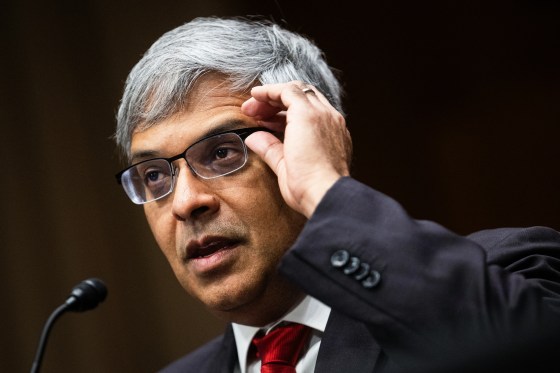
Dr. Jay Bhattacharya, who directs the National Institute of Health, is taking over as acting director of the Centers for Disease Control and Prevention, he confirmed to NBC News.
Bhattacharya replaces Jim O’Neill, who served simultaneously as acting CDC director and deputy secretary of the Health and Human Services Department. The New York Times was first to report the news.
The transition is the latest in a monthslong series of leadership shake-ups across federal health agencies.
Former CDC Director Susan Monarez was fired in August after 29 days on the job. She said in testimony before the Senate Committee on Health, Education, Labor and Pensions that Health Secretary Robert F. Kennedy Jr. removed her because she refused to blindly approve vaccine guidance changes. Kennedy has disputed her account. Several top CDC officials resigned in protest after Monarez’s ousting.
At NIH, a combination of terminations, resignations and retirements has left more than half of the agency’s 27 institutes and centers without permanent directors. Dr. Jeanne Marrazzo, who in 2023 succeeded Dr. Anthony Fauci as director of the National Institute of Allergy and Infectious Diseases, said Kennedy fired her in September because of her defense of vaccines and for speaking out against the cancellation of NIH research.
A spokesperson for the Department of Health and Human Services did not immediately respond to a request for comment.
Bhattacharya, a former Stanford Medicine professor, gained notoriety during the Covid pandemic for his opposition to lockdowns. He has led the NIH since April.
As director of the world’s largest public funder of biomedical research, Bhattacharya has prioritized research on some of Kennedy's areas of interest, including chronic disease and nutrition. He has also encouraged scientists to pursue “high-risk, high-reward ideas” and called for more replication of studies to validate their results.
O’Neill was named acting CDC director after Monarez was fired. During his time in the role, O'Neill signed off on several controversial guidance changes, including a major overhaul of the childhood vaccine schedule last month that reduced the number of vaccines universally recommended for all children.
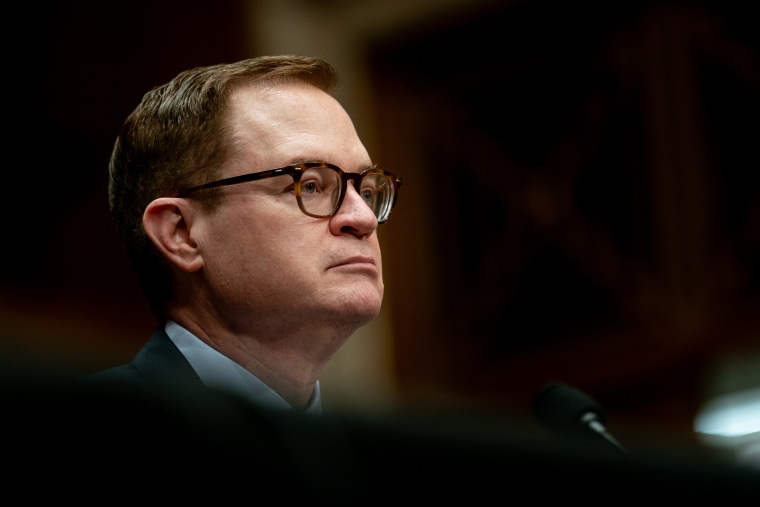
In December, O'Neill approved a recommendation from the CDC’s vaccine advisory panel — a group Kennedy appointed, many of whom have expressed skepticism of vaccines — to reverse decadeslong guidance that newborns get the first dose of the hepatitis B vaccine within 24 hours of birth. Instead, the CDC now says women who test negative for hepatitis B can consult a health care provider about whether their newborns should get the vaccine.
O'Neill also approved the panel’s guidance in September that people decide with their doctor about whether to get a Covid vaccine; the CDC had previously recommended the shots for everyone ages 6 months and up.
Around the same time, O'Neill called on vaccine manufacturers to develop separate shots for measles, mumps and rubella instead of the current vaccine, which targets all three. The request came after President Donald Trump suggested without evidence that “there could be a problem” with the combination shot. Measles, mumps and rubella vaccines have been combined since 1971, in part to reduce the number of injections that children receive.