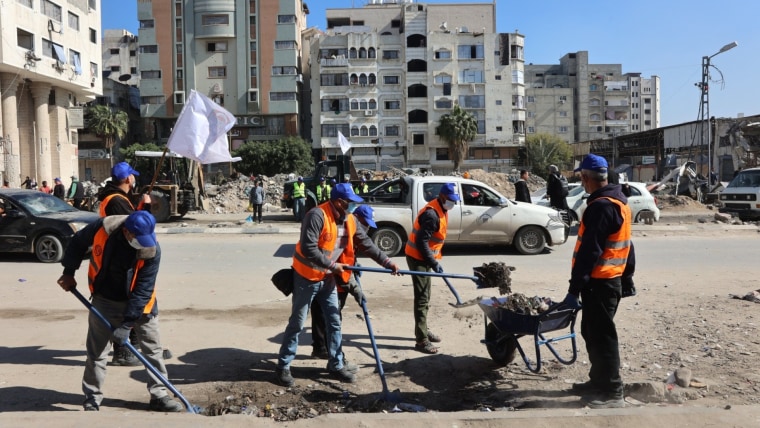
The six-week ceasefire in Gaza expired Saturday, with Hamas accusing Israel of “evading the commitment to end the war and withdraw completely from Gaza.”
“There are no negotiations” regarding the second phase, Hamas spokesperson Hazem Qassem told Al-Araby TV on Saturday, adding that Israel’s proposal to extend the first phase “is unacceptable to us."
Later on Saturday evening, the office of Prime Minister Benjamin Netanyahu said Israel will adopt a plan by U.S. special envoy to the Middle East Steve Witkoff that would extend the temporary ceasefire through Ramadan and Passover, which conclude at the end of March and on April 20, respectively.
Under the proposal, half of the remaining hostages, including bodies of those who have died, would be released on day one of its execution, with the rest released upon successful negotiation of a permanent ceasefire, according to Netanyahu's office. Israel’s move to adopt the plan was made during an overnight security meeting, it said.
If a more permanent deal is out of reach on the 42nd day of peace negotiations, Israel can return to fighting, Netanyahu’s office said. That provision, it said, is supported by the Trump administration.
The White House did not immediately reply to a request for comment.
Hamas has yet to accept the proposal and did not immediately respond to a request for comment on the statement from Netanyahu’s office. Separately, Israel has not confirmed the latest developments in its negotiations with Hamas and also did not respond to a request for comment.
Israel said it would immediately begin negotiating on the details of the plan if Hamas changes its stance.
Talks on the second phase were set to begin weeks ago. In January, during the initial announcement of the agreement, then-President Joe Biden said the ceasefire would continue even after six weeks “as long as the negotiations continue.”
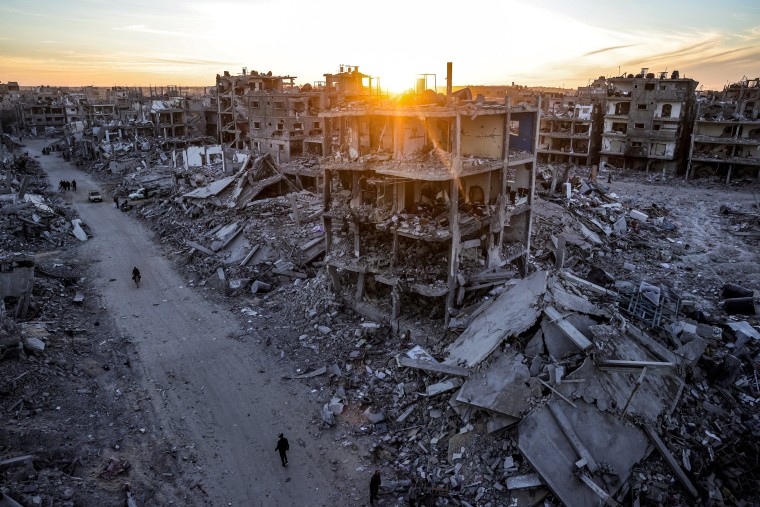
The second phase of the ceasefire would have seen the release of additional hostages and prisoners, mark the withdrawal of Israeli forces from Gaza, and ultimately lead to a permanent end to the war.
Hamas has retained 27 hostages who are still alive and more than 30 who are believed to be dead, according to an NBC News tally.
The U.S., Egypt and Qatar — the three countries that helped mediate the deal — continue to act as guarantors of the agreement.
Amid concerns around the truce, the Pentagon said Friday that the U.S. State Department had approved the potential sale of nearly $3 billion worth of bombs and other weaponry to Israel on an emergency basis. The sale marked the second time the Trump administration declared an emergency to approve weapons sales to Israel since last month.
The fragile ceasefire agreement, which came into effect on Jan. 19, halted months of fighting and allowed the exchange of 33 Israeli and five Thai hostages for nearly 2,000 Palestinian prisoners and detainees.
Under the agreement, Israeli forces were due to withdraw from the Philadelphi Corridor on Saturday, a provision that has remained a major sticking point in the ceasefire negotiations.
Israel earlier said it would not allow Hamas to take over the corridor.
“We will not withdraw from the Philadelphi Corridor. We will not allow Hamas murderers to roam our borders again with trucks and rifles, and we will not let them rearm through smuggling,” an Israeli official told NBC News on Thursday, referring to the weapons and other materials that entered Gaza over the Egyptian border.
The narrow strip of land that runs along Gaza’s border with Egypt and includes the key Rafah border crossing has also been a lifeline for Palestinians in Gaza — allowing the entry of goods and humanitarian aid in the years before the war.
