IE 11 is not supported. For an optimal experience visit our site on another browser.
911 calls capture kids burning with fever, struggling to breathe at ICE detention center
EMS crews were called to the Dilley Immigration Processing Center in Texas at least 11 times since September for children in medical distress, records show.
The voices on the emergency calls sound calm. Matter-of-fact. Routine.
“Frio County 911. What is your emergency?”
“I’m calling from the Dilley immigration center in Dilley, Texas. I’m calling for a little kid going through respiratory distress.”
The callers — medical staff inside the remote facility that houses hundreds of immigrant children and their parents in South Texas — tick through the clinical details: symptoms, vital signs, ages.
“He’s a 6-year-old male.”
“Sixty?”
“Six-year-old.”
On the calls, staff at the Dilley Immigration Processing Center request ambulances for children struggling to breathe, burning with fever or appearing lethargic — emergencies unfolding inside a detention center that lawyers, immigration advocates and pediatricians have warned is not suitable for children.
“We have a child that is possibly having an allergic reaction. Male, little boy.”
“It’s a 13-year-old. Possible leg fracture.”
“He’s desatting. … His oxygen level is 80.”
“Five to 7 years old … three seizures today.”
Since mid-September, emergency crews have been dispatched to Dilley at least 11 times to treat children in medical distress, according to EMS call logs and 911 audio obtained by NBC News. The calls offer a glimpse into what happens when children fall seriously ill inside a detention center that has become a flashpoint in the national immigration debate.
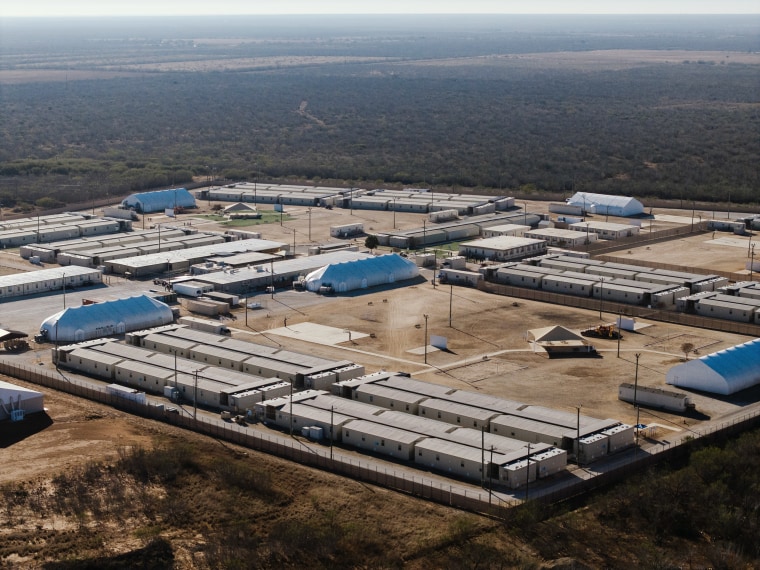
The Dilley Immigration Processing Center in Dilley, Texas, in January. Since mid-September, emergency crews have been dispatched to Dilley at least 11 times to treat children in medical distress. Brenda Bazán
Most of the children were taken to a nearby community hospital, the records show. In at least three cases, children were transferred more than an hour away to a specialized pediatric hospital in San Antonio equipped to treat complex or life-threatening conditions, according to the logs.
In one case involving a 22-month-old in respiratory distress, the boy’s condition was so serious, first responders wanted to fly him to the hospital by helicopter but couldn’t because of bad weather, the records show. Parents of another toddler with low oxygen refused to be transported.
The records don’t include information about what happened after the ambulance rides.
In a more recent case not captured in the dispatch logs, 2-month-old Juan Nicolás was taken to a hospital last week with a respiratory illness after his mother said he choked on his own vomit. The family was later deported to Mexico.
Do you have a story to share about immigration detention? Contact reporter Mike Hixenbaugh at mike.hixenbaugh@nbcuni.com.
Dr. Lara Jones, a pediatric critical care physician based in California, said the emergency calls point to potential missed opportunities for earlier medical intervention that might have prevented some children from being hospitalized. She and other physicians argue that holding children in a prisonlike setting is fundamentally incompatible with their health.
“There is absolutely, unequivocally no appropriate way to detain a child, period,” Jones said, citing studies showing that detention is associated with serious health consequences for children. “It is causing physical, mental, measurable, studied harm. And there is no context in which that’s justified.”
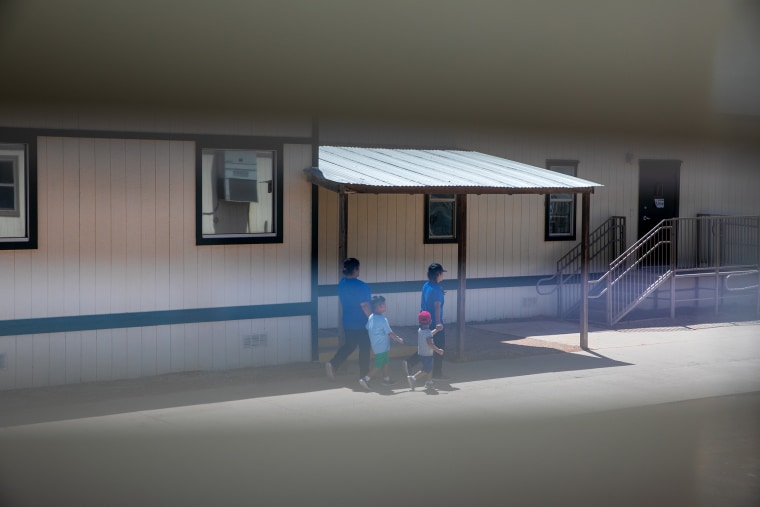
Detainees have complained of contaminated food and inadequate medical care at the Dilley Immigration Processing Center.Ilana Panich-Linsman / The New York Times via Redux
The release of the 911 calls and doctors’ warning comes amid broader criticism of Dilley, where the Department of Homeland Security has sent hundreds of children with their parents since last spring as part of the Trump administration’s expanding immigration crackdown. Lawyers, human rights advocates and families held at the facility have described contaminated food, inadequate schooling and barriers to timely medical care.
In a statement to NBC News, Ryan Gustin, a spokesperson for CoreCivic, which operates Dilley under a federal contract, said no child “has been denied medical treatment or experienced a delayed medical assessment.” Staff are trained to call 911 when a child’s condition exceeds what can be managed on-site, Gustin said, not because of inadequate care, but out of “an abundance of clinical precaution.”
DHS didn’t respond to questions about the emergency calls.
This week, the agency published a statement it said was “correcting the record” on what it called “mainstream media lies” about conditions at Dilley, asserting that parents and children “are housed in facilities that provide for their safety, security and medical needs.” The agency said families have access to a full medical staff, including a pediatrician, and described the care provided as “the best healthcare” some detainees have received “in their entire lives.”
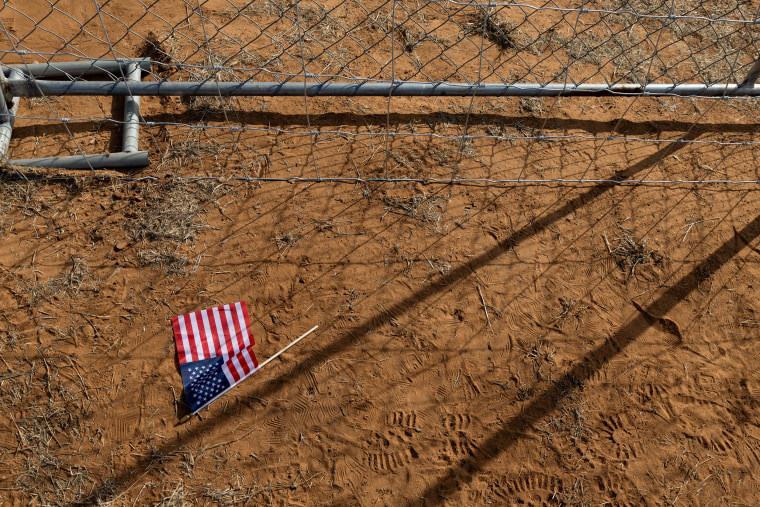
An American flag is left on the ground following a protest this month outside the Dilley Immigration Processing Center.Kaylee Greenlee / Reuters
Kheilin Valero Marcano’s account paints a different picture.
By mid-January, Valero Marcano knew something was seriously wrong with her daughter, Amalia. In the month since federal officers arrested the family of asylum-seekers during an immigration check-in in El Paso, Texas, and transferred them to Dilley, the 17-month-old’s health had steadily declined.
For weeks, according to Valero Marcano and a habeas corpus petition seeking the family’s release, Amalia struggled with worsening respiratory symptoms. It began with a fever, then a cough that wouldn’t ease. Her nose clogged with thick mucus. Her breathing grew strained and wheezy. Echoing complaints from other families, Valero Marcano said her daughter’s care was complicated by a policy at Dilley that requires families to line up outside — sometimes for hours in freezing temperatures or rain — for each dose of medicine.
They stood in line three times a day, she said — in the morning, after lunch and again in the evening — for pain medicine and antibiotics. On blistering cold days, they wrapped Amalia in a blanket, trying to keep her warm.
“Many times I had to take the girl with a fever,” Valero Marcano said in Spanish this week in an interview with NBC News.
Amalia didn’t improve. She spiraled on the evening of Jan. 18, when — according to Valero Marcano and the 911 logs — medical staff at Dilley noted dangerously low blood-oxygen levels. A nurse explained they were calling for an ambulance.
After a brief stop at Frio Regional Hospital, Amalia and her mother were transported by ambulance to Methodist Children’s Hospital in San Antonio. There, the girl was treated for more than a week for pneumonia, Covid-19, RSV and respiratory distress, according to the family, while Immigration and Customs Enforcement officers stood guard.
After Amalia was discharged, immigration officers returned them to Dilley, where medical staff withheld the nebulizer prescribed by doctors at the hospital, claiming that it was not necessary, according to Valero Marcano and the habeas corpus petition. The family was released from detention the following week, after a lawyer filed the petition.
Stiven Arrieta Prieto and Kheilin Valero Marcano entered the U.S. in 2024 with their baby, Amalia. They sought asylum after fleeing Venezuela, saying they were persecuted for opposing President Nicolás Maduro.NBC News
Valero Marcano said she was not surprised to learn that other children at Dilley had also been rushed to hospitals.
“They should change their ways,” she said of the facility. “At least give medicine to the children who need it.”
In a statement, DHS denied that Amalia’s medication was withheld. The agency said the girl “immediately received proper medical care” when she fell ill. Upon her return to Dilley, the statement said, the girl “was in the medical unit and received proper treatment and prescribed medicines.” Gustin, the CoreCivic spokesperson, said detainee privacy protections prevent the company from commenting on individual medical cases.
Dr. Ashley Cozzo, a pediatrician and neonatologist based in Connecticut who also signed the letter calling for children to be released from Dilley, said Amalia’s case — along with the other emergency calls — points to potential structural failures.
In pediatrics, she said, the focus is prevention: recognizing warning signs early enough to keep a child out of the emergency room. Based on firsthand accounts and public reporting, Cozzo said she’s concerned that conditions at the facility may be contributing to the spread of infectious diseases — including measles, Covid-19 and RSV — and that once children become sick, care is not escalating quickly enough to prevent emergencies.
“Those calls are pointing in the same direction,” Cozzo said. “A missed opportunity at early identification and appropriate intervention.”