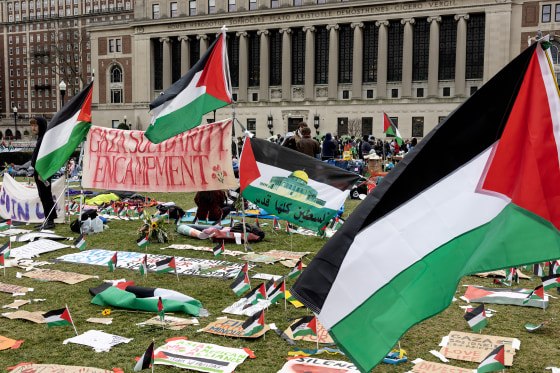
Academic groups of professors and scholars have sued the Trump administration, claiming the arrests of noncitizen students and faculty members who participate in pro-Palestinian protests are unconstitutional.
The American Association of University Professors — which has chapters at colleges across the country — and the Middle East Studies Association filed a lawsuit Tuesday alleging Trump's new immigration enforcement policies violate the First Amendment, which enshrines free speech and assembly, and the Fifth Amendment, which ensures due process.
The suit was filed against President Donald Trump, the State Department and Secretary of State Marco Rubio, the Department of Homeland Security and Secretary Kristi Noem, U.S. Immigration and Customs Enforcement acting Director Todd Lyons, and the government in the District of Massachusetts.
In January, Trump signed executive orders to make sure noncitizens in the United States do not bear hostility toward the country and do not advocate for foreign terrorists and to combat antisemitism.
The complaint, however, says the orders have stretched their purview into an "ideological deportation policy."
The Trump administration has incorrectly labeled any speech supporting Palestinian human rights and critical of Israel's military actions as “pro-Hamas,” the complaint says.
Immigration authorities have arrested and detained several university-affiliated people under the policies, including Mahmoud Khalil and at least four others — including one who fled to Canada in fear of arrest — the complaint says.
Furthermore, in alleges, the Trump administration supplied universities with the names of other students "they intend to target under the policy" and "launched new social media surveillance programs aimed at identifying still others."
The policies have "created a climate of repression and fear on university campuses," the filing says.
“The agencies' policy, in other words, is accomplishing its purpose: it is terrorizing students and faculty for their exercise of First Amendment rights in the past, intimidating them from exercising those rights now, and silencing political viewpoints that the government disfavors,” the complaint says.
The complaint lists several examples of detained students and professors, including Khalil, 30, a legal permanent resident and Columbia University student who was apprehended March 8 at his New York City campus apartment.
He has not been charged with any crime, but the administration has alleged he was involved in activities aligned with Hamas, which his attorneys deny. He is being detained at an ICE facility in Louisiana.
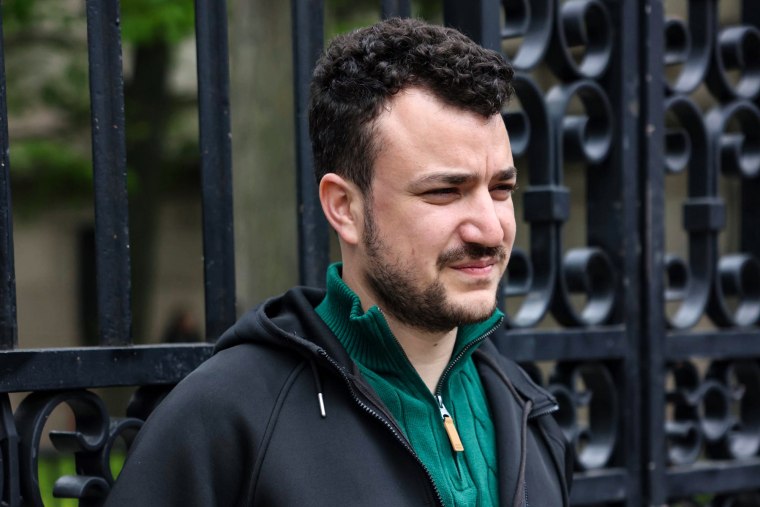
Another case was that of Ranjani Srinivasan, an Indian national who is a doctoral student at Columbia and an adjunct assistant professor at New York University.
The State Department revoked Srinivasan's student visa on March 5 and immigration authorities showed up at her home two days later, but she did not open the door, the complaint says. They returned the following night, but she had fled to Canada.
The Department of Homeland Security described Srinivasan as a terrorist sympathizer involved in activities supporting Hamas without evidence. Srinivasan has disputed the allegations, the complaint says, noting that she was involved in protesting human rights violations in Gaza.
The suit also lists the cases of Yunseo Chung — 21, a legal permanent resident and Columbia student who was involved in pro-Palestinian protests and was advised her legal permanent resident status was revoked on March 10 — and Badar Khan Suri — an Indian national and postdoctoral fellow at Georgetown University whom ICE arrested on March 17. It also names Momodou Taal, a student visa holder and doctoral candidate at Cornell University described as a pro-Palestinian advocate whose visa was revoked this month.
The suit was filed by the AAUP and its chapters at Harvard University, New York University and Rutgers University.
The groups allege that the Trump policy prevents them from hearing from their noncitizen students and colleagues, makes it impossible for citizen members to organize and participate in political expression with noncitizen members and makes it difficult to benefit from noncitizens' insights, scholarship and academic projects.
