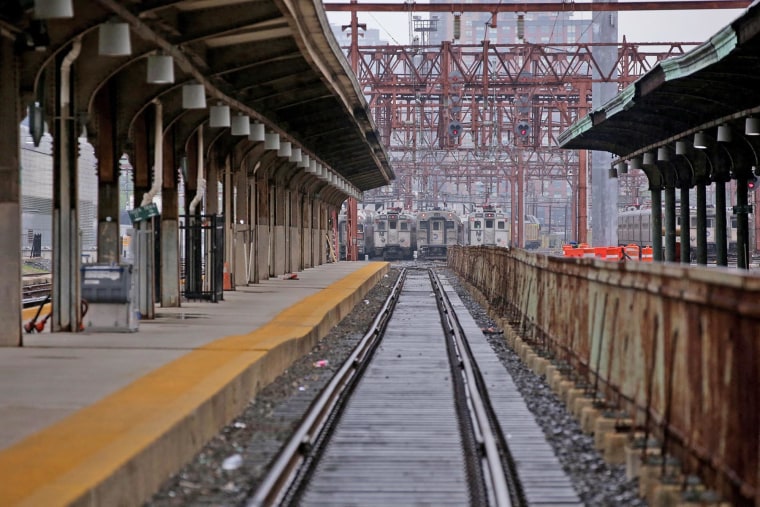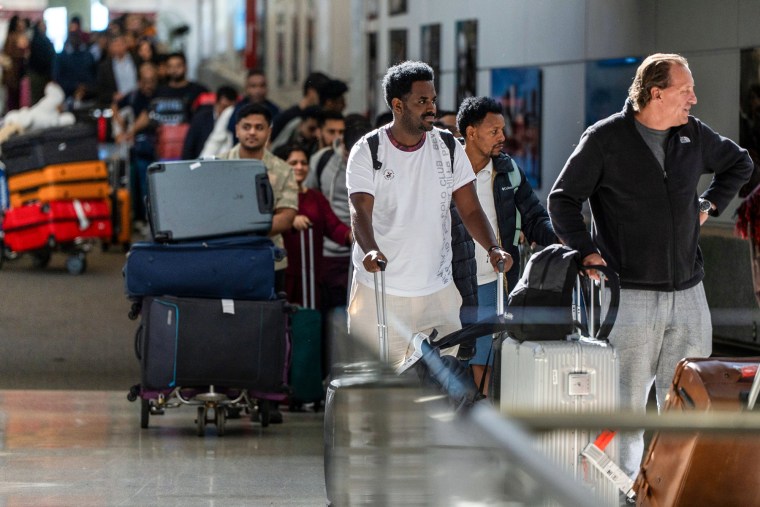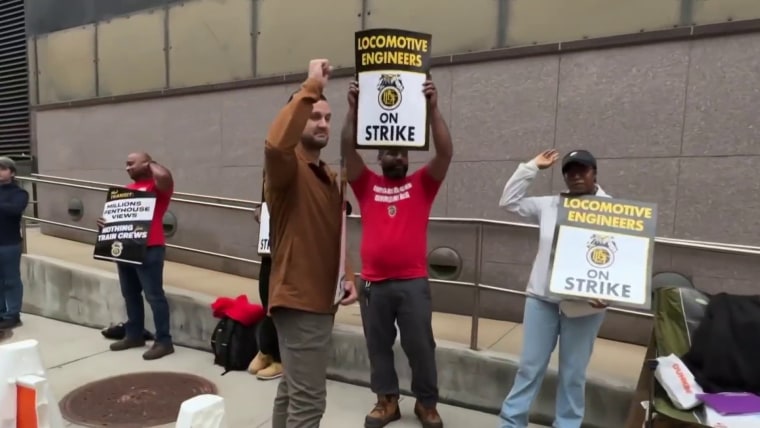
New Jersey’s beloved musical bard Bruce Springsteen promised Wendy in his breakthrough hit “Born to Run" that some day “we’re gonna get to that place where we really wanna go, and we’ll walk in the sun.”
But in recent days, keeping that promise to Wendy — and to everybody else trying to get in and out of the Garden State — has gotten a whole lot harder.
Springsteen's song was released in 1975, well before congestion pricing jacked up the cost of driving into New York City; well before air traffic controllers began losing radio and radar contact with the planes they were guiding into Newark Liberty International Airport; and well before the New Jersey Transit engineers walked off the job just after midnight Friday for the first time in 40 years.
The latest in that trifecta of travel challenges left some 100,000 NJ Transit train riders wondering Friday how they'll make their commutes to work.
"I have no idea, honestly," said Julia Slaby, who lives in Lyndhurst and was trying to get to Manhattan for her last day of classes at the Fashion Institute of Technology. "Maybe I'll take the bus."
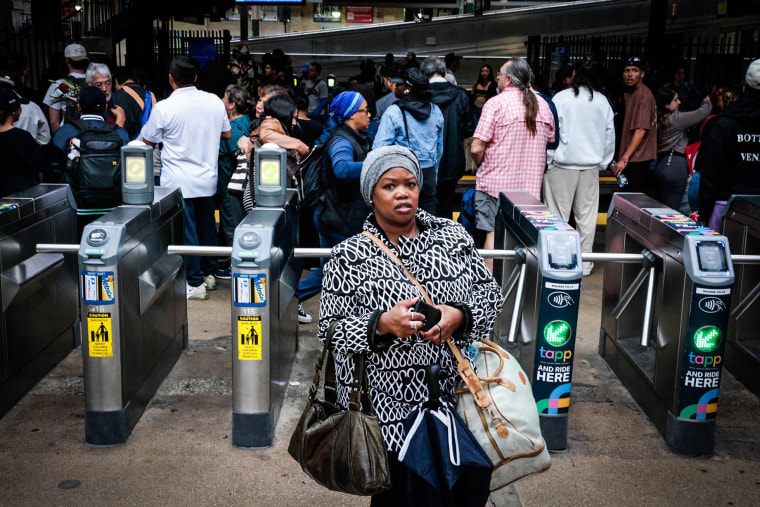
Another regular commuter, Laura Kounev, said her husband was going to have to drive her to Hoboken, where she can take the PATH train into Manhattan, and that he will be skipping work to pick her up in Hoboken when her workday is done.
"Oh my God, I don’t even know what I’m gonna do if it goes on for weeks," Kounev said when asked if she hopes the strike gets resolved soon. "I hope so, because even right now we have my car being used by the babysitter to take the kids to and from school, so I take public transit."
New Jersey Gov. Phil Murphy said they're ready to resume salary talks when the Brotherhood of Locomotive Engineers and Trainmen (BLET), which represents the 450 to 500 striking NJ Transit workers, returns to the bargaining table.
"What the people of New Jersey need right now is for the members of the BLET to step up and meet their obligations to the public,” he said Friday.
Echoing the governor, NJ Transit President Kris Kolluri said they're determined "to reach a fair and affordable deal as soon as humanly possible."
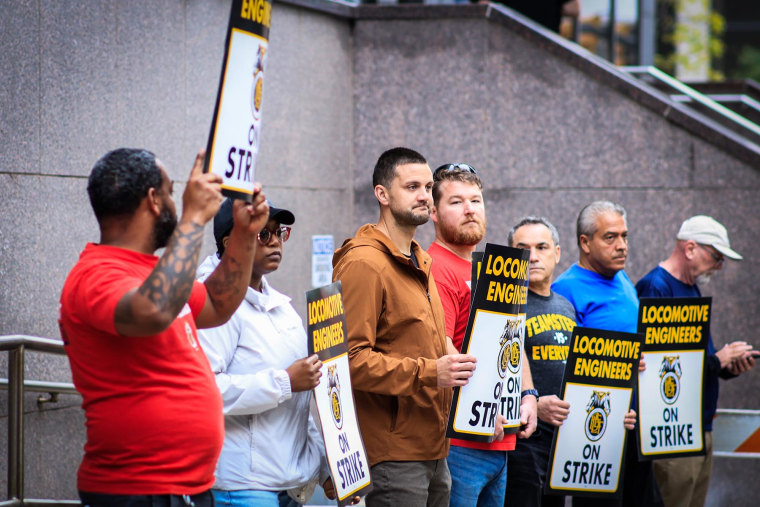
Union chief Tom Haas said late Thursday that he wants "to bring New Jersey Transit engineers up to a wage level that is commensurate with all the other passenger railroad engineers in the Northeast," adding that their rail engineers are paid up to 20% less than their counterparts.
“NJ Transit just remains unwilling to bridge that gap,” said Haas before the engineers went on strike.
The last NJ Transit work stoppage occurred in 1983 and lasted 34 days. And while Tony Soprano did not run into traffic jams driving home on the Pulaski Skyway from the Lincoln Tunnel in the opening credits of “The Sopranos," the rest of us live in the real world.
New Jersey is a cramped and crowded state with a population density higher than Japan, where even on good days the traffic often moves like molasses in the tightly packed towns outside New York City and Philadelphia.
So this strike, lawmakers and union leaders say, has all the makings of a full-blown transportation crisis.
"This is a hardship for everybody," said a locomotive engineer on a picket line who declined to give his name. "We understand that and hopefully this gets resolved as quickly as possible. Because the last thing we want to do is be out here. Believe me."
Newark Mayor Ras Baraka, a gubernatorial candidate who recently made headlines when he was arrested at a federal immigration detention facility to protest President Donald Trump's migrant crackdown, said the "strike presents a serious burden for commuters and creates hardships for our residents in Newark, as well as people who come here to work."
"We are hopeful that talks will resume this weekend and the strike can be brought to a quick end," Baraka said.