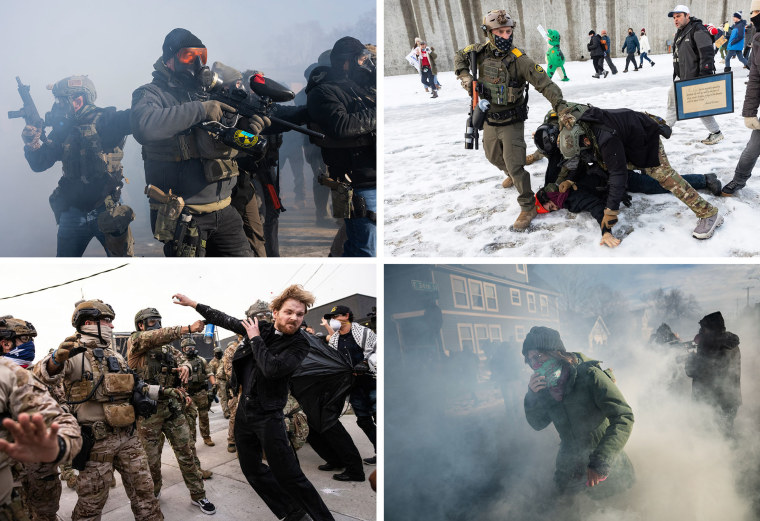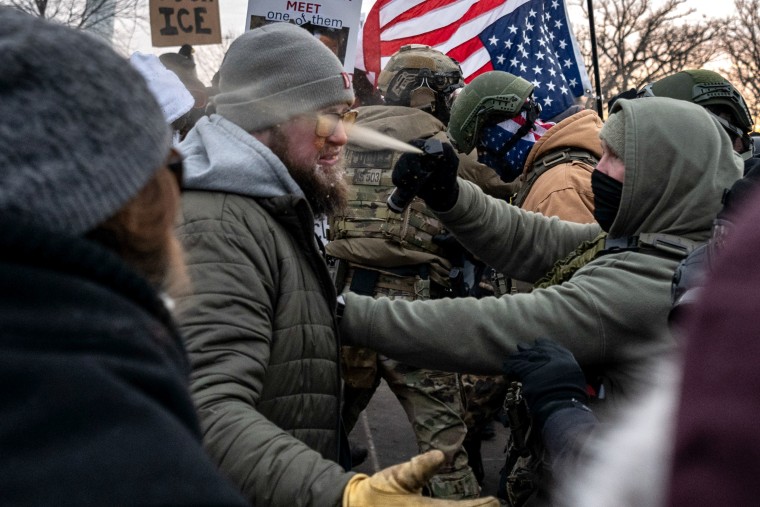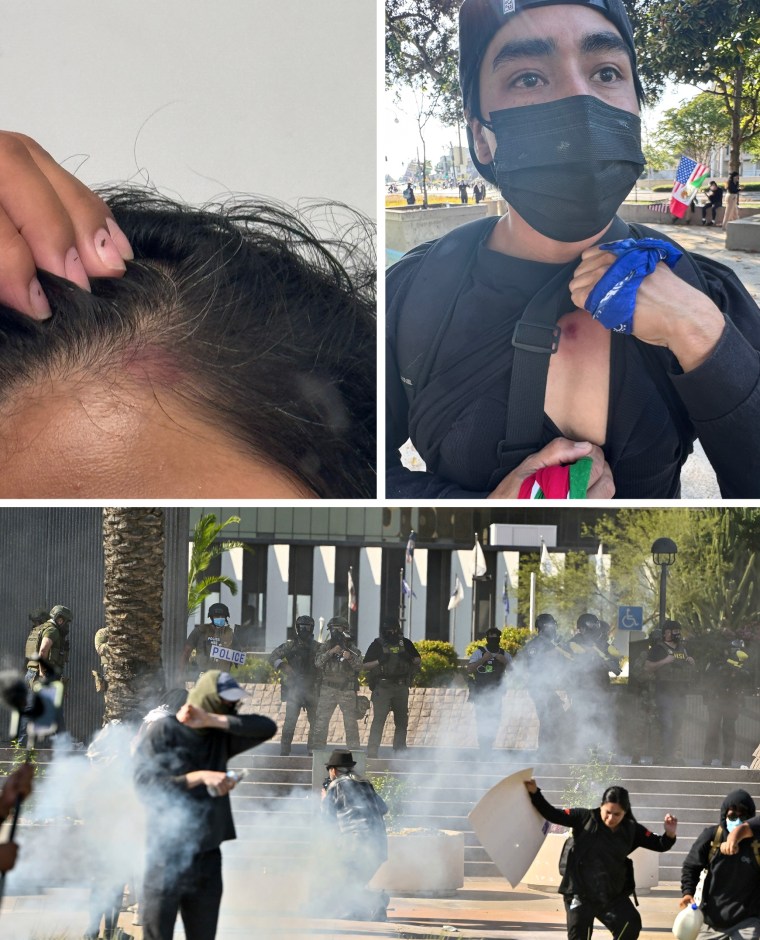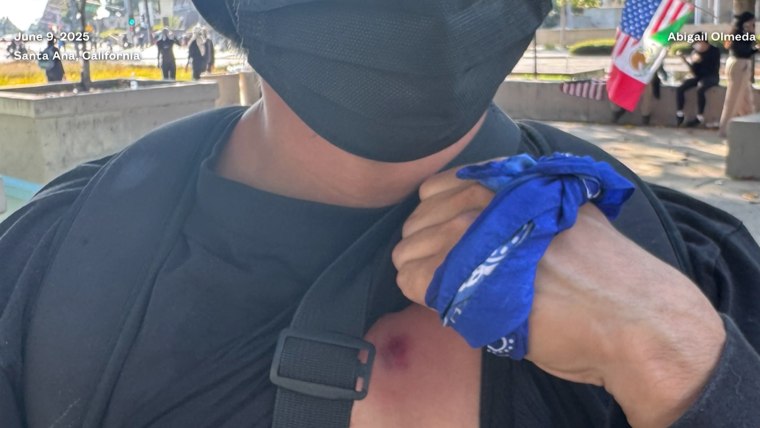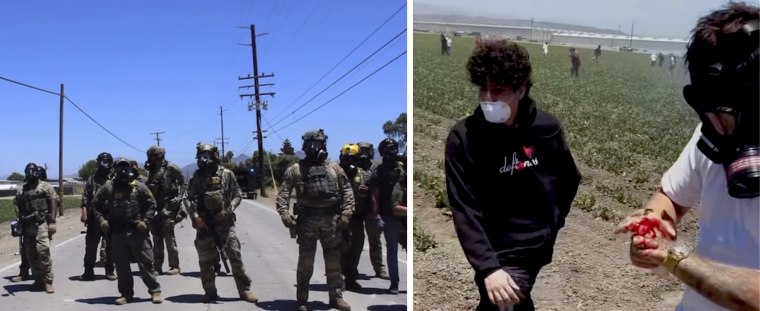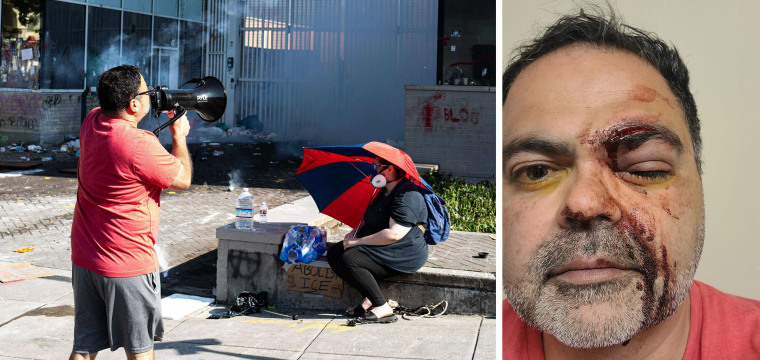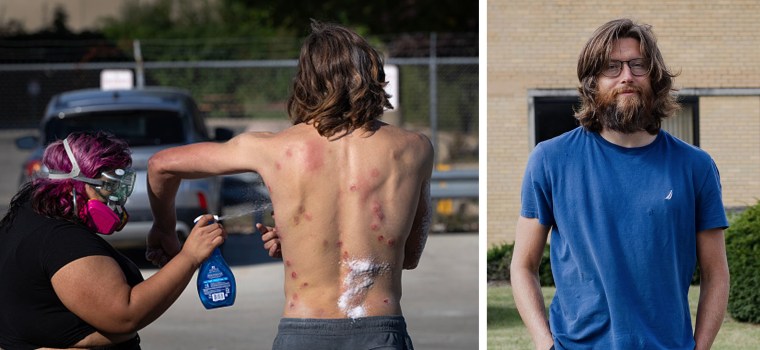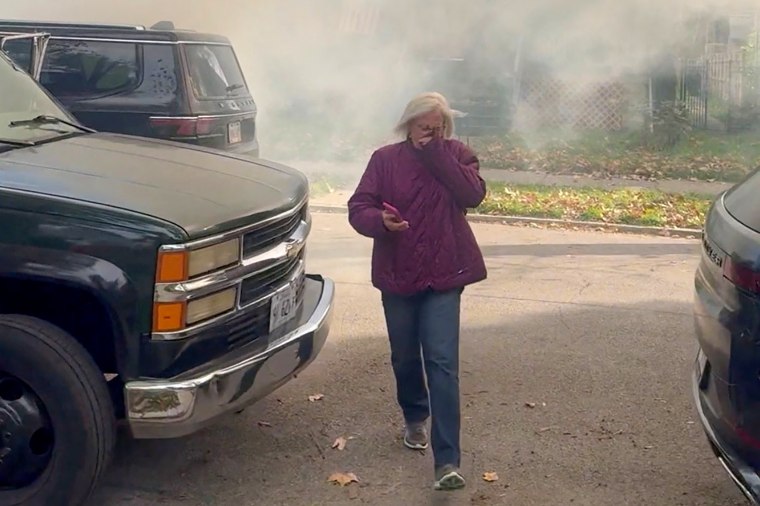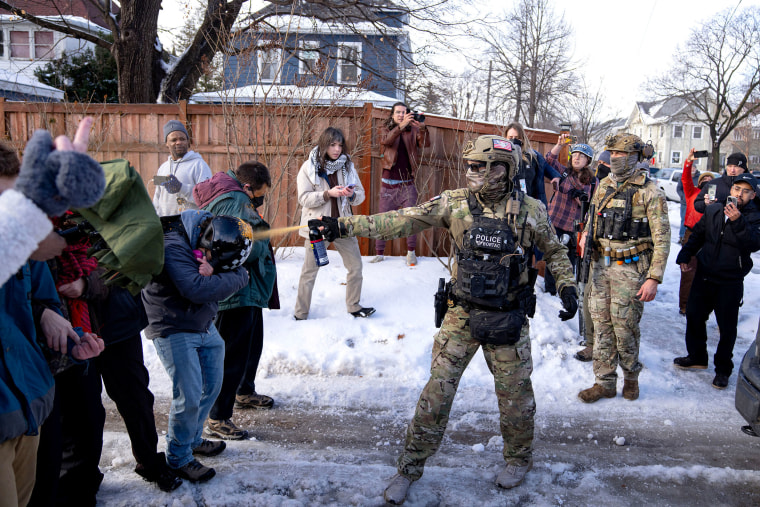
They batter bodies with rubber bullets and sear eyes with pepper spray. They lob tear gas and explosive flash-bangs at chanting crowds. They smash car windows. They shove people to the ground. They ram vehicles and point their guns.
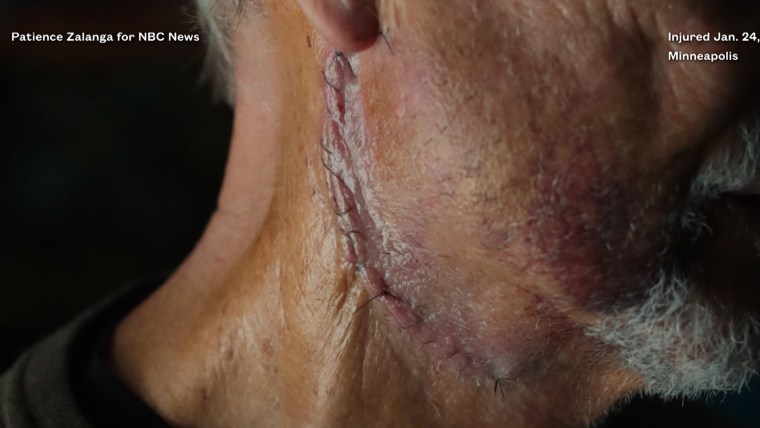
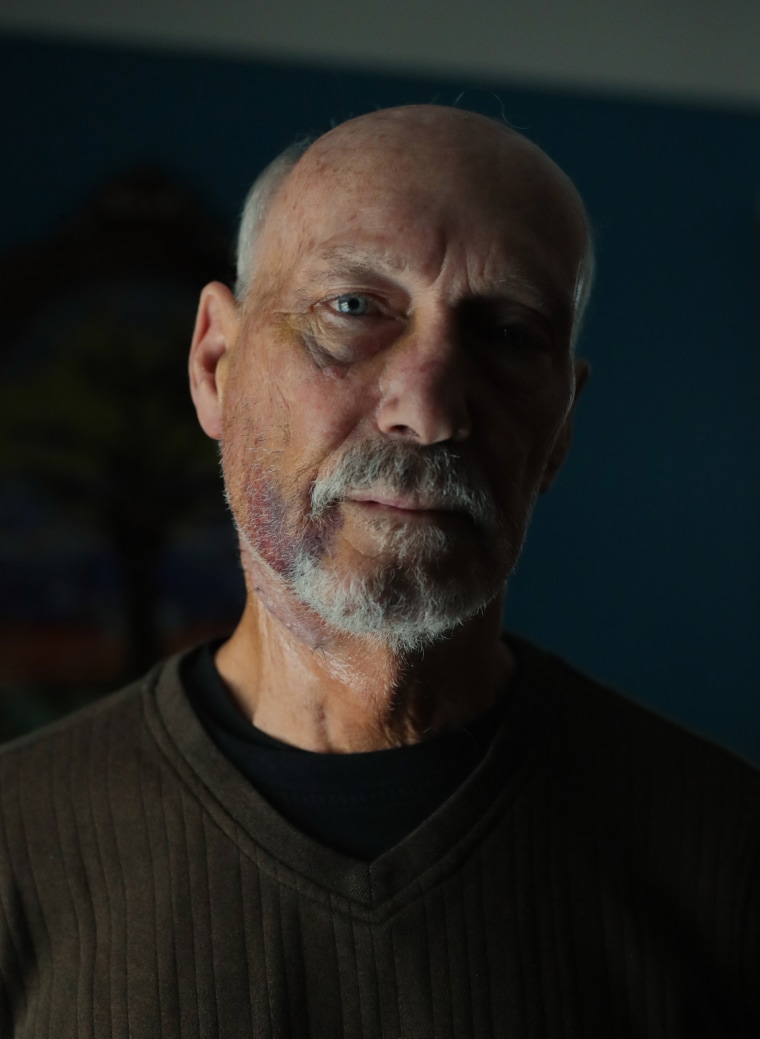
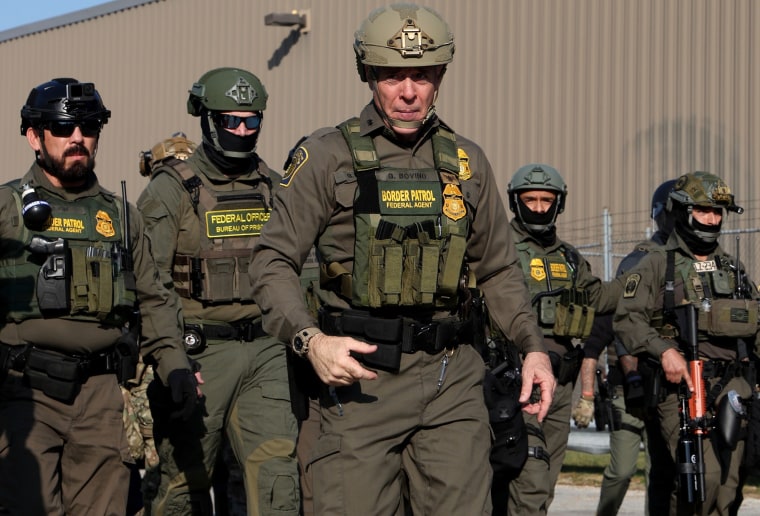
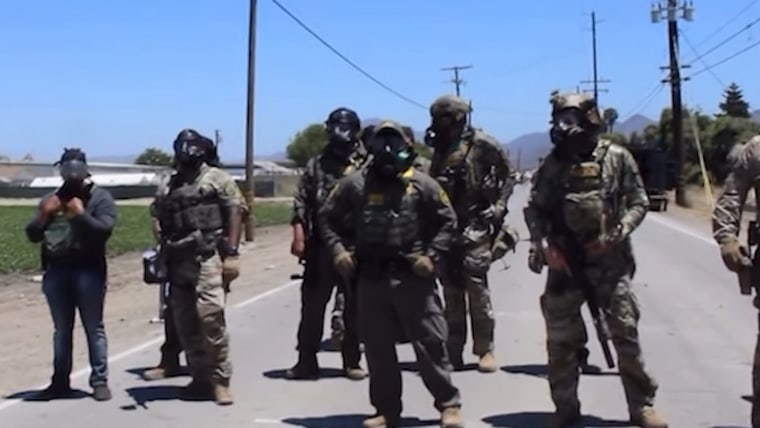
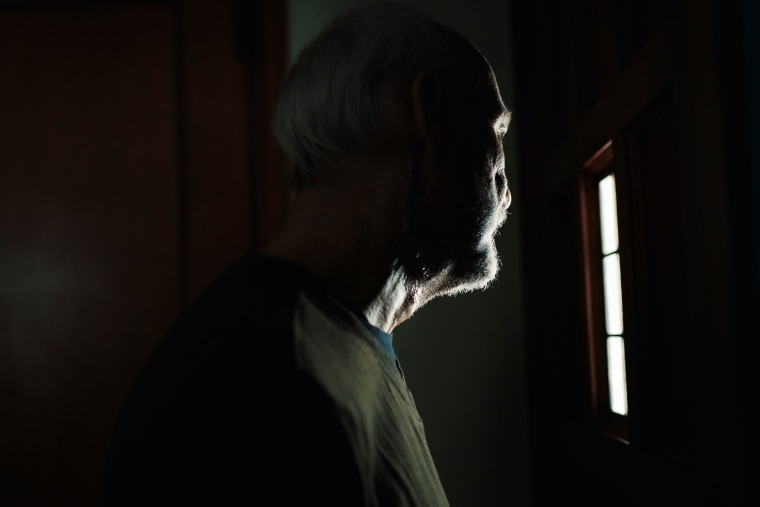
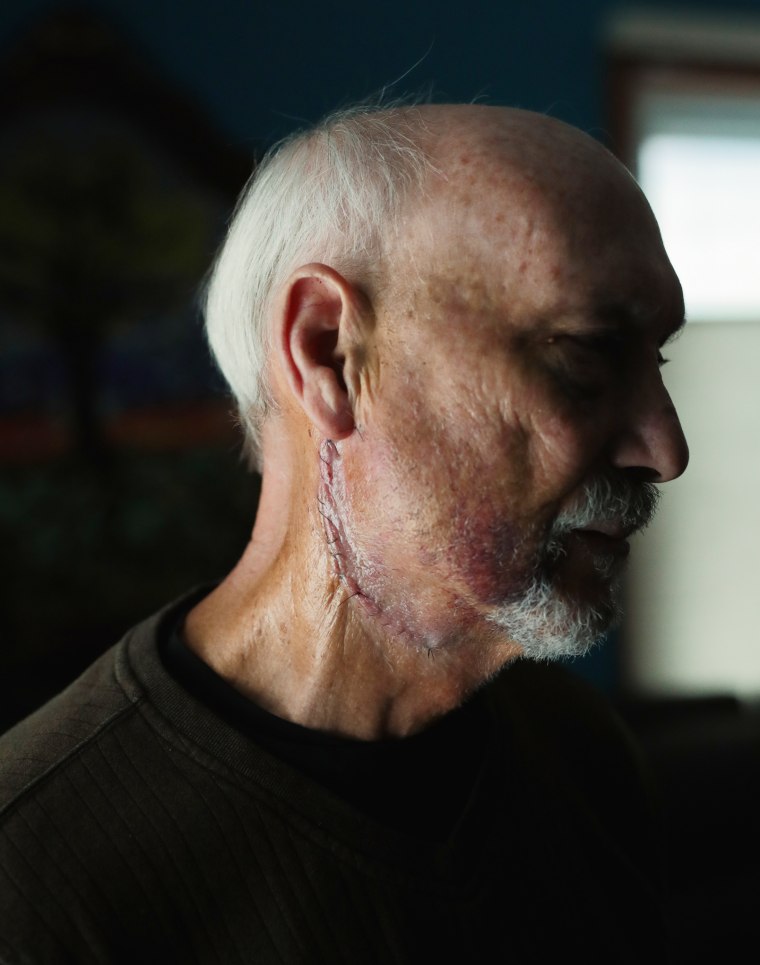
Federal officers carrying out President Donald Trump’s immigration crackdown in cities across the country have shot 13 people with guns. But far more often, they have used harsh tactics to scare or repel those they see as getting in their way. The officers, masked and kitted out with military-grade armor and rifles, have faced down peaceful protesters and people who have threatened, obstructed or attacked them, with methods that are less deadly than guns but still inflict grievous injuries. Hundreds have been hurt, and courts in at least four states have found that officers used force inappropriately and indiscriminately.
NBC News reviewed dozens of incidents since the spring and found that Department of Homeland Security officers have repeatedly deployed “less lethal” weapons in ways that appear to violate their own policies or general policing guidelines, unless they believed their lives were in danger. The review was based on interviews with lawyers, experts and protesters who were injured as well as witness statements, documents from criminal and civil cases and videos taken at protests.
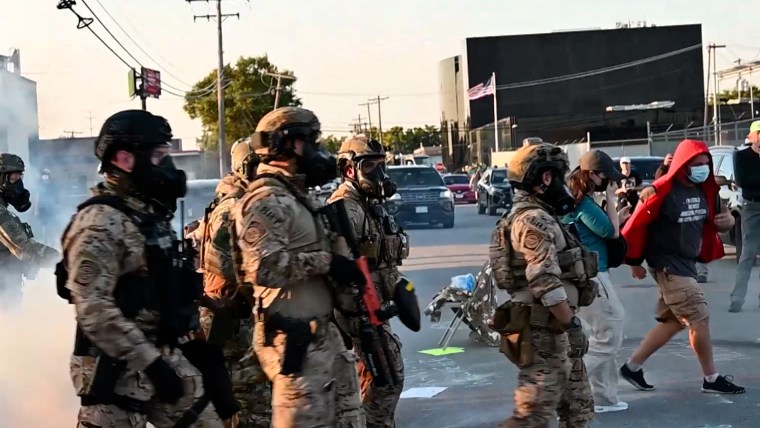
The reporting reveals a cycle of escalation: Heavily armed immigration officers’ open-air raids motivated angry residents to meet officers head-on in the streets. Rather than trying to defuse a tense situation, officers abruptly used physical or chemical force. DHS seemed to apply these tactics with little discretion, whether protests were peaceful or violent, large or small.
“I’ve never seen federal agents so out of control and acting in such a malicious manner,” said Rubén Castillo, a former federal prosecutor and federal judge who now leads the Illinois Accountability Commission, a state effort to review allegations of abuse against immigration officers. “They said they were going after ‘the worst of the worst,’ then they became the problem.”
This conduct stoked public outrage, triggered backlash from local officials and prompted judges to intervene. For months, the Trump administration charged harder, fighting court orders and promoting an air of ruthlessness and impunity that signaled to officers they could use whatever means they saw fit. Government officials have defended officers’ actions as necessary and justified, while giving misleading or false accounts of some clashes.
The pervasive use of less lethal tactics, caught on video and ricocheting across social media, began in late spring and summer in California and Oregon, expanded into Chicago in the fall and reached a crescendo in Minneapolis, where officers shot and killed two protesters last month. Public outcry led the DHS to change on-the-ground leadership, end the surge in Minneapolis and order the wide-scale use of body cameras. “I learned that maybe we could use a little bit of a softer touch,” Trump told NBC News in early February, adding in the same breath, “but you still have to be tough.” On Friday, two senior DHS officials told NBC News that the agency has no immediate plans for more large-scale immigration operations focusing on specific cities. Still, the Trump administration says many newly hired officers have yet to be deployed.