After almost 14 months of deadly bombings, the skies above southern Lebanon and northern Israel were quiet Wednesday as a ceasefire negotiated by the United States took effect.
If the truce succeeds between Israel and Hezbollah — the powerful, Iran-backed, Lebanese militant and political group — it will be a rare moment of diplomatic success in the multifront conflict raging across the Middle East.
President Joe Biden said the ceasefire, which he announced Tuesday, is intended to be permanent, although Israeli Prime Minister Benjamin Netanyahu warned that he will not hesitate to attack Hezbollah again if it rearms or strikes Israel again.
The sounds of warplanes, missiles and artillery were replaced with dancing and singing in parts of Lebanon as news of the ceasefire was announced late Tuesday.
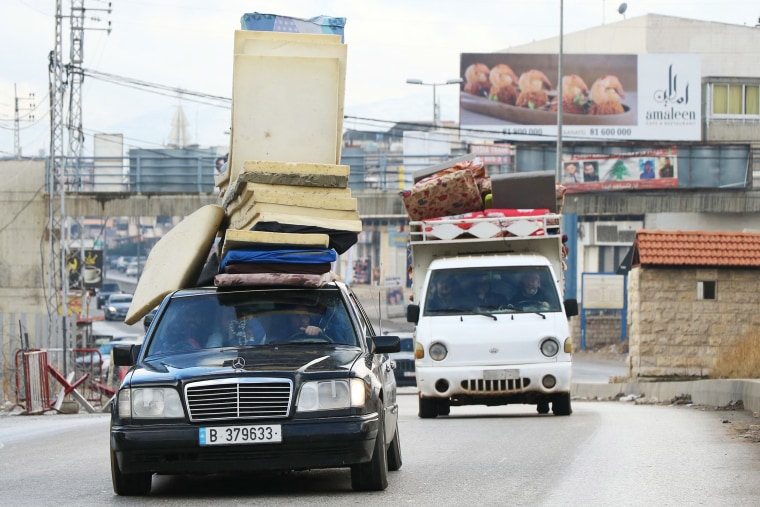
Despite the nascent truce, it is not clear when people in Lebanon and Israel will be able to return home.
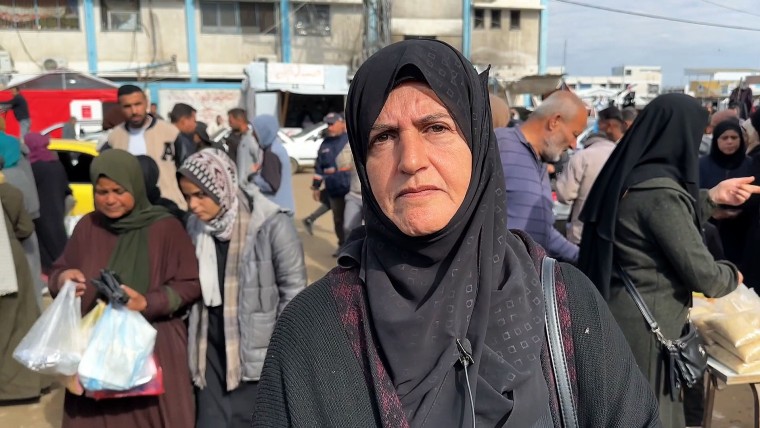
“We are happy because we will return to our country and homeland in the south,” Hala Saeed, a Lebanese woman displaced from her home, told The Associated Press.
However, even amid the jubilant scenes of flag waving and music outside her shelter in the Lebanese city of Sidon, there was more than a hint of sadness and caution.
“Our joy is very great,” Kamal al-Haj Ali, another displaced resident, told the AP. “Of course we cannot forget the sadness of our martyrs, the people of our villages, the blood is still on the ground.”
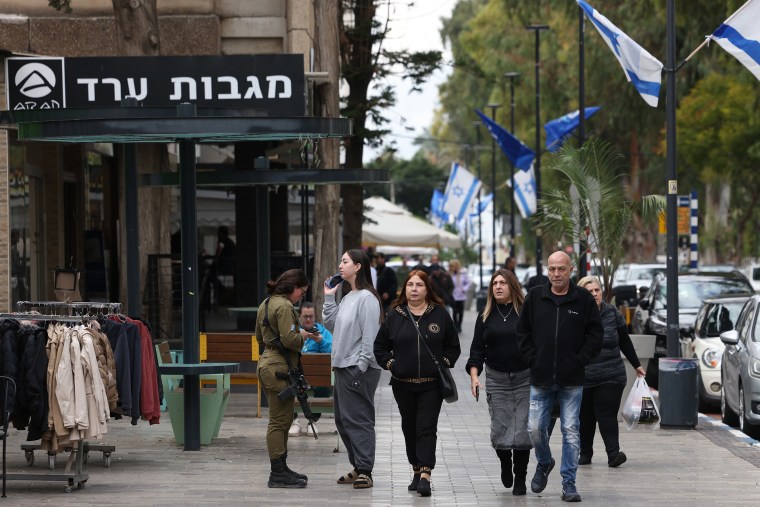
While the war in Gaza has received the most international attention, the conflict in Lebanon has spawned a parallel humanitarian crisis, with 3,500 people killed and 1.2 million displaced in Lebanon. In northern Israel, 60,000 people have been forced from their homes, with 80 soldiers and 50 civilians killed, according to local officials.
The ceasefire, brokered by Washington as well as France, effectively reinstates an old agreement that ended the 2006 war between Israel and Lebanon but was never fully implemented.
Under United Nations Resolution 1701, Israeli forces are set to leave southern Lebanon, and Hezbollah will withdraw to north of the country’s Litani River, around 18 miles from the border with Israel. They will be replaced by 5,000 troops from the Lebanese army, which is not officially a party to the conflict.
Netanyahu said the ceasefire was an opportunity to focus on Iran — without elaborating what that meant for Israel's archenemy — as well as regrouping his own forces after they seriously weakened Hezbollah's command structure and missile arsenal.
But he cautioned that Israel would “respond forcefully” if the terms of the ceasefire were violated.
He did not say when those displaced by the fighting might be able to return to their homes in northern Israel.
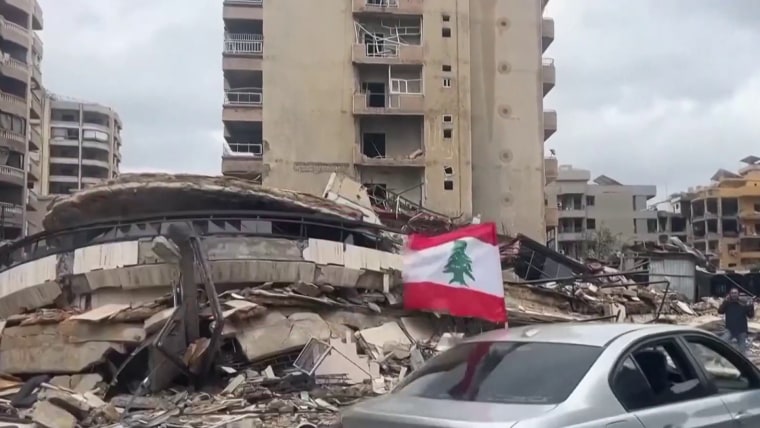
Many felt they had little choice to move after Hezbollah began to fire on Israel, destroying homes and buildings and turning once thriving communities into ghost towns. It is unclear when residents, placed into hotels and other temporary accommodation, will able to return.
For Lebanon, the agreement presents the opportunity for respite after more than a year of violence, which as well as the death and displacement has also devastated public services and infrastructure.
Of the 207 health care centers in Lebanon's conflict zone more than 100 have been forced to close, according to the U.N.’s refugee agency (UNHCR).
The crisis has also spilled into neighboring Syria, with 280,000 Syrians who had fled their own war into Lebanon now going back across the border, “once again on the run for their lives,” the UNHCR said in a briefing last month.