One of the enduring images of the Ukraine crisis has been Russian President Vladimir Putin hosting a revolving door of Western leaders at the other end of a giant marble table.
Whether or not Putin launches a full-scale invasion of his neighbor, he has undeniably got the attention of Europe and the Biden administration, whose hopes of focusing on China rather than on Russia have been dashed.
By threatening an invasion of a democratic European country, Russia has created a “new normal” on the continent, NATO Secretary-General Jens Stoltenberg said last week — one in which Moscow is willing and able to openly contest the region’s values and borders.
As he delivered the stark assessment that Putin had already "made the decision" to attack Ukraine, President Joe Biden similarly said Friday that the Russian leader “is focused on trying to convince the world that he has the ability to change the dynamics in Europe.”
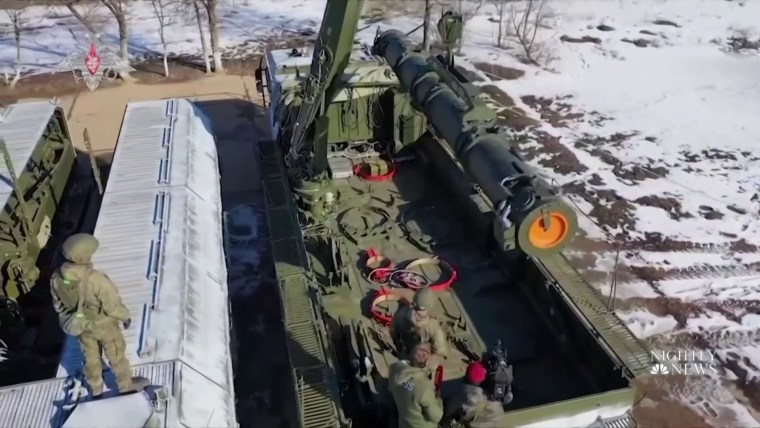
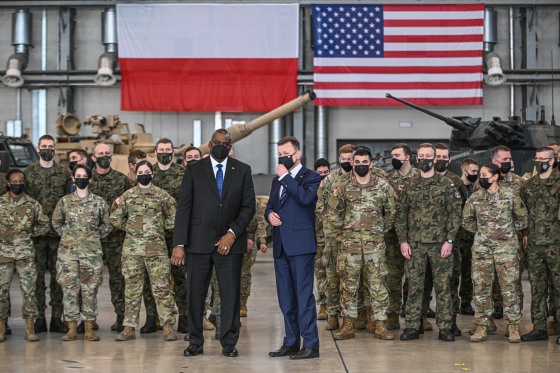
But that’s not to say Putin is having it all his way, some officials and experts say. His threats have given a new purpose and vigor to NATO, with the transatlantic alliance broadly united in its condemnation of Moscow.
Allying a vast military buildup on Ukraine’s borders with bold security demands, the Kremlin has seized a new relevance but perhaps also given one to the Western alliance.
“Putin has an achievement under his belt by getting all this attention,” said James Nixey, director of the Russia-Eurasia program at Chatham House, a London think tank.
“On the other hand, he has put himself in a very difficult position whereby he’s made a list of demands, and if he doesn’t get those met — and he won’t — then that will look like failure.”
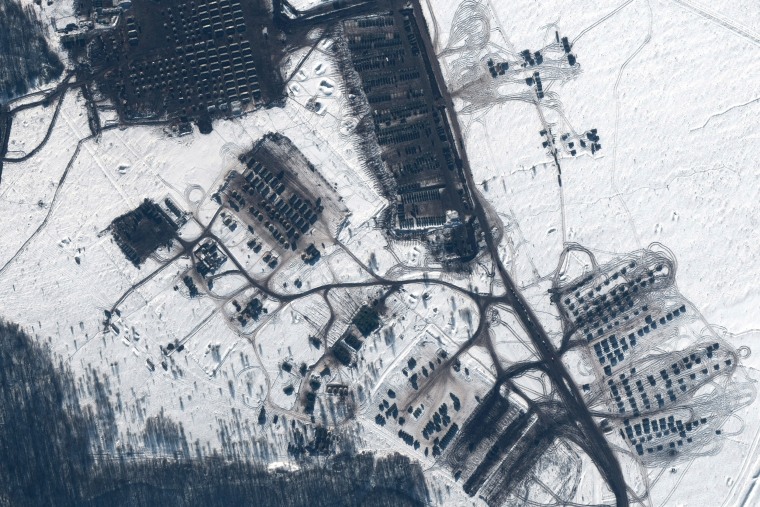
Moscow has steadfastly denied the 150,000-plus troops clustered around Ukraine will be used in an assault on the former Soviet republic. But Monday's move to order Russian troops into the two breakaway regions in Ukraine's east after formally recognizing their independence was a dramatic escalation that will draw a swift response from the West.