It was close to 10 p.m. in Riyadh when Salma al Rashid learned that she and other Saudi women would soon be allowed to drive. Still, she decided to wake up her 13-year-old daughter to share the good news.
“She asked me ‘Is it true?’” said al Rashid of leading Saudi charity Al Nahda Philanthropic Society for Women.
“I look at this as more than driving — I see myself as more of a human today than yesterday,” she said, calling Tuesday's announcement a “tipping point" for women's rights in Saudi society.
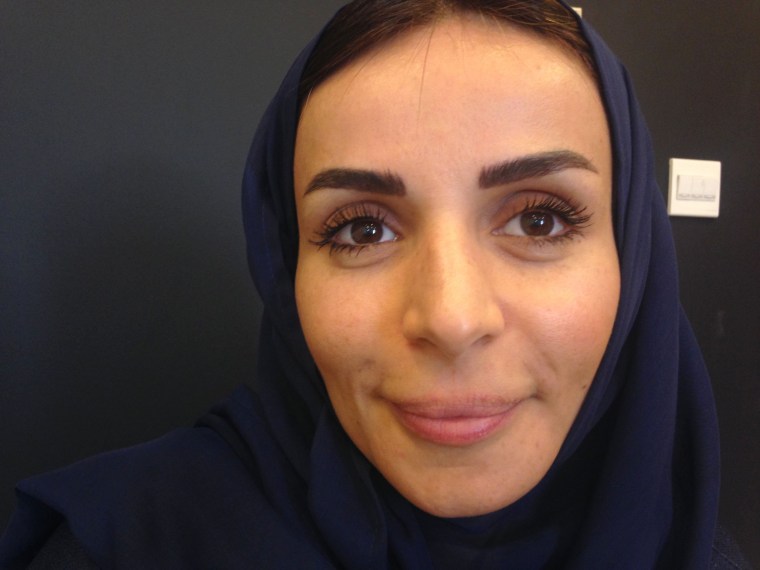
King Salman's decree, which had been rumored for months, is more than symbolic, added al Rashid — it will allow women to take part in the top-to-bottom reform of the kingdom's society and economy being pushed by powerful Crown Prince Mohammed bin Salman.
"For us this is a confirmation of how serious the country is in trying to reach that vision 2030," she said. "If we want women to be active participants in the developments of the country we need to get there."
While Vision 2030 mentions only one target aimed at women, the impact of it and other ongoing reforms was always likely to be outsized. It sets forth plans to boost women’s participation in the workforce from 22 percent to 30 percent. Already women are able to work in shops, hotels and offices — which were all off-limits to them just a few years ago.
The country has consistently been ranked as one of the worst for gender equality. Women are forbidden to wear clothes or make-up that "show off their beauty," must limit the amount of time they spend with men who aren't family members and are not allowed to use public swimming pools. They only got the right to ride a bike in 2013.
"It is one of the boldest and most dramatic moves that Mohammed bin Salman could make when it comes to international PR"
Driving is a logical step toward greater parity for women in society — namely the reform of laws that require them to gain permission from a male guardian to travel and marry, according to many women in the kingdom.
Earlier this year King Salman ordered a review of the country's guardianship laws.
But Tuesday's move is also about much more than women's rights, according to Jane Kinninmont, a senior research fellow and deputy head of the Middle East and North Africa program at the London-based Chatham House think tank.
"It is one of the boldest and most dramatic moves that Mohammed bin Salman could make when it comes to international PR," she said.
The decision comes just months after bin Salman, the king's 32-year-old son and formerly the country's defense minister, was elevated to the position of crown prince — and thus the heir apparent to the Saudi throne — over the king's nephew Muhammad bin Nayef in what many observers referred to as a palace coup.
Related: Mohammed Bin Salman, Saudi Arabian Prince, Pushes Rapid Change
No reason for the replacement was announced, but bin Salman, not bin Nayef, was chosen to visit President Donald Trump at the White House in March. That meeting was widely hailed as a success in Saudi Arabia.
The decision allowing women to drive crucially shows bin Salman asserting his authority over the country's powerful clerics, with whom the royal family has traditionally ruled by consensus, she added.
This month, a slew of prominent clerics were detained in an apparent crackdown amid widespread speculation that King Salman intends to abdicate in favor of his son. Some have huge followings online, and had criticized the government in the past but more recently kept silent or failed to back government policies publicly.

Bin Salman "is asserting his power," Kinninmont added. "He clearly saw the clerics as a camp who could restrain the king."
"There is quite a lot of discontent" in Saudi society. "You have people who are opposed to westernization, austerity, the war in Yemen and especially [the rift with] Qatar."