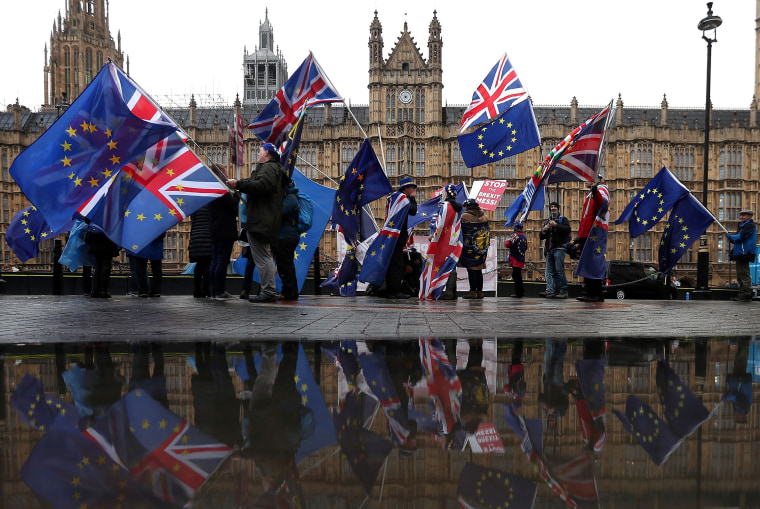
LONDON — Brexit can often seem like a never-ending time warp of deals, deadlines, crunch moments and midnight negotiations. If the United Kingdom voted to leave the European Union in June 2016, why are we still talking about it now, 1,645 days later?
The good news is, if you're tired of hearing about Brexit, Thursday perhaps brought a moment of final clarity that might help put the issue to rest — for a while at least. The U.K. and E.U. finally agreed a trade deal that will replace the partnership they shared for 47 years.
"For the past four years, Brexit has consumed us," said David Henig, the U.K. director of the European Centre For International Political Economy, a think tank. "The biggest thing resulting from this deal is that it draws a line under four and a half years of debate — this takes Brexit off the front pages and returns the business of trade relations back to dull officialdom."
Here's some of what we know of the agreement, and a reminder of how Britain and the E.U. got to this place.
What's in the deal?
Politicos will squabble over the details, debating which side ceded more and which gained in the negotiations. The full agreement is said to number some 2,000 pages.
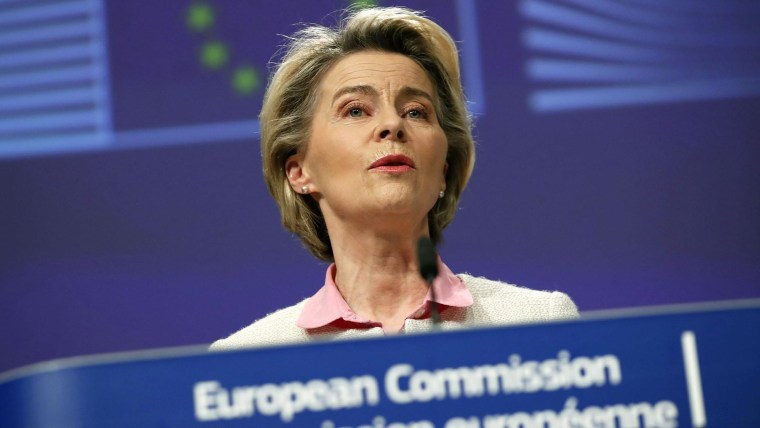
What we know so far is that Prime Minister Boris Johnson and Ursula von der Leyen, president of the European Commission, the E.U.'s executive branch, emerged with what's known as a "hard" Brexit. It ditches most of their shared rules and regulations but keeps free trade moving between them, as well as some cooperation on areas such as security, financial markets, aviation and science.
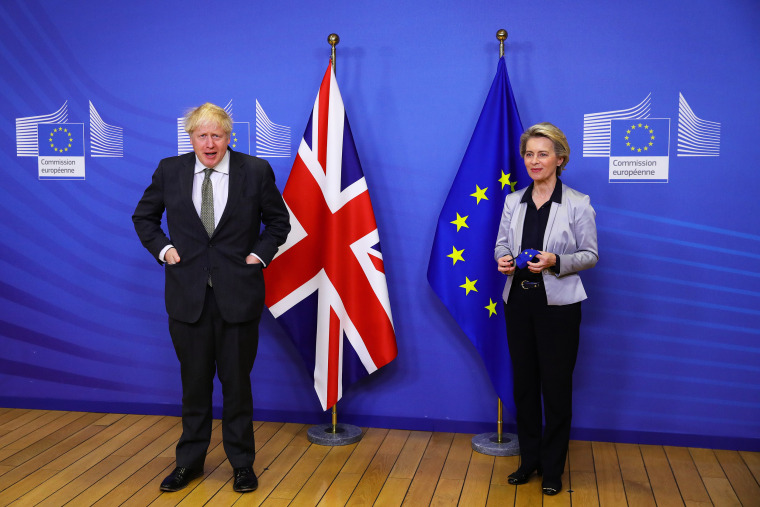
Championed by Johnson, the deal was welcomed by the E.U. with a wistful relief — especially considering the alternative. If they failed to reach an agreement by Dec. 31, the U.K. would have crashed out with a "no deal" Brexit. Experts see this as a nightmare scenario, threatening border chaos, price rises, shortages of food and medicine and even unrest on the streets.
The agreement will likely gain final approval by lawmakers next week, and all things considered is "a good deal for both sides," Henig said. Still it will not avoid trading friction. It is the first trade deal in history that erects more barriers — rather than fewer — compared to the seamless E.U. relationship before.
What was it all about?
On June 23, 2016, the British people voted by 52 percent to 48 that they no longer wanted to be part of the E.U. But the referendum said little about what they did want instead.
The E.U. is the world's largest political and economic club, bound together by decades of shared laws, values, and a desire never to repeat the continent-wide horror of World War II.
Britain had always been something of an uneasy member, its right-wing newspapers railing against what they saw as unnecessary regulations dictated from Brussels that eroded their country's sovereignty.
Download the NBC News app for breaking news and politics
When working as a journalist with the Daily Telegraph in the 1980s and 90s, Johnson perfected a type of tale that mocked "Eurocrats" for imposing needless rules about how bendy bananas should be — stories that were often more amusing than they were factually accurate.
For decades this Euroscepticism gripped the Conservative Party, playing a role in the downfall of prime ministers Margaret Thatcher and John Major in the 1990s. When their successor David Cameron tried to draw a line under his party's infighting, by calling what he assumed would be an easy-win Brexit referendum in 2016, he too stepped down after the shock result came in.
For supporters, Brexit was the only way to "take back control" — to borrow its campaign slogan — of their laws, money and borders, the latter usually a euphemism for tighter controls on immigration.
Turmoil just beginning
Some moderates favored a "soft Brexit" that mirrored Norway's relationship with the E.U. Norway is not an E.U. member but remains in its "single market," allowing people, goods, money and services to move freely between countries with little or no checks at all.
Hardcore Brexiteers said this was unconscionable, instead favoring a "hard" Brexit that would see their country scrap most — if not all all — of the shared rules and regulations with Europe. Meanwhile some Remainers sought to overturn the result altogether.
The internecine political war between these factions has taken an enormous toll.