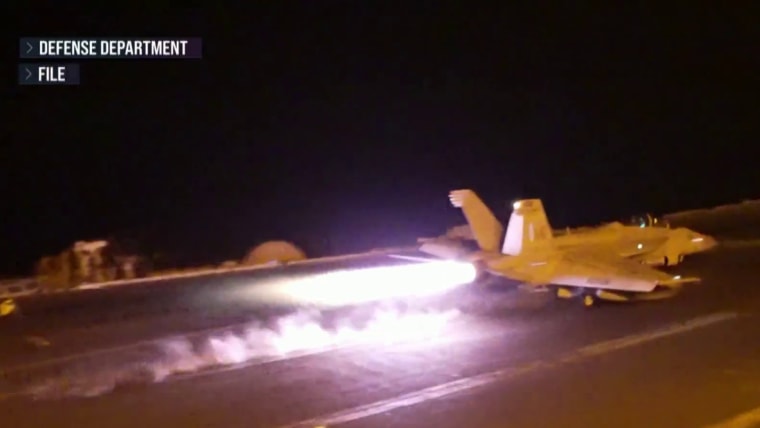
WASHINGTON — The United States launched attacks Friday against 85 sites in Iraq and Syria used by Iranian forces and Iran-backed militants, its first retaliatory strikes for the killing of three American soldiers in Jordan last weekend, U.S. officials said.
U.S. military forces struck targets at seven facilities tied to attacks on U.S. personnel in the region, National Security Council spokesman John Kirby told reporters. U.S. Central Command said the facilities included command and control operations, intelligence centers, rockets and missiles, and drone storage sites.
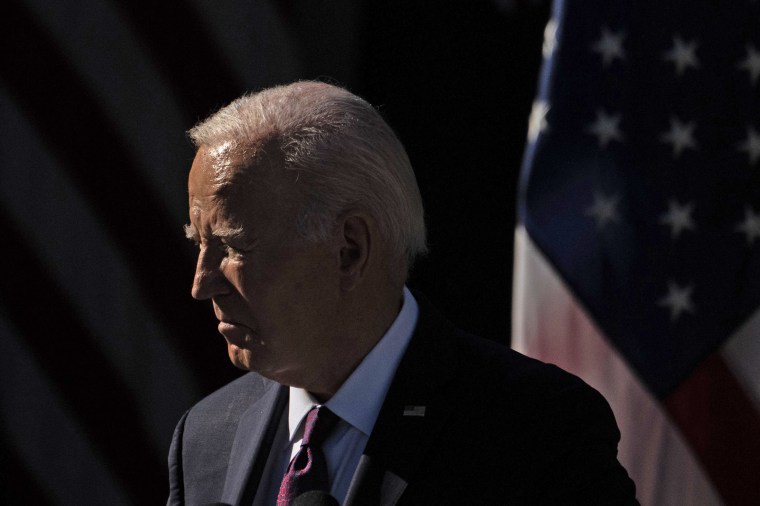
“Our response began today. It will continue at times and places of our choosing,” President Joe Biden said in a statement. “The United States does not seek conflict in the Middle East or anywhere else in the world. But let all those who might seek to do us harm know this: If you harm an American, we will respond.”
The military action is a significant escalation in Washington’s bid to deter the growing threat from Iran-backed groups across the Middle East — a step fraught with risk abroad and at home, as Biden seeks to prevent the Israel-Hamas war from spiraling into a wider conflict while working to secure his re-election.
The Biden administration had made clear that the U.S. would take military action after the drone attack by Iran-backed militants at a remote U.S. base in Jordan, in which more than 40 others were wounded. Biden attended the dignified return of the three slain U.S. soldiers at Dover Air Force Base earlier Friday.
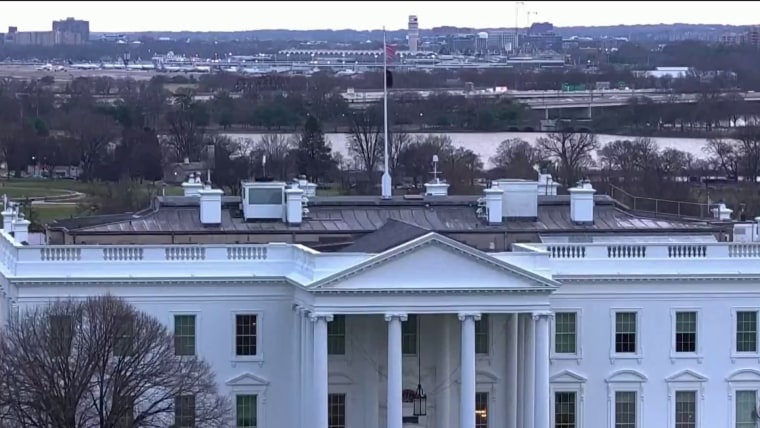
Syrian state television reported that the strikes killed and wounded people, but it did not specify an exact number of casualties.
Kirby said the U.S. did not know how many militants were killed or wounded, but said the targets were selected to avoid civilian casualties.
The targets were “based on a clear, irrefutable evidence they were connected to attacks on U.S personnel in the region,” he said.
The U.S. conducted the strikes knowing that the facilities are used by Iranian-backed militia personnel and Iran’s Revolutionary Guard Corps, Lt. Gen. Douglas A. Sims II told reporters.
“We made these strikes tonight with an idea that there would likely be casualties associated with people inside those facilities,” he said.
The U.S. used more than 125 munitions on the strikes, Sims said. He said all of them were precision munitions.
The Iraqi army condemned the U.S. airstrikes against Iran-backed militias in Iraqi border areas, calling the air assault a “violation of Iraqi sovereignty” and “a threat that will drag Iraq and the region into unforeseen consequences.”
Yahya Rasool Abdullah, a spokesman for the commander-in-chief of the Iraqi Armed Forces, asserted that the “strikes come at a time when Iraq is striving to ensure the stability of the region.”
Kirby, the National Security Council spokesman, told reporters that the U.S. informed the Iraqi government about the strikes before they were launched.
Before the strikes, Defense Secretary Lloyd Austin had promised a “multitier response” and officials told NBC News that Biden settled on a plan expected to unfold over multiple days, possibly weeks.
Biden seeks to deter widening conflict
Even as Biden and his deputies vowed to retaliate, they have added the caveat that Washington does not seek a war with Iran or a wider conflict in the region, a sentiment that was reiterated in the president’s statement on Friday. Their calibrated statements appeared to indicate that it was unlikely the reprisal strikes would hit targets inside Iran itself.
“We will continue to work to avoid a wider conflict in a region, but we will take all necessary actions to defend the United States, our interests and our people,” Austin told reporters at a Pentagon news conference Thursday.
Austin repeated much of that statement on Friday after the strikes, adding in part that “the president and I will not tolerate attacks on American forces.”

