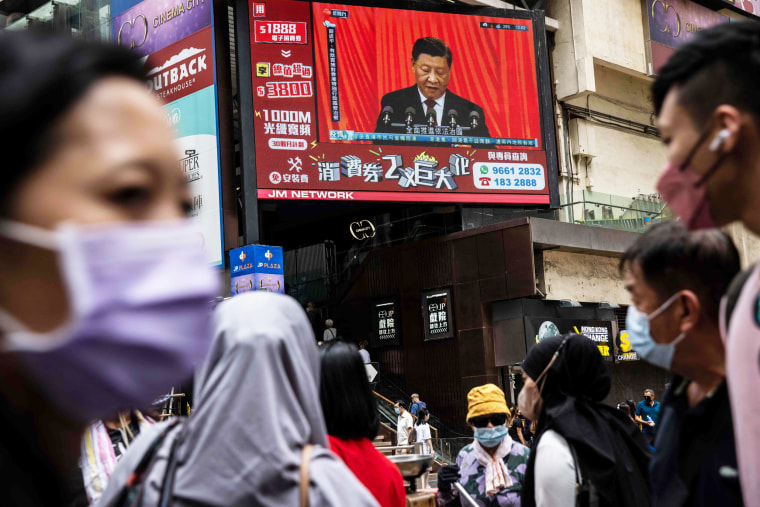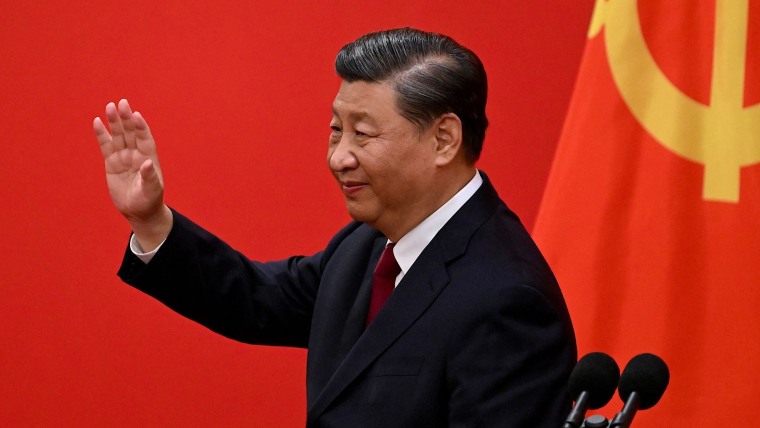
HONG KONG — Xi Jinping secured a historic third term as the leader of China on Sunday, cementing his status as the country’s most powerful figure in decades and extending his authoritarian rule over the world’s second-largest economy.
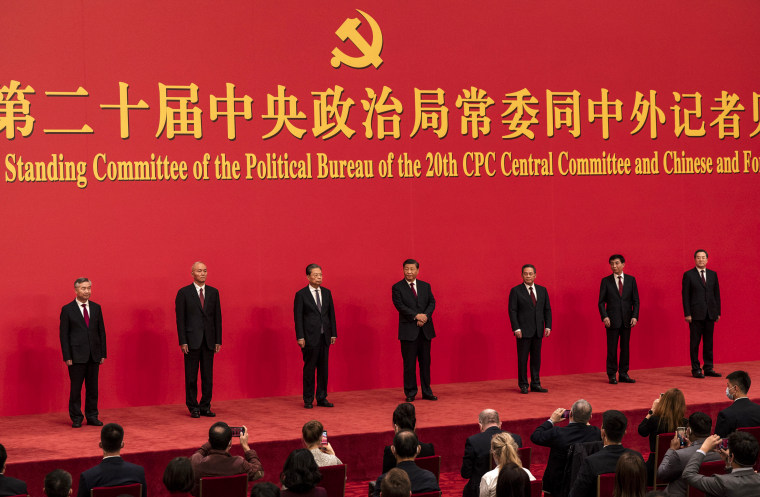
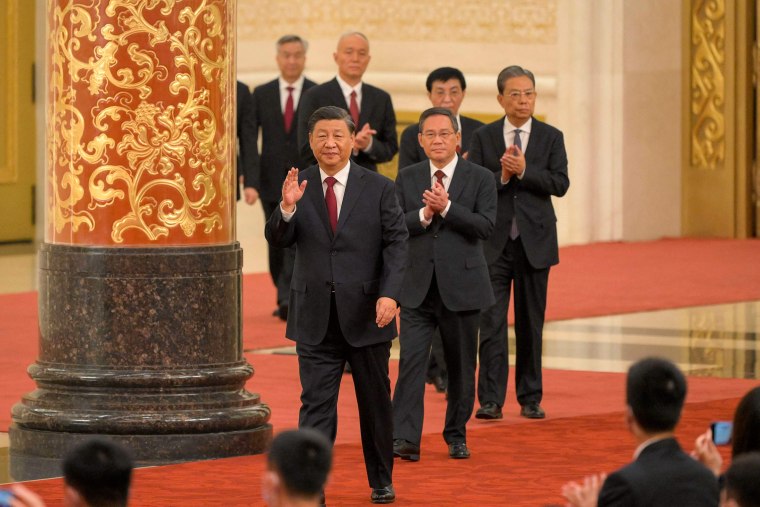
Xi’s third five-year term became official when he was the first to walk out onstage at the Great Hall of the People in Beijing, where a twice-a-decade congress of the ruling Chinese Communist Party wrapped up Saturday. He was followed in descending order of rank by the six other members of the new Politburo Standing Committee, China’s top leadership body.
Xi is breaking with tradition by remaining in office, having amended the Chinese Constitution in 2018 to remove the two-term limit on the presidency. The Chinese leader Deng Xiaoping introduced the limit in 1982 to prevent a return to a Mao-style cult of personality.
Here are some takeaways from the weeklong party congress:
Centralized power
The Chinese political system is structured around Xi, 69, who heads the state, the military and — most important — the Chinese Communist Party. Since he came to power in 2012, Xi has tightened the party’s grip on the state and society, sidelined political rivals and stamped out dissent.
Over the years, Xi — whom the party named a “core” leader in 2016, putting him on par with Mao and Deng — has increasingly surrounded himself with people unlikely to challenge him or his policies.
“What we’re starting to see is sort of an undermining of a lot of the rules, both formal and informal, that were put in place by his predecessors in favor of him getting his allies into the top jobs,” said James Gethyn Evans, an expert in Chinese history and politics at the Fairbank Center for Chinese Studies at Harvard University.
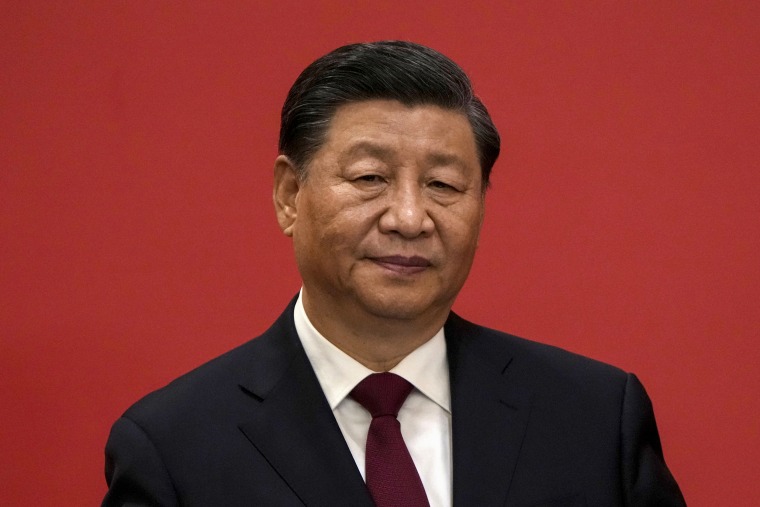
The trend continued Sunday, when the new Politburo Standing Committee was revealed. Xi allies Li Qiang, Cai Qi, Ding Xuexiang and Li Xi joined current members Wang Huning and Zhao Leji to form Xi’s inner circle.
Li Qiang, who as party secretary of Shanghai oversaw the city’s devastating two-month Covid lockdown last spring, came out immediately behind Xi, indicating he will succeed Premier Li Keqiang as China’s No. 2 official.
There is no obvious successor among the members of the Standing Committee, who are all men in their 60s, in a sign that Xi could be eyeing a fourth term, as well.
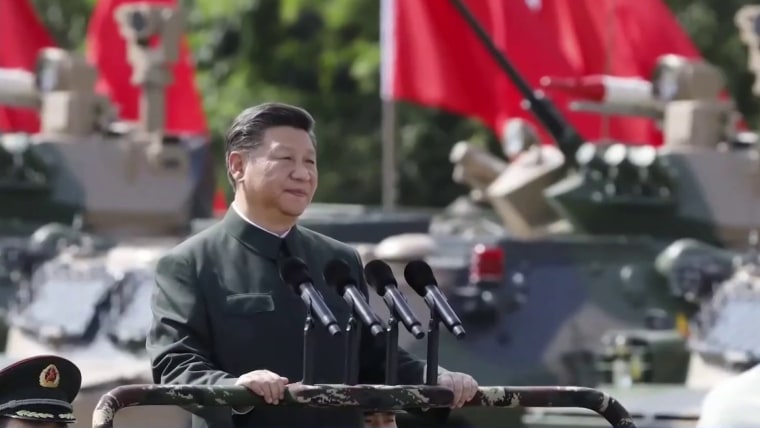
Xi’s tightened control was already apparent as the highly choreographed congress closes Saturday, with about 2,300 delegates unanimously approving work reports, as well as amendments to the party charter, that could further increase Xi’s authority.
They also elected a 205-member Central Committee that is stacked with Xi loyalists and no longer includes more moderate leaders like Li Keqiang, the departing premier, and former Vice Premier Wang Yang. Both men had been members of the previous Politburo Standing Committee, which along with the broader Politburo is nominally elected from among the Central Committee membership.
In a moment of unexpected drama Saturday morning, former President Hu Jintao, who had been sitting next to Xi, was escorted out of the hall without explanation shortly after foreign journalists came in. On his way out, Hu, 79, put his hand on Li’s shoulder.
Taiwan remains a flashpoint
Xi’s speech opening the congress on Oct. 16 did not include any escalation of rhetoric around Taiwan, the self-ruling island democracy that Beijing claims as its territory. He reiterated the goal of peaceful “reunification,” without renouncing the possible use of force.
“Xi has promised essentially more of the same on Taiwan,” Wen-Ti Sung, a Taipei-based expert on U.S.-China-Taiwan relations at the Australian National University, said by email. “Xi still promises no specific timeline on unification.”
But Xi did put greater emphasis on warning “external forces” to stay out of the Taiwan issue.
U.S. House Speaker Nancy Pelosi’s contentious visit to the island in August has changed Washington’s relationship with both China and Taiwan, said Lev Nachman, an assistant professor at National Chengchi University in Taipei.
“There has kind of been a reset of tone,” he said, “and I think that’s going to not just keep Taiwan in the conversation, but keep it front and center.”
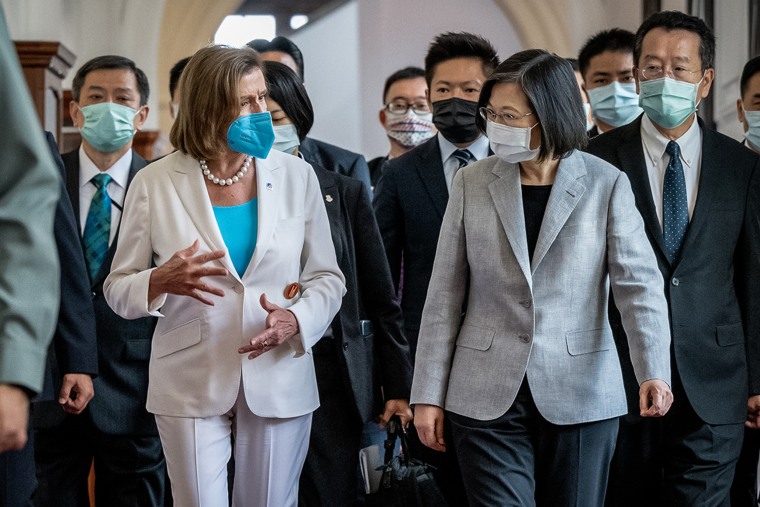
Although there is always the risk of a Taiwan conflict’s being set off by accident, Nachman said, China is unlikely to make a calculated decision to invade any time soon as it deals with pressing domestic matters, like an economic slowdown and growing public frustration with Xi’s strict “zero-Covid” policy.