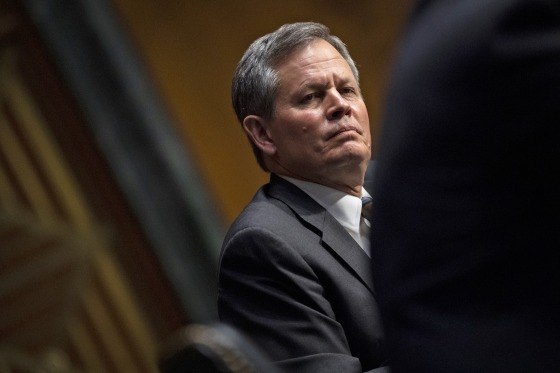
WASHINGTON — Sen. Steve Daines, R-Mont., is the man in charge of retaking the Senate for Republicans in 2024. And he thinks he has a secret weapon: former President Donald Trump.
Many people blame Trump, in part, for endorsing candidates who were popular with the conservative base but turned off general election voters and ultimately lost. But Daines is convinced that a partnership can work its magic this time.
The start of that plan came Monday, when Daines, the head of the National Republican Senatorial Committee, formally backed Trump for president, giving him arguably his most significant endorsement of the cycle.
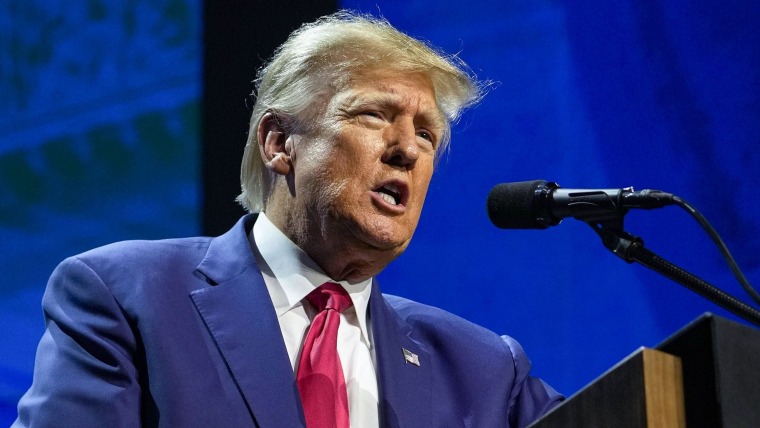
“He wants to win. I want to win,” Daines said in a sit-down interview Thursday. “The most important thing we can give our next Republican president is a Republican majority in the Senate.”
Daines explained his decision to back Trump at such an early juncture of the primary by pointing to their collaboration on the 2017 tax cuts and the Great American Outdoors Act, legislation that provided billions in new funding to address maintenance backlogs at national parks.
But Daines also highlighted his efforts to recruit more mainstream Republican candidates and the boost Trump could give them to make it through contested primaries.
“You look back — his endorsement certainly was a significant factor in primary elections,” Daines said. “And so I’m going to continue to work with the president. I spoke to him [Wednesday] night. And we dialogue a fair amount, just talking about the various states and where his support could help significantly in terms of getting behind candidates who can win primaries and general elections.”
Having Trump on the same page with the NRSC could be critical to the Republican Party’s Senate fortunes next fall. The party is blessed with a map that features Democrats trying to hold on to more than a half-dozen swing or Republican-aligned states with only a few, tough, opportunities for them to pick up seats.
But the GOP is coming off a cycle in which it blew critical races after Trump-backed candidates who embraced his false claims of a stolen election and called for stringent abortion restrictions piled up loss after loss in what should’ve been a strong year for them.
At the top of the agenda for Daines and Senate Republicans is a trio of seats held by Democrats in red states — West Virginia, Ohio and Montana. The NRSC has already started to rally behind West Virginia Gov. Jim Justice, who announced his candidacy Thursday, in a primary battle against Rep. Alex Mooney.
Trump has yet to make his support in that race clear; he is close personally with Justice, but he endorsed Mooney in a contested primary last year. In Ohio, Trump has encouraged businessman Bernie Moreno’s Senate run, while the NRSC has so far stayed neutral. In Montana, the NRSC is reported to be encouraging military veteran and businessman Tim Sheehy to jump in, while Trump has kept his powder dry.
Meanwhile, should Trump win the presidential nomination, he will have to carry swing states like Pennsylvania, Arizona and Wisconsin — each of which is gearing up for tough Senate contests.
While Daines sees Trump as the prohibitive favorite to win the GOP primaries, he said there was still a long way to go for him to secure the nomination.
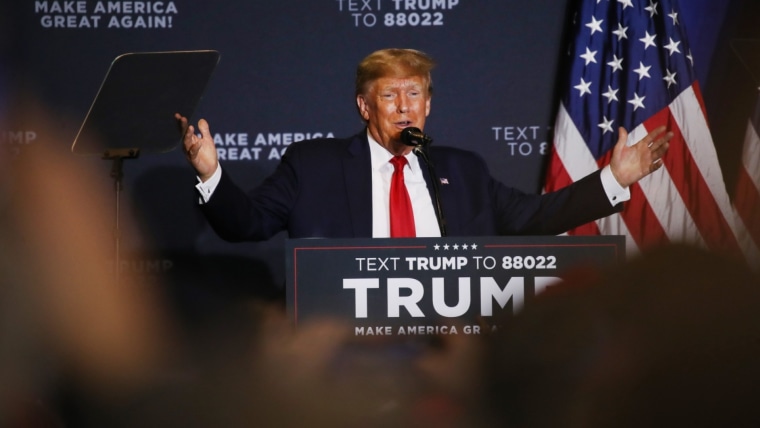
“So it is early. I mean, it’s April of the year before the election,” he said. “But this is absolutely a generational-defining election. And we’ve got our heads down here working hard. And we’re going to continue to watch [the] presidential level for sure. But my singular task here is to stay focused on winning the United States Senate for the Republicans.”
Although most polling shows Trump far ahead of his GOP primary rivals, the same surveys tend to show him behind President Joe Biden.
But Daines believes 2024 will be different from 2020, because Biden will be expected to more vigorously campaign and make more public appearances than he did last time, in a period overshadowed by the Covid pandemic. Voters, he said, will also be judging the records of both Biden and Trump rather than offering a referendum purely on Trump’s performance.
“There’s a lot of water to run between now and the election that will go under the bridge,” he said. “But I think it’d be a pretty strong contrast between these two leaders.”
In his short time at the helm of the NRSC, Daines has sought to correct issues that plagued the party at the ballot box last year, whether they be candidate quality or an aversion to early voting. He said his big takeaway from 2022 was the need to get more involved in recruiting candidates who can appeal to independent voters while still being able to make it through GOP primaries.