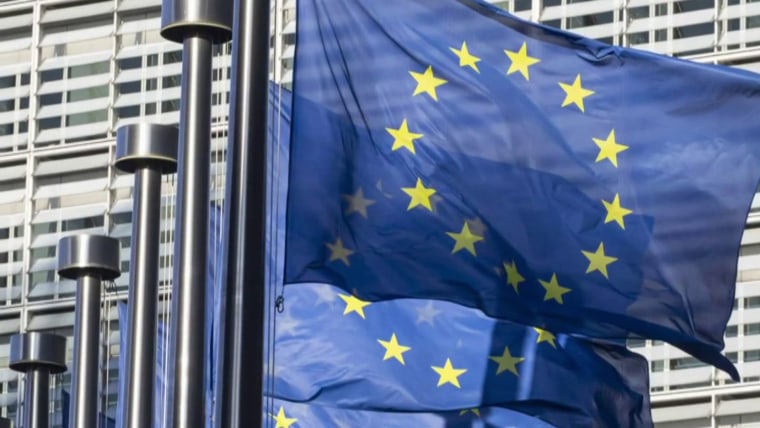
The European Union has pushed back against President Donald Trump’s latest suggestion that he will impose a 50% import tariff on all E.U. goods, warning that trans-Atlantic trade must be built on “respect, not threats.”
The rebuke came after Trump said in a Friday post on his Truth Social platform that trade negotiations with Brussels were “going nowhere” and suggested he would slap a 50% blanket duty on all European goods entering the U.S. starting June 1.
But on Sunday, Trump announced that the new date for the tariff to go into effect would be July 9, after he said Ursula Von Der Leyden — president of the European Commission — called him and requested he push back the date.
It was just the latest bellicose remark from Trump and came amid a broader souring of relations between the two global powers that has seen months of distrust and economic sparring.
The E.U., home to nearly 450 million people, is the world’s largest trading bloc and one of Washington’s top commercial partners. It exported more than $600 billion in goods to the U.S. last year while importing goods worth around $370 billion.
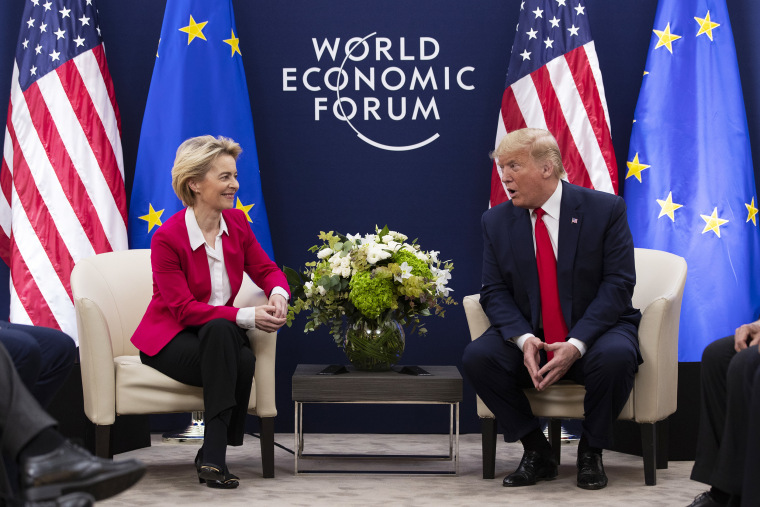
Trump’s latest broadside follows his April 2 “Liberation Day” announcement of a 39% tariff on European goods, an idea he later walked back before he changed course again Friday with an even tougher stance.
Stephen Moore, a former economic adviser to Trump, told the BBC that his former boss was expressing his frustration with the E.U.
“I think he was hoping that by now we would have the E.U. coming with some kind of deal on the table, and so far that hasn’t come,” he said, calling the 50% import tariffs a “shot at the bow.”
E.U. Trade Commissioner Maroš Šefčovič said late Friday that “E.U.-U.S. trade is unmatched & must be guided by mutual respect, not threats,” and that the bloc remains committed to securing “a deal that works for both,” following a call with U.S. Trade Representative Jamieson Greer and Commerce Secretary Howard Lutnick.
While the E.U.’s response signals a willingness to negotiate, discord has deepened between the bloc and its longtime trans-Atlantic ally over a return to the combative stance Trump took during his first administration, when he flew in the face of decades of cooperation and cast the E.U. as an economic rival.
In 2018, Trump said “nobody treats us much worse than the European Union” and argued the bloc was designed to exploit the U.S. He repeated that claim this year, describing the E.U. as being “formed in order to screw the United States.”
While the ideological architects of Trump's first administration such as Steve Bannon and Peter Navarro have also gone on record criticizing the union, many in Trump’s current inner circle have shared those sentiments.
Vice President J.D. Vance lashed out in February at European leaders at a security conference in Munich over issues ranging from free speech to migration and defense, dealing a sucker punch to the European view of America as a steadfast cultural ally.
“The threat that I worry the most about vis-à-vis Europe,” Vance said, “is the threat from within — the retreat of Europe from some of its most fundamental values, values shared with the United States of America.”
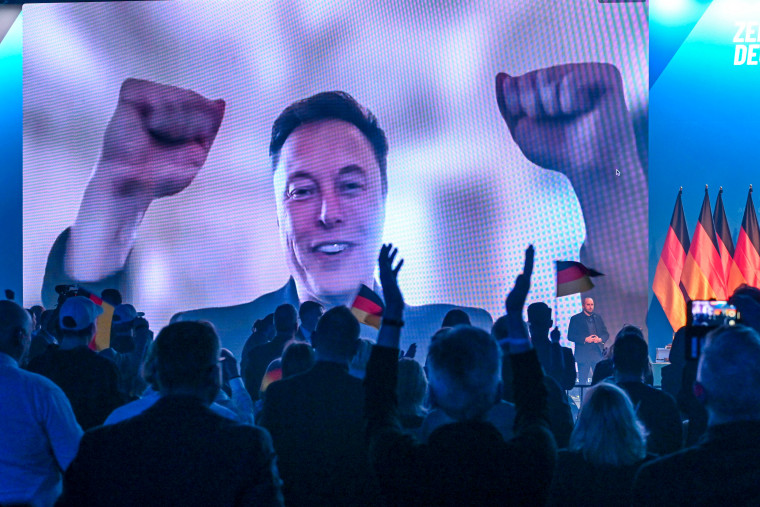
That came after Elon Musk — the world’s richest man, who also served as Trump’s close adviser earlier in his second term — threw his support behind Germany’s far-right Alternative for Germany party, which has called for Germany to leave the E.U.
Underlying much of the second Trump administration’s animosity toward Europe has been security funding, most prominently over the war in Ukraine.
While the administration’s view of the war in Ukraine has since softened, Vance has repeatedly opposed sending military aid to Kyiv, saying in February that “I don’t really care what happens to Ukraine one way or another.”
And in a Signal conversation between senior administration officials leaked in March, the vice president initially resisted U.S. strikes in Yemen, arguing he didn’t want to “bail Europe out,” while Defense Secretary Pete Hegseth warned that Europe was treating America like a “sucker” by relying on it for defense.