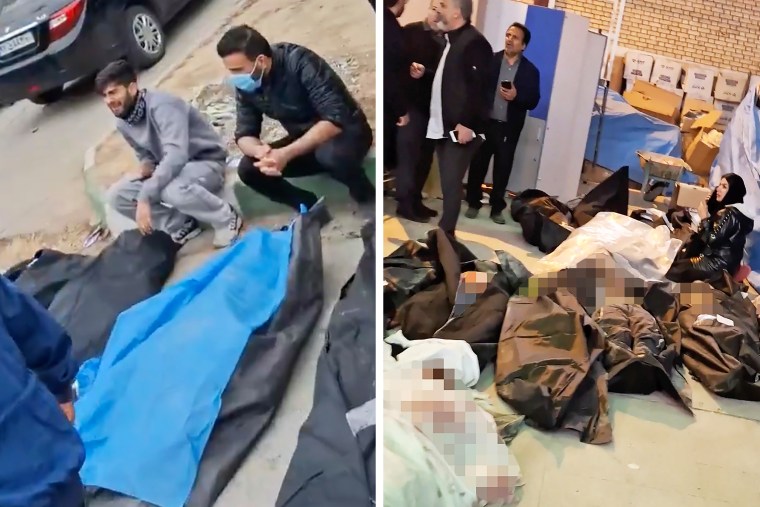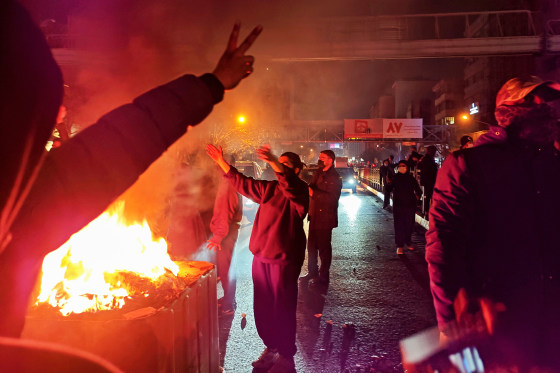
After a brutal crackdown on anti-government protests that left thousands dead, Iranian authorities are taking the next step to crush dissent: mass arrests.
Tens of thousands of people were arrested during the nationwide unrest, and security forces are still tracking down and detaining people they believe attended protests that called for an end to theocratic rule, according to human rights observers. But in recent weeks, authorities have also targeted specific groups perceived as threats to the regime, including reformist politicians, doctors, lawyers and journalists, rights groups say.
The arrests have not squashed the anti-government sentiment: Protests have broken out on a number of university campuses in recent days, according to state media and videos circulating on social media.
“What they have left is guns, prisons and the revolutionary courts. To kill and imprison people and in this way stay in power,” said Hossein Raeesi, a prominent human rights lawyer who practiced in Iran for 20 years and is now a professor at Carleton University in Ottawa.
President Donald Trump said Tuesday in his State of the Union speech that Iran had killed at least 32,000 protesters.
"They shot them and hung them," he said. "We stopped them from hanging a lot of them, with the threat of serious violence. But this is some terrible people."
The U.S.-based Human Rights Activists News Agency (HRANA) put the number of people killed in the protests at more than 7,000 as of Monday, with nearly 12,000 cases “under review.”
The group says that it verifies each death with a network of activists on the ground in Iran and that its data goes through “multiple internal checks.”
The U.S. is conducting a huge military buildup in the Middle East, with Trump not ruling out an attack on Iran even as the two countries hold nuclear talks.
Another round of talks was taking place Thursday in Geneva, while Iran has warned of a significant response to even a limited attack.
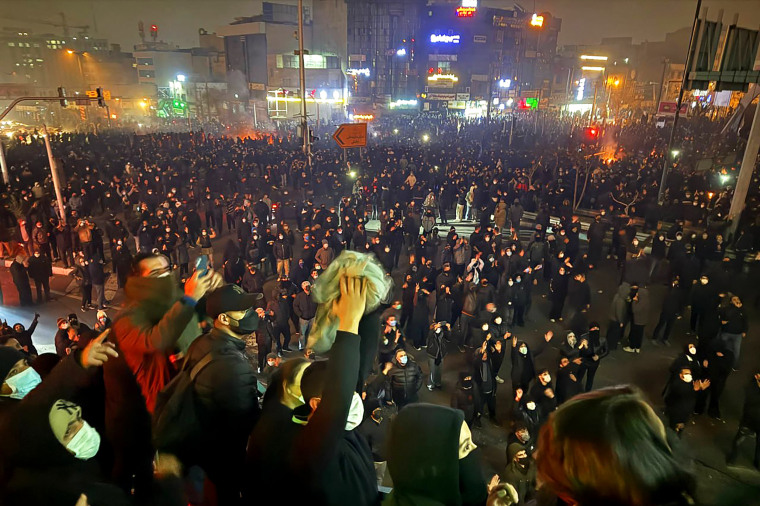
But while the regime seeks to hold off that external danger, it appears to be rooting out perceived internal threats.
More than 53,000 people have been arrested since the protests began, HRANA said in its report Monday. The head of Iran's judiciary, hard-line cleric Gholamhossein Mohseni Ejehi, labeled protesters “terrorists” and called for fast-tracked punishments.
Among the reformists who were swept up were Azar Mansouri, the head of the Reformist Front coalition; Javad Emam, a spokesman for the reformist faction; and Ebrahim Asgharzadeh, a hostage-taker at the U.S. Embassy in Tehran in 1979-turned-regime critic, according to the semiofficial Iranian Students’ News Agency.
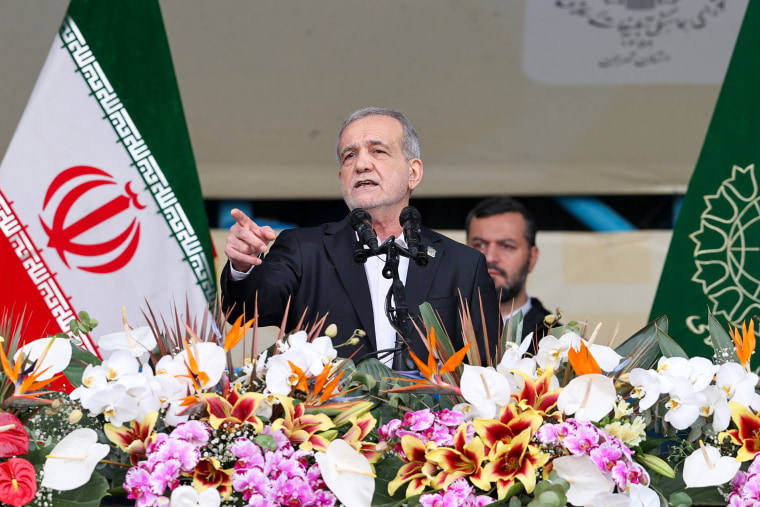
The arrests may have also been a message to President Masoud Pezeshkian, who is close to the reformists and had initially mentioned holding talks with protesters, analysts say. Mansouri, Asgharzadeh and Emam were all released on bail two weeks ago, according to the students news agency.
“The reformists themselves — bereft of popular trust — are no longer the real menace,” Ali Vaez, Iran project director at the International Crisis Group, said in an email response to questions. “It is any structure, any network, any embryonic capacity to organize that the regime truly fears.”
The volume of arrests has been so high that thousands of people have spent at least part of their time at “black box detention sites,” off-the-grid locations such as warehouses, truck containers and storage facilities, according to Esfandiar Aban, the director of research at the Center for Human Rights in Iran, a New York-based advocacy group.
Detainees at the black box sites, some of whom are seriously wounded, do not receive medical care, do not have access to proper toilet facilities and are not logged in official records, raising the chances of torture or even death, Aban said.
“We get so many texts from people saying: ‘This is the name of my child. We have no idea where they have been for 40 days,’” Aban said in a phone interview. “It’s terrible pressure for the family. They don’t know if they’re dead or alive.”