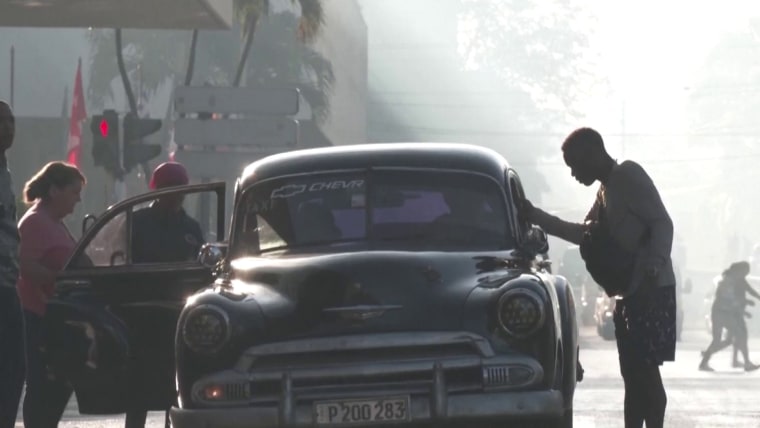
HAVANA — The ripple effects from the capture of Venezuelan leader Nicolás Maduro on Saturday could make their way quickly here, devastating this island that has been in a yearslong economic crisis.
Following the dramatic operation that ousted Maduro in the dead of night, President Donald Trump suggested Cuba’s government will fall, something reiterated by Secretary of State Marco Rubio and Sen. Lindsey Graham, R-S.C.
Since the rise of Hugo Chavez in Venezuela in 1999, Cuba has depended heavily on Venezuela for subsidized oil in exchange for Cuban medical professionals, military advisers, security forces and others. Without Venezuelan oil, Cuba’s economy, which is already in a deep crisis, will likely spiral even further.
“If oil supply were to cease entirely, the Cuban economy would grind to a halt,” said Pavel Vidal, a former Cuban central bank economist who teaches at Javeriana University in Colombia. “This would represent a devastating blow to a Cuban economy already in recession for six years and lacking the productive capacity, competitiveness and foreign currency to replace these flows.”
Expecting more hardship
In Cuba, where everyday people are accustomed to the dire economic situation, many are bracing themselves for even tougher conditions following the U.S. actions in Venezuela. The island and its government survived the collapse of the Soviet Union in the 1990s when its economy shrank by roughly 30%.
“The situation here is going to become very difficult,” said Rey Rodriguez, a butcher. “Imagine what awaits us. Less oil, more blackouts … young people are going to become even more pessimistic.”
There are no oil tankers leaving Venezuela for Cuba based on satellite tracking services, according to Jorge Piñón, an energy expert at the University of Texas at Austin Energy Institute. It doesn’t mean “ghost ships” with their transponders turned off haven’t slipped in.
Venezuela usually sends three or four tankers per month, which adds up to 30,000 to 35,000 barrels per day.
“That’s why the Venezuelan supply is so important, because those 30,000 to 35,000 barrels a day represent 50% of the deficit that Cuba has of oil,” Piñón said. The rest is supplied by Mexico and Russia.
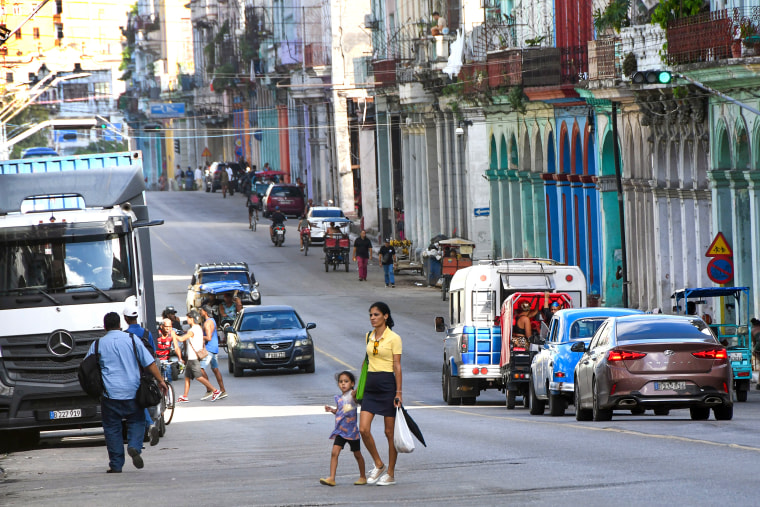
Weeks before the U.S. actions in Venezuela, Cuban President Miguel Díaz-Canel gave a bleak outlook of the economy during a speech at the National Assembly, saying the country’s gross domestic product decreased over 4%, inflation shot up and the economy was “partially paralyzed.”
Content creator Pedro Luis García said: “We don’t know what the economic situation will be, but it will likely worsen because of the oil. But I don’t think there can be a change of government, because the problems have been around since 1962, and this government is prepared for these types of situations.”
Cubans, under U.S. sanctions for decades, have been dealing with severe shortages of food, medicine and fuel for the past few years, as the import-dependent island has seen its foreign currency revenues fall by about 30%.
Its tourism sector, the second most important source of revenue for the government, has taken a hit in recent years and could drop even further if conditions on the island worsen.
Cuba is also grappling with a trifecta of mosquito-borne illnesses including dengue and chikungunya virus that have affected almost one-third of the population. The situation has worsened with the government’s inability to clear piles of trash that accumulate on streets and to carry out fumigation campaigns.
For the past year, Cubans have faced prolonged blackouts because of the island’s aging oil-fired power plants. Cuba’s grid collapsed several times last year because of the outdated infrastructure and fuel shortages. Declining oil imports from Venezuela, Russia and Mexico have led to the rationing of electricity. The capital, Havana, once insulated from blackouts, now faces 10 hours or more without electricity each day. In other parts of the country, the blackouts can extend to 20 hours.
Oil shipments from Venezuela are likely to stop if Trump gets his way.
Cuba’s second biggest supplier of oil, Mexico, is also facing pressure from Trump. He recently suggested the U.S. can take action against the country, saying drugs were “pouring” through Mexico and that “we’re going to have to do something.”
A defiant government response
The day Maduro was captured, Cuba’s president condemned and denounced the U.S. actions in a defiant speech. Díaz-Canel said that U.S. actions were not about Maduro, his government or even drug trafficking, but that the “obscure object of imperialist desire was Venezuelan petroleum, the lands and natural resources of Venezuela.”

