Trump says he's postponing attacks on Iran power plants, citing 'productive' talks to end war
Iran said the reversal was designed to lower energy prices and "buy time" for Trump's military plans. Trump had threatened to "obliterate" Iran's power plants unless it ends a blockade of the crucial Strait of Hormuz, which has sent global energy prices soaring.
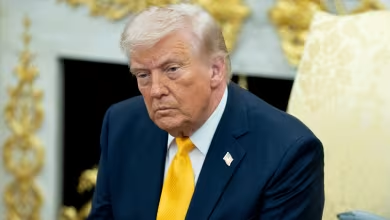
Coverage on this live blog has ended. Follow live updates here.
What to know
- TRUMP POSTPONES ENERGY ATTACKS: President Donald Trump said this morning he was postponing any strikes against Iran's power plants for five days, citing what he said were "productive conversations" with Tehran to end the war. Markets surged and oil prices dropped on the news.
- TEHRAN DEFIANT: Iran responded by saying that there had been no direct talks and that Trump's move was designed to lower energy prices and "buy time" for his military plans. Tehran had threatened to strike electricity targets across the region if Trump followed through on his threat to "obliterate" the country's power network unless it opened the crucial Strait of Hormuz shipping route by tonight.
- GLOBAL ENERGY CRISIS: The global economy faces a "major threat" and the current energy crisis is worse than the oil shocks of the 1970s, the International Energy Agency warned. The U.S. moved to ease sanctions on Iranian oil to cool surging prices, but that would be a boon for Tehran.
- DEATH TOLL: More than 2,000 people have been killed across the Middle East as the war enters its fourth week. In Iran, Israeli and American strikes have killed more than 1,200 people, according to the Iranian Red Crescent Society. At least 1,000 people have been killed in Lebanon, and 15 have died in Israel. Thirteen U.S. service members have been killed, and two more died of noncombat causes.
- INSIGHTS AND ANALYSIS: Get exclusive analysis and insight into the Middle East conflict by becoming an NBC News subscriber.
IDF says search and rescue forces heading to central Israel amid impact reports
Search and rescue forces are on their way to several sites in central Israel, where reports of impacts have been received, the Israel Defense Forces said.
“The public is requested to avoid gathering in these areas,” it added.
Two Iranian energy sites hit by airstrikes: report
Two energy facilities have been struck in Iran, the semi-official Fars news agency reported on Telegram.
The gas administration building and a gas pressure reduction station on Kaveh Street in Isfahan were hit, resulting in damage to parts of the facilities and nearby homes, the news agency reported. Isfahan is a city in central Iran.
A gas pipeline for the Khorramshahr power plant was also “targeted,” Fars said, citing reports.
The governor of Khorramshahr, a port city in southwestern Iran, said a projectile struck an area outside the gas pipeline station, and that there were no casualties.
Pakistan moves to mediate between the U.S. and Iran
Pakistan is joining a growing list of countries acting as go-betweens for the U.S. and Iran, four sources told NBC News, with two of those sources saying an in-person meeting could be held in the coming days in Islamabad, the Pakistani capital.
A diplomatic source said Pakistan is in conversations with both the U.S. and Iran and is “well poised to play an active role” in discussions to end the war, which has killed more than 2,000 people and displaced millions as it enters its fourth week. A Gulf official said Pakistan had been passing messages between the two countries for the past two days.
For the first time since the conflict began with U.S. and Israeli strikes on Feb. 28, Trump said earlier today that the U.S. and Iran had held “very good and productive conversations” and that the discussions would “continue throughout the week.” The announcement was an about-face from the president’s stark ultimatum over the weekend demanding that Iran reopen the Strait of Hormuz within 48 hours or the U.S. would “obliterate” the country’s power plants.
“We’re doing a five-day period. We’ll see how that goes, and if it goes well, we’re going to end up with settling this,” Trump told reporters of his decision to postpone U.S. strikes on Iran’s energy infrastructure. “Otherwise, we’ll keep bombing our little hearts out.”
Sen. Ted Cruz praises U.S. military operation as largest naval feat since WWII, calls for 'collapse' of Iranian regime
The U.S. military operation in Iran is the “largest naval defeat, the most ships sunk since World War II,” Sen. Ted Cruz said.
In an interview on Fox News, Cruz, R-Texas, said Trump asked him whether the U.S. should continue negotiating with Iran on Feb. 27, the day before it began airstrikes along with Israel.
“I said: ‘Listen, the ayatollah is not negotiating in good faith. All the ayatollah is trying to do is delay, delay and delay and delay while they build missiles, while they build drones, while they try to reconstitute their nuclear program,’” Cruz said. “And what I my advice to the president was, there was only one deal he should accept from the ayatollah, which is the deal that President Trump gave Nicolás Maduro before we went down and arrested Maduro.”
He said that Trump gave Maduro, the former president of Venezuela, the option to flee and live in exile and that when he refused, Maduro was arrested and transported to a U.S. prison.
Asked what the outcome of the war should be, Cruz said, “The collapse of this regime.”
“I don’t have a dog in the fight of who the next leader of Iran is,” he said. “I just want it not to be an Islamist who wants to murder us.”
Foreign ministers of Iran and Oman share phone call
The foreign ministers of Iran and Oman had a phone conversation today, Iranian state news reported.
They discussed the regional developments after the U.S. and Israeli strikes and developments related to the Strait of Hormuz, and they agreed to continue consultations in the future, IRIB News said on Telegram.
Iranian president has phone call with prime minister of Pakistan
Iranian President Masoud Pezeshkian held a phone call today with Shehbaz Sharif, the prime minister of Pakistan, the semiofficial Iranian news agency Tasnim said on Telegram.
During the call Sharif declared Pakistan’s solidarity with Iran, the news agency reported.
The two leaders discussed bilateral relations, regional developments and the consequences of the war on regional and global security.
“Iran did not start the war and the aggressor attacked without justification or legal basis during nuclear negotiations, targeting the country and killing senior officials and civilians, including students, as well as striking public facilities. Therefore, defending the country’s territory is a legitimate and natural right,” Pezeshkian said, per Tasnim.
Pezeshkian said Iran’s request to regional countries is to not allow the U.S. or Israel to use their territory or facilities to attack Iran and to not enable further aggression.
He said Iran has taken measures to ensure maritime safety in the Strait of Hormuz and the secure passage of ships for vessels “that are not linked to the aggressors,” the news agency reported. Sharif said he appreciated Iran’s cooperation in allowing Pakistani vessels safe passage through the strait.
Former IRGC commander warns U.S. against attacking Iranian infrastructure, says war will continue until all losses are recovered
Former Islamic Revolutionary Guard Corps commander Mohsen Rezaei said the war will continue until “all of Iran’s losses are recovered, all economic sanctions are lifted, and international legal guarantees are obtained to prevent U.S. interference in Iran,” according to Iranian state news.
He said that if Trump attacks Iran’s infrastructure, “it will no longer be an eye for an eye, but an eye for a head, a hand, and a foot,” warning, “America will be paralyzed,” IRIB News reported.
Netanyahu says he's spoken with Trump and strikes will continue
Israeli Prime Minister Benjamin Netanyahu said that he has spoken with Trump and that strikes in Iran and Lebanon will continue.
“President Trump believes there is an opportunity to leverage the significant achievements of the Israel Defense Forces and the U.S. military to achieve the objectives of the war through an agreement — one that safeguards our vital interests,” Netanyahu said in a video message on social media.
“At the same time, we continue our strikes — both in Iran and in Lebanon,” he added.
He said the strikes are “systematically dismantling” Iran’s missile and nuclear programs, as well as targeting Hezbollah in Lebanon.
“Just a few days ago, we eliminated two additional nuclear scientists — and more actions are ahead,” he continued.
Kuwait army fighting 'hostile missile and drone attacks'
Kuwait’s army said its air defenses are confronting “hostile missile and drone attacks.”
The army said on X that if explosions are heard, it is because air defense systems are intercepting the attacks.
"Everyone is requested to adhere to the security and safety instructions issued by the competent authorities," the army said.
White House won't say whether U.S. officials will meet with Iran for more talks
Asked for comment on whether U.S. officials will meet this week with Iran or intermediaries for further talks, White House press secretary Karoline Leavitt said, "These are sensitive diplomatic discussions, and the U.S. will not negotiate through the press."
"This is a fluid situation, and speculation about meetings should not be deemed as final until they are formally announced by the White House," she added.
Nearly 8,000 targets struck in Iran since start of Operation Epic Fury, CENTCOM says
U.S. military forces have struck roughly 7,800 targets in Iran since the start of the military campaign dubbed Operation Epic Fury, according to U.S. Central Command.
In a fact sheet released to the news media, CENTCOM said U.S. forces have undertaken more than 8,000 combat flights. More than 120 Iranian ships are listed as damaged or destroyed.
"CENTCOM forces are striking targets to dismantle the Iranian regime's security apparatus, prioritizing locations that pose an imminent threat," the fact sheet says.
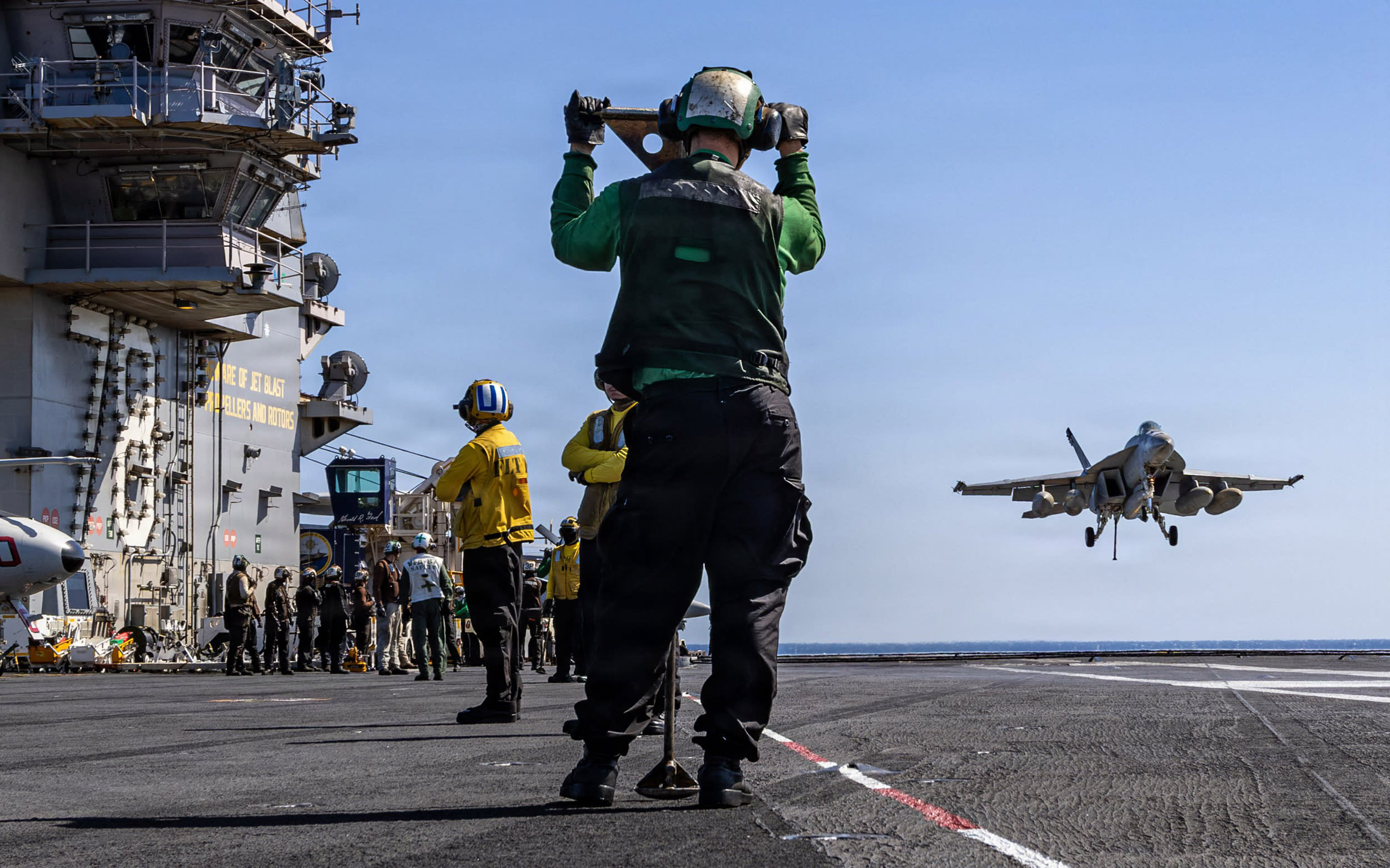
An F/A-18E Super Hornet fighter jet approaches the flight deck of the USS Gerald R. Ford on March 8 during Operation Epic Fury. NAVCENT Public Affairs via AFP - Getty Images
Saudi Arabia intercepts and destroys at least five drones in past hour, Defense Ministry says
Saudi Arabia’s Defense Ministry said it has intercepted and destroyed at least five drones in the past hour.
The Defense Ministry shared several posts on X announcing the destruction of the drones, all in the eastern region of the kingdom.
Missiles launched from Iran toward Israel, Israel Defense Forces says
Israel Defense Forces said defense systems are operating to intercept missiles identified as having been launched from Iran toward Israel this afternoon ET.
A precautionary directive was sent to mobile phones in relevant areas. The public is instructed to enter a protected space and remain there until further notice.
There is 'no need' to lay mines in Persian Gulf, Iran's Revolutionary Guards say
Iran's regime sees “no need” to lay mines in the Persian Gulf, a spokesperson for the Islamic Revolutionary Guard Corps said in a statement.
“The armed forces ... are capable of ensuring the security of the Persian Gulf, and extra-regional countries have no right to intervene in this area,” the spokesperson for the Revolutionary Guards said, according to IRIB state television.
Strikes on Iran 'must continue,' Israeli opposition figure says in laying out his conditions for a deal
Benny Gantz, a prominent Israeli opposition leader known for his centrist politics, said today that strikes on Iran “must continue” but mapped out the broad strokes of a potential deal to resolve the conflict.
“Israel must ensure that in any arrangement with the Iranians — enriched uranium is removed from Iran, ballistic missile production is dismantled, and Iran halts all funding of its proxy forces,” Gantz said in a statement.
Iranian proxy forces in the region include Hezbollah, a militant group based in Lebanon, and Hamas, which governs the Gaza Strip.
“The most important thing is not only what is written, but that Israel’s freedom of action in response to any violation is preserved,” Gantz added. “Ending the operation without securing all these conditions guarantees that the next round is closer than ever — and will weaken opposition to the regime and the regional alliance.”
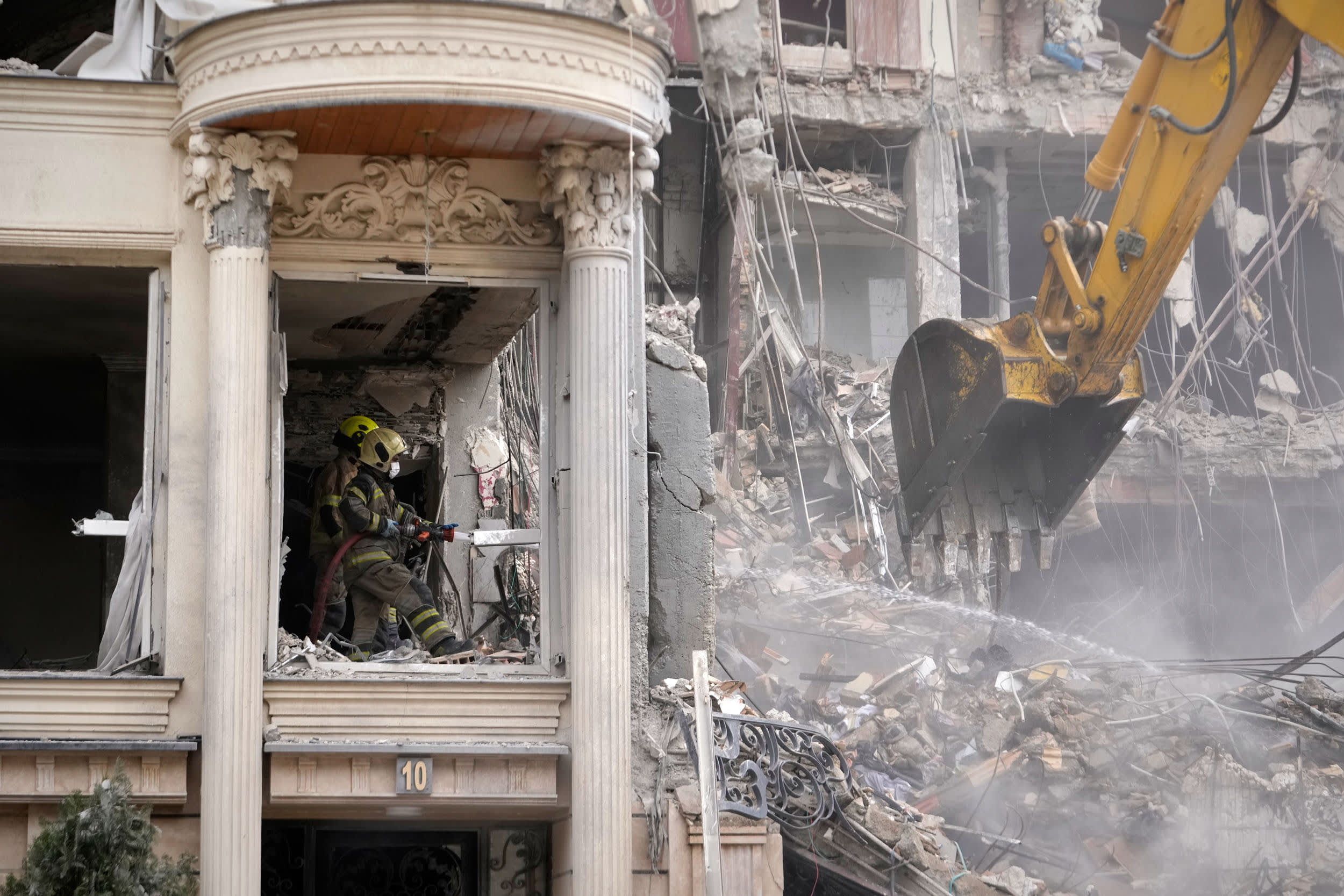
Rescue workers at a residential building hit in an earlier U.S.-Israeli strike in Tehran today. Vahid Salemi / AP
Iranian official accuses Trump of retreating on Strait of Hormuz
Saeed Jalili, one of the most hard-line figures in Iranian politics, appeared to mock Trump on X, accusing the U.S. of backing down from its demand to reopen the Strait of Hormuz.
“First, they said: ‘The Strait of Hormuz must be opened.’ Then, they said: ‘I will insure and escort the ships.’ Now, they say: ‘I am willing to manage it jointly with Iran,’” Jalili wrote.
“This is the very definition of a retreat: Iran’s power has brought the United States to the table of realities,” he added. He closed the X post with the hashtag “#TACOTrump,” an acronym for “Trump Always Chickens Out.”
The four-word phrase gained traction online after Trump reversed some of his most aggressive tariffs on U.S. trading partners last year.
Striking Iran's power plants would be 'collective punishment,' National Iranian American Council says
Before Trump postponed his threat to target Iran’s energy infrastructure, the president of the National Iranian American Council said it would be a “collective punishment.”
“Let’s be absolutely clear: threatening to bomb Iran’s power plants is a threat to millions of civilians — people who rely on electricity for hospitals, water systems, and basic survival,” Jamal Abdi said in a statement. “This is not a ‘targeted’ strike. This is collective punishment.”
Abdi called for urgent diplomacy to end the war, saying the U.S. “must not deepen a conflict that is already exacting a devastating toll on civilians.”
“Every hour this continues, more lives are at risk,” he said. “The only responsible path forward is to end this war — before even more irreversible harm is done.”
Pakistani prime minister and Iranian president agree on need for 'de-escalation'
Pakistan's prime minister and Iran's president agreed on the "urgent need for de-escalation, dialogue, and diplomacy" amid the escalating conflict between U.S.-Israeli forces and Tehran, according to Iran's state-run Nour News agency.
"I also emphasized the importance of unity within the Islamic ummah and reaffirmed Pakistan’s commitment to playing a constructive role in advancing peace in the region," Pakistan's Shehbaz Sharif said in a statement provided to Nour summarizing his phone call with Iran's Masoud Pezeshkian.
Israeli settlers smash cars and set fires in the West Bank as 4 Palestinians are killed in Gaza
At least 10 Palestinians were injured last night in attacks in the occupied West Bank by Israeli settlers, who rampaged through nearby villages after a funeral for a settler killed in a car crash a Saturday night.
The Palestinian Red Crescent Society said the wounded in Deir al-Hatab included a 45-year-old man shot in the foot and a woman suffering from smoke inhalation. Videos obtained by The Associated Press show cars and homes set ablaze as army flares light up the sky near the village east of Nablus and next to the Israeli settlement of Elon Moreh.
The arson and assaults in four Nablus-area villages yesterday came a day after the official Palestinian news agency WAFA reported simultaneous attacks in at least six communities overnight — the latest spate of violence in the occupied West Bank.
Analysis: Off-ramp might be available if both sides can claim victory
Iran didn’t back down. Its answer to Trump’s threat to bombard its energy infrastructure was that it would hit back.
That is a serious threat to the Gulf states that rely on desalination plants for drinking water. Taking them out would be a huge deal for those countries that are based in the desert and have no other supply.
There was also the fact that an Iranian missile got through Israel’s defenses and hit the town of Dimona, which is widely believed to host the Middle East’s sole nuclear arsenal, although Israel has never admitted to possessing nuclear weapons.
Iran said that was a response to strikes on its own nuclear site at Natanz.
Israel has a long-standing policy of strategic ambiguity, a doctrine of neither confirming nor denying the possession of nuclear weapons. But their existence is an open secret, and the Iranian missile’s coming so close to the facility will have unnerved some.
After Trump’s latest comments, the rhetoric coming out of Iran might have been expected. It hasn’t capitulated, and it has forced Trump to backtrack.
But in many ways, you want a conflict to end with both sides claiming victory, both saving face. While Iranian officials may be denying that talks have taken place at present, it might be hoped that this will be an off-ramp from the conflict.
U.K. summons Iranian ambassador for talks after two charged with spying
Seyed Ali Mousavi, Iran’s ambassador to the U.K., was summoned to Britain’s foreign office today to discuss “the recent charging of two individuals, one Iranian national and one British-Iranian dual national, under the National Security Act.”
Both were charged “on suspicion of providing assistance to a foreign intelligence service,” a spokesperson said today.
“We take threats posed by Iran and those who do its bidding extremely seriously. This government will take all measures necessary to protect the British people, including exposing Iran’s reckless and destabilising actions at home and abroad,” the spokesperson added.
Israel ramps up strikes on bridges over Lebanon's Litani River
Israel struck a bridge connecting Lebanon's south to the rest of the country yesterday after announcing its military would be destroying all crossings over the Litani River.
The crossing had been used by Hezbollah members to move from north to south and to transfer “thousands of weapons, rockets, and rocket launchers,” the Israel Defense Forces said, adding that it had been used to carry out attacks from the south against its soldiers and civilians.
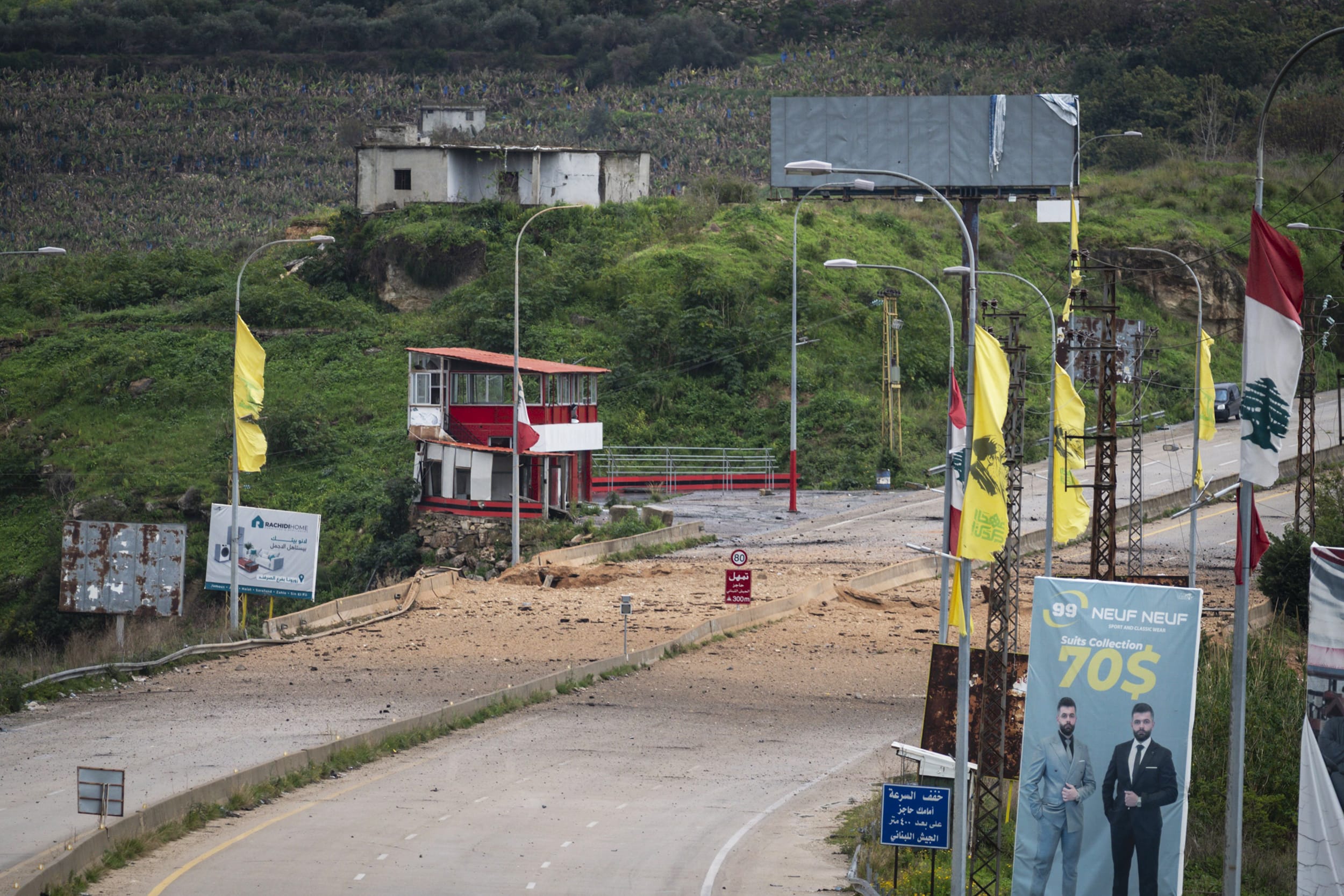
The aftermath of a strike on Qasmiya Bridge in Tyre, Lebanon. Adri Salido / Getty Images
Israeli Defense Minister Israel Katz yesterday said he and Prime Minister Benjamin Netanyahu had instructed the IDF to destroy all bridges over the river as well as to accelerate the destruction of homes in villages near the southern border.
The order represents a significant escalation in Israel's military assault in Lebanon, which was reignited earlier this month after Hezbollah fired into Israeli territory in response to the U.S. and Israel's attacks on Iran, which killed Supreme Leader Ayatollah Ali Khamenei.
Zelenskyy says Ukraine has evidence Russians are providing intel to Tehran
Ukrainian President Volodymyr Zelenskyy said on X that his country has "irrefutable evidence" that the Kremlin continues to provide intelligence to the Iranian regime.
"Russia is using its own signals intelligence and electronic intelligence capabilities, as well as part of the data obtained through cooperation with partners in the Middle East," Zelenskyy said, citing a report compiled by Oleh Ivashchenko, Ukraine's chief of defense intelligence.
Zelenskyy did not provide evidence or cite specific details from Ivashchenko's report.
NBC News reported earlier this month that Russia was providing intelligence to Iran on the location of U.S. forces in the Middle East, citing four sources with knowledge of the matter. The Kremlin has denied this.
Kremlin dismisses report on U.S. and Russian intel sharing
A report suggesting that Russia had proposed a deal with the U.S. that would see Moscow halting intelligence sharing with Iran in exchange for Washington doing the same with Ukraine has been dismissed as false.
Kremlin spokesman Dmitry Peskov told reporters that he was aware of the report published by Politico last week, citing two people familiar with the U.S.-Russia negotiations. The report said that the proposal for a quid pro quo was rejected by the U.S.
Peskov said it was false in a daily briefing earlier today.
NBC News reported earlier this month that Russia was providing intelligence to Iran on the location of U.S. forces in the Middle East, citing four sources with knowledge of the matter.
U.S. requested talks through other countries, Iran's foreign ministry spokesperson says
Messages from friendly countries indicating a U.S. request for negotiations to end the war have been received in recent days, Esmaeil Baghaei, a spokesperson for Iran's foreign ministry, told state media.
These were responded to appropriately in line with the Islamic Republic's positions, the IRNA news agency reported Baghaei as saying. Any attack on Iran’s energy infrastructure would be met with a decisive response from Iran’s armed forces, he added.
Bahrain urges residents to go to 'nearest safe place' as siren sounds
In a post on X, Bahrain’s interior ministry called on residents to “remain calm and head to the nearest safe place.”
The kingdom said a “siren has been sounded.”
It was not immediately clear what directly led to the government’s warning.
Iranian parliament head says 'no negotiations' held between Washington and Tehran
No negotiations between Washington and Tehran have been held, the head of the Iranian legislature said in a post on X today, appearing to counter earlier comments from Trump.
The “fakenews is used to manipulate the financial and oil markets and escape the quagmire in which the U.S. and Israel are trapped,” Mohammad-Bagher Ghalibaf, the speaker of the Iranian paraliament, said in an English-language post on the social media platform.
The people of Iran “demand complete and remorseful punishment,” he added.
“All Irainan officials stand firmly behind their supreme leader and people until this goal is achieved,” Ghalibaf added.
Iran expands targets to include U.S. Treasury bonds
Iran is expanding its targets to include buyers of U.S. Treasury bonds, its parliament speaker said.
“Alongside military bases, those financial entities that finance the US military budget are legitimate targets,” Mohammad Bagher Ghalibaf said yesterday in a post on X. “US treasury bonds are soaked in Iranians’ blood. Purchase them, and you purchase a strike on your HQ and assets.”
“We monitor your portfolios. This is your final notice,” he added.
The warning came after Trump set a 48-hour deadline for Iran to reopen the Strait of Hormuz, a crucial shipping route, or face strikes on its power plants.
Israel 'must ensure strategic depth inside Lebanon,' president says
Israeli President Isaac Herzog said he believed his country “must ensure strategic depth inside Lebanon” and “create a clear and meaningful forward defense area” there, according to a new statement released by his spokesperson.
Herzog, who toured Israel's northern border area today, said the region "cannot return to the reality that existed before the last ceasefire." He did not provide specific details on what he envisions for southern Lebanon.
Elsewhere, Israeli Finance Minister Bezalel Smotrich went further, telling an Israeli radio station that the country should extend its border with Lebanon up to the Litani River.
Smotrich, who leads the ultranationalist Religious Zionist Party, said Israel's military operation in Lebanon “needs to end with a different reality entirely, both with the Hezbollah decision but also with the change of Israel’s borders.”
“I say here definitively...in every room and in every discussion, too: the new Israeli border must be the Litani,” Smotrich told an Israeli radio program, according to Reuters.
The comments came as the Israeli military continues to bomb civilian infrastructure and homes in southern Lebanon. Israeli officials have said they are targeting Hezbollah, the militant group and Iranian regime proxy based in Lebanon.
Germany’s Merz says he shared concerns over Iranian power plant attacks with Trump
German Chancellor Friedrich Merz said that he had spoken to President Donald Trump on Sunday and expressed his concerns about threatened attacks on Iran’s power plants.
“I am grateful that he said today that he is postponing them for another five days and is now also opening the possibility for immediate and direct contact with the Iranian leadership,” said Merz at a press conference in Berlin on Monday.
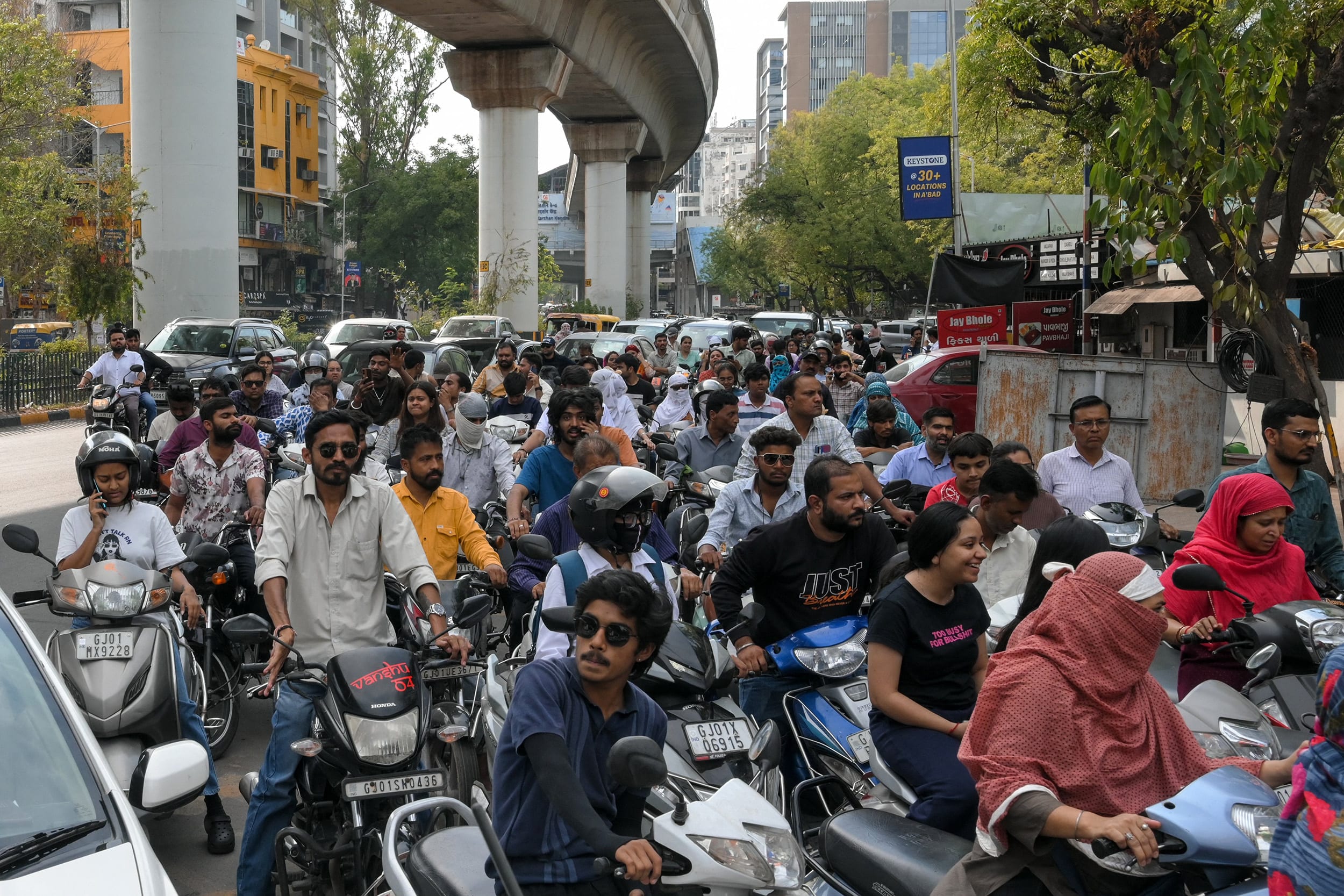
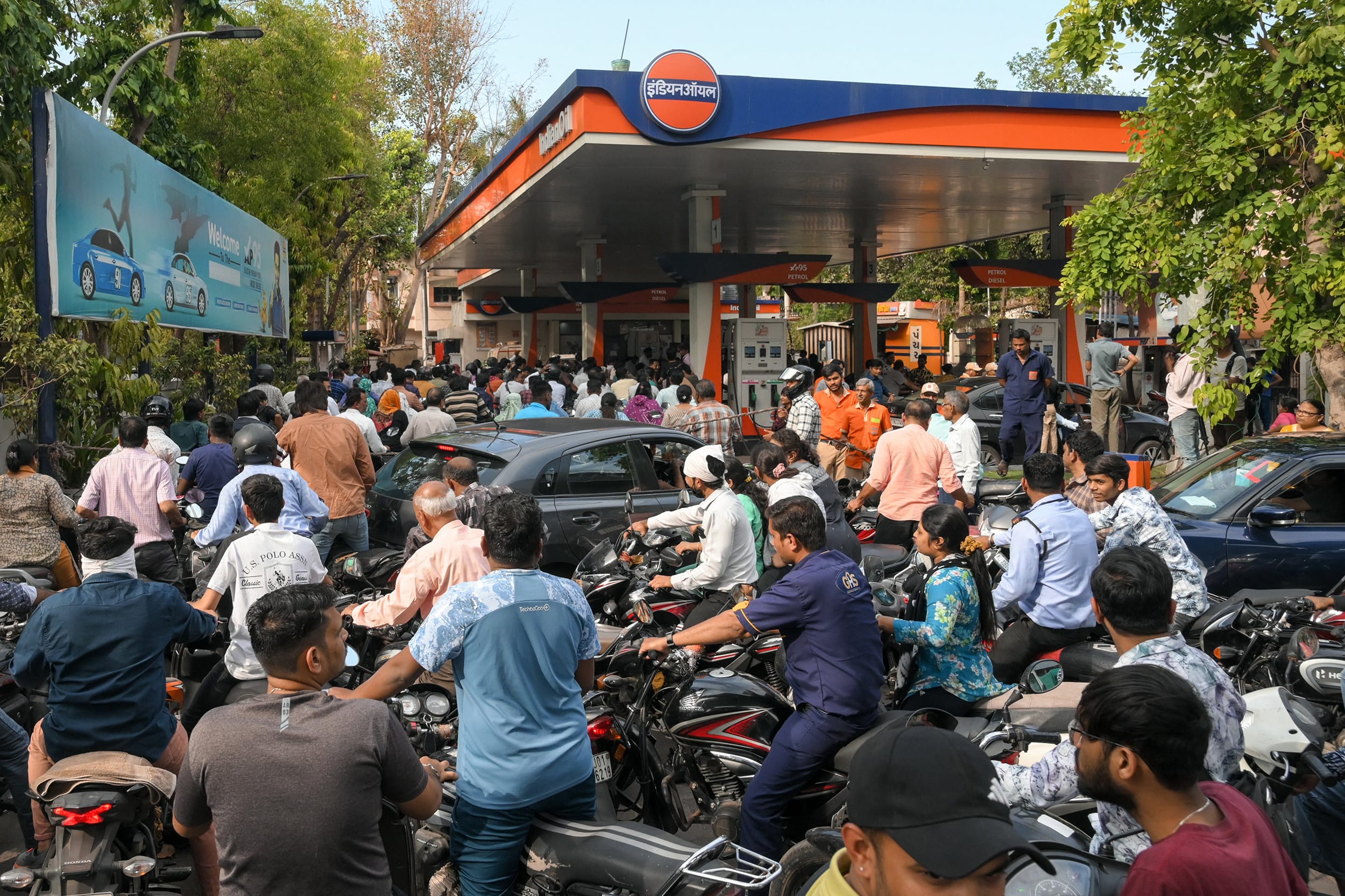
Long lines for fuel in India
Shammi Mehra / AFP - Getty Images
Shammi Mehra / AFP - Getty Images
People line up to refuel at a gas station in the Indian city of Ahmedabad today following import disruptions to oil supplies caused by the U.S.-Israel war with Iran.
Iranians form human chain around power plants
Iranian civilians in two cities formed human chains around two Iranian powers plants today, videos uploaded to the messaging platform Telegram by the state-run Fars news agency showed.
In one of the videos, filmed in the city of Ahvaz, some of the civilians can be seen holding Iranian flags near the Ramin power plant. Similar scenes were captured near the power plant in the city of Mashhad.
The public gesture came amid Trump's threats to strike key Iranian energy infrastructure unless the regime releases its stranglehold on the Strait of Hormuz, a vital passageway for the global oil and gas supply.
Iranian and Russian foreign ministers speak amid escalating conflict
Moscow's and Tehran's top diplomats spoke on the phone today, according to Iranian state media, which reported that they condemned what they characterized as the unlawful U.S.-Israeli military assault.
Iranian Foreign Minister Abbas Araghchi reiterated Tehran's determination to defend its national sovereignty and territorial integrity, according to the IRNA news agency. If the U.S. makes good on its threats to attack Iran's energy infrastructure, the regime's response will be swift, Araghchi was quoted as saying.
Russian Foreign Minister Sergey Lavrov, for his part, affirmed the strong ties between Moscow and Tehran, IRNA reported.
Trump says he could jointly control the Strait of Hormuz with Iran's supreme leader
The Strait of Hormuz could be “open very soon” if diplomatic talks go well with Iran, Trump told reporters this morning.
Asked if Iran would still be able to control the crucial waterway, which is one of the world’s busiest oil shipping channels and crucial to the global energy supply, Trump replied it would be “jointly controlled.”
Asked by who, he said, “Maybe me — me and the ayatollah, whoever the ayatollah is, whoever the next ayatollah.”
Trump also said that there will be “a very serious form of a regime change” inside Iran.
“There’s automatically a regime change, but we’re dealing with some people that I find to be very reasonable, very solid,” he said. “The people within know who they are. They’re very respected, and maybe one of them will be exactly what we’re looking for.”
Trump says he thinks Israel 'will be very happy' with a U.S.-negotiated deal with Iran
Trump addressed this morning whether he believes Israel would abide by a ceasefire agreement with Iran if the U.S. reaches a diplomatic deal.
"I think Israel will be very happy with what we have. We just spoke to Israel a little while ago. I think they'll be very happy. This will be peace for Israel," Trump told reporters on the tarmac in West Palm Beach.
Trump said that Iran "called" to discuss trying to resolve the war diplomatically.
"They called, I didn't call. They called," he said. "They want to make a deal, and we are very willing to make it. There's got to be a good deal, and it's got to be no more wars, no more nuclear weapons. They're not going to have nuclear weapons anymore."
Trump: 'We are very intent on making a deal with Iran'
Trump said the U.S. is "very intent on making a deal with Iran" after talks with regime officials, in an interview with CNBC this morning.
The president said the discussions with Iranian authorities had been very intense, but he was hopeful something substantive can be achieved, the cable channel reported.
Iranian state media, however, contradicted the president's account of conversations, saying that Washington and Tehran have not held direct or indirect talks.
“There is been no negotiation and there is no negotiation, and with this kind of psychological warfare, neither the Strait of Hormuz will return to its pre-war conditions nor will there be peace in the energy markets,” state media reported an unnamed senior security official as saying.
Iran war energy crisis is worse than 1970s oil shocks, IEA chief says
The global energy crisis stemming from the war in Iran is worse than the global oil shocks of the 1970s, according to the executive director of the International Energy Agency.
In each of the two oil crises of 1973 and 1979, the world lost about 5 million barrels of oil a day, causing major global economic downturns, Fatih Birol told the National Press Club of Australia in Canberra.
“Today — only as of today — we lost 11 million barrels per day, so more than two major oil shocks put together,” he said.
Birol said the other current energy crisis, involving natural gas, is worse than Russia’s 2022 invasion of Ukraine, which cost the world 75 billion cubic meters of gas per day compared with the 140 billion cubic meters being lost daily now.
The current situation is like “two oil crises and one gas crisis put all together,” he said, adding that it goes beyond those two fuels to include “vital arteries of the global economy” such as petrochemicals, fertilizer, sulfur and helium.
“Their trade is all interrupted, which would have serious consequences for the global economy,” he said, with food prices likely to soon be affected if shipments of fertilizer are disrupted for too long.
Birol said at least 40 energy assets in nine countries had been “severely or very severely damaged,” and that it would take time for them to return to normal capacity.
“No country will be immune to the the effects of this crisis if it continues to go in this direction,” he said.
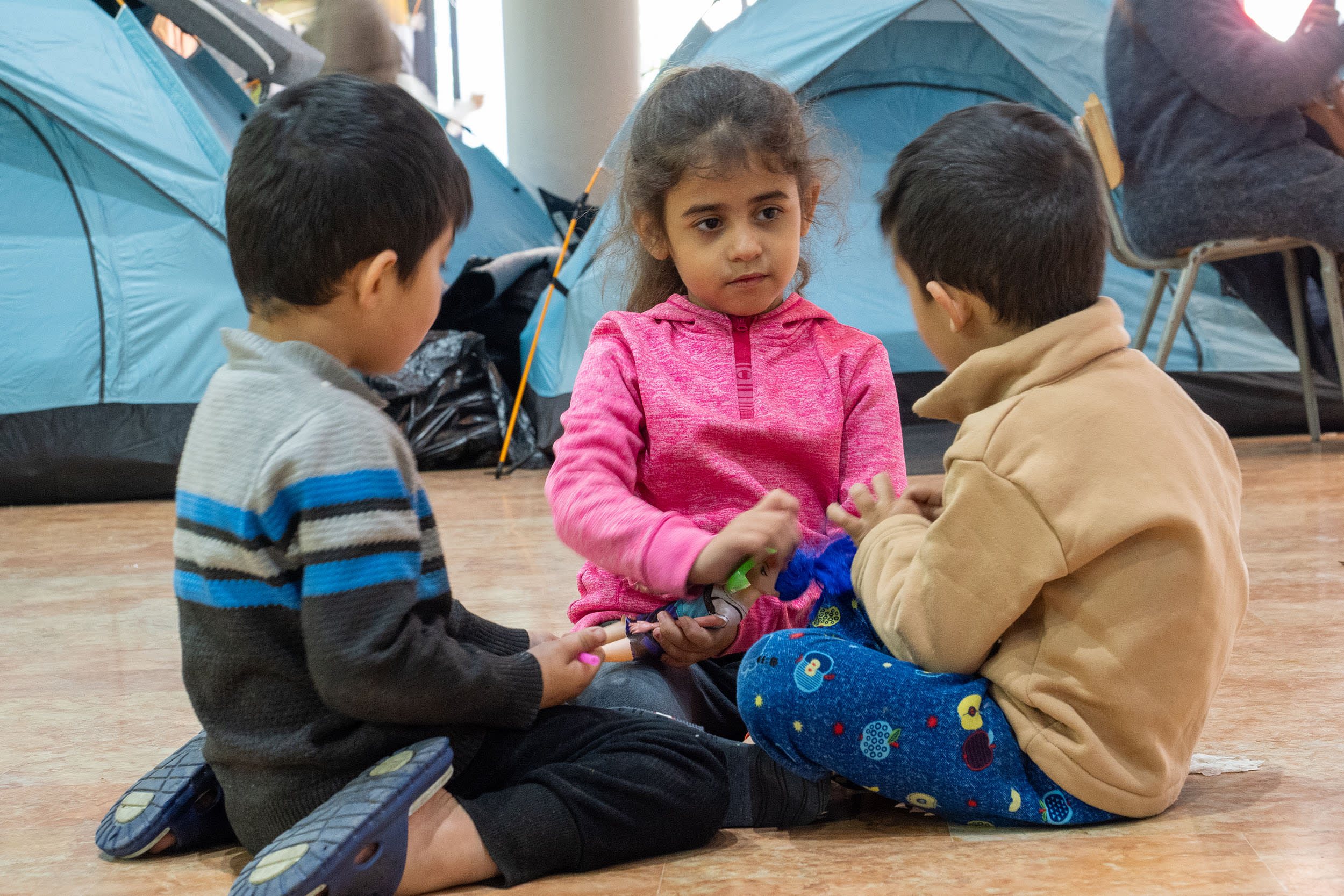
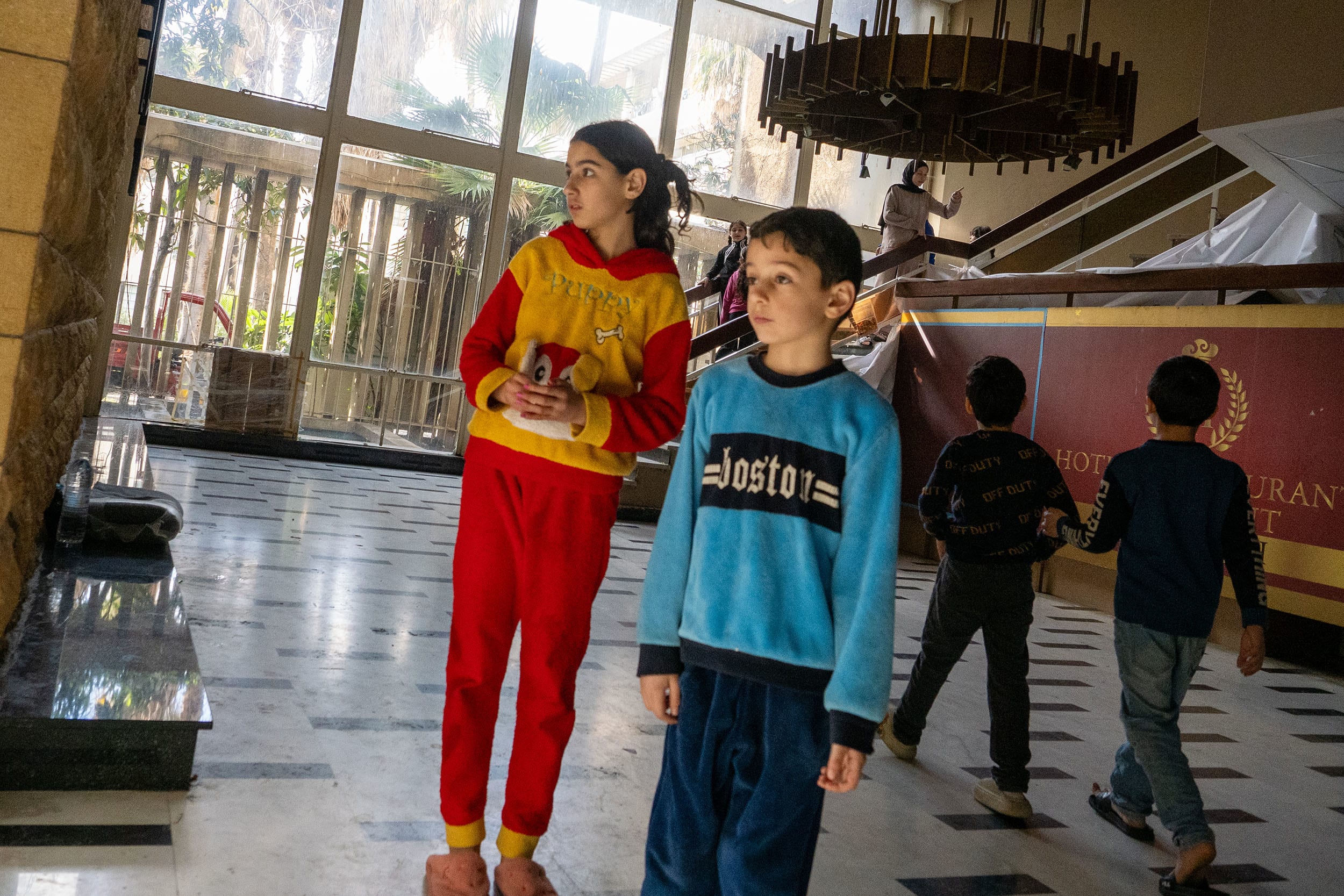
Families shelter at a Beirut camp for Lebanon's internally displaced
Mo Abbas / NBC News
Families with children from Lebanon's capital, Beirut, and the south of the country are taking shelter from Israeli airstrikes in a school in the east of the city Saturday. Hassan Sirhan was with his son Ali, 18, who is bedbound and has severe mental and physical impairments.
“Ali doesn’t know about the war, but when he hears explosions he screams. He doesn’t know planes are attacking. He doesn’t know war,” Sirhan said.

Mo Abbas / NBC News
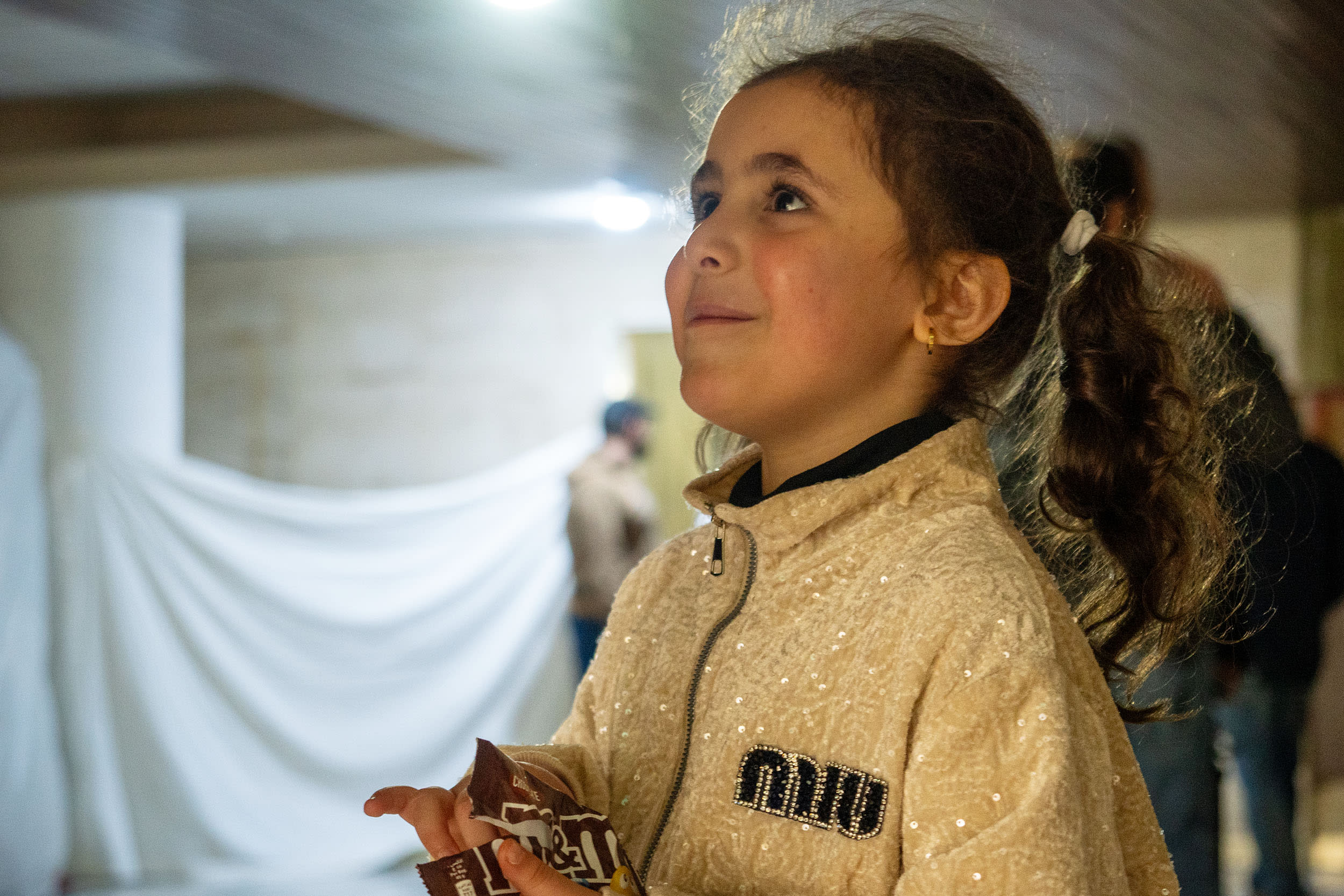
6-year-old Rahaf Abu Mjeir and her family were displaced from southern Lebanon, and are taking shelter in a school in eastern Beirut.
Mo Abbas / NBC News
Mo Abbas / NBC News
One of Pakistan's premier sporting events to be held in empty stadiums amid energy crisis
Pakistan’s premier cricket competition will be played in empty stadiums this year due to the oil crisis caused by the Iranian blockade of the Strait of Hormuz.
The decision was made “to support efficient use of energy and public resources,” the Pakistan Cricket Board said in a statement.
In a separate statement, the board said that an average of 30,000 spectators would have created a “significant strain on energy resources” had they attended Pakistan Super League matches.
The tournament’s opening ceremony, which was scheduled to be held Thursday in Lahore, Pakistan's second largest city, was also canceled.
The tournament will also scale down from six host cities to just two.
Pakistan is not the first country to implement energy-saving measures in Asia, which is heavily dependent on the Middle East for energy imports and has been especially hit hard by the crisis.
Vietnam has urged people to work from home and limit vehicle usage, while the Philippines has initiated a four-day workweek for government employees. Sri Lanka has also introduced a four-day workweek, making every Wednesday a holiday for public sector employees.
Democratic senator says Trump is backing down on threat because of financial markets
Sen. Chris Murphy, D-Conn., argued that Trump backing down on his threat to strike Iranian power plants was to calm the financial markets.
"a. Trump isn’t announcing a pause on strikes," Murphy said in a post to X. "He’s saying he’s postponing a possible war crime — strikes on Iran’s civilian energy infrastructure. b. Also, this isn’t a message to Iran. It’s a panicky message to the markets: “No war escalation until markets close on Friday'."
The 48 hour deadline Trump gave Iran to reopen the Strait of Hormuz would have expired tonight.
Trump reversal aimed at calming markets and buying time, Iranian Foreign Ministry says
Trump’s reversal is “part of efforts to reduce energy prices and buy time to implement his military plans,” the Iranian Foreign Ministry said shortly after Trump announced a postponement of his plan to strike Iran’s power plants.
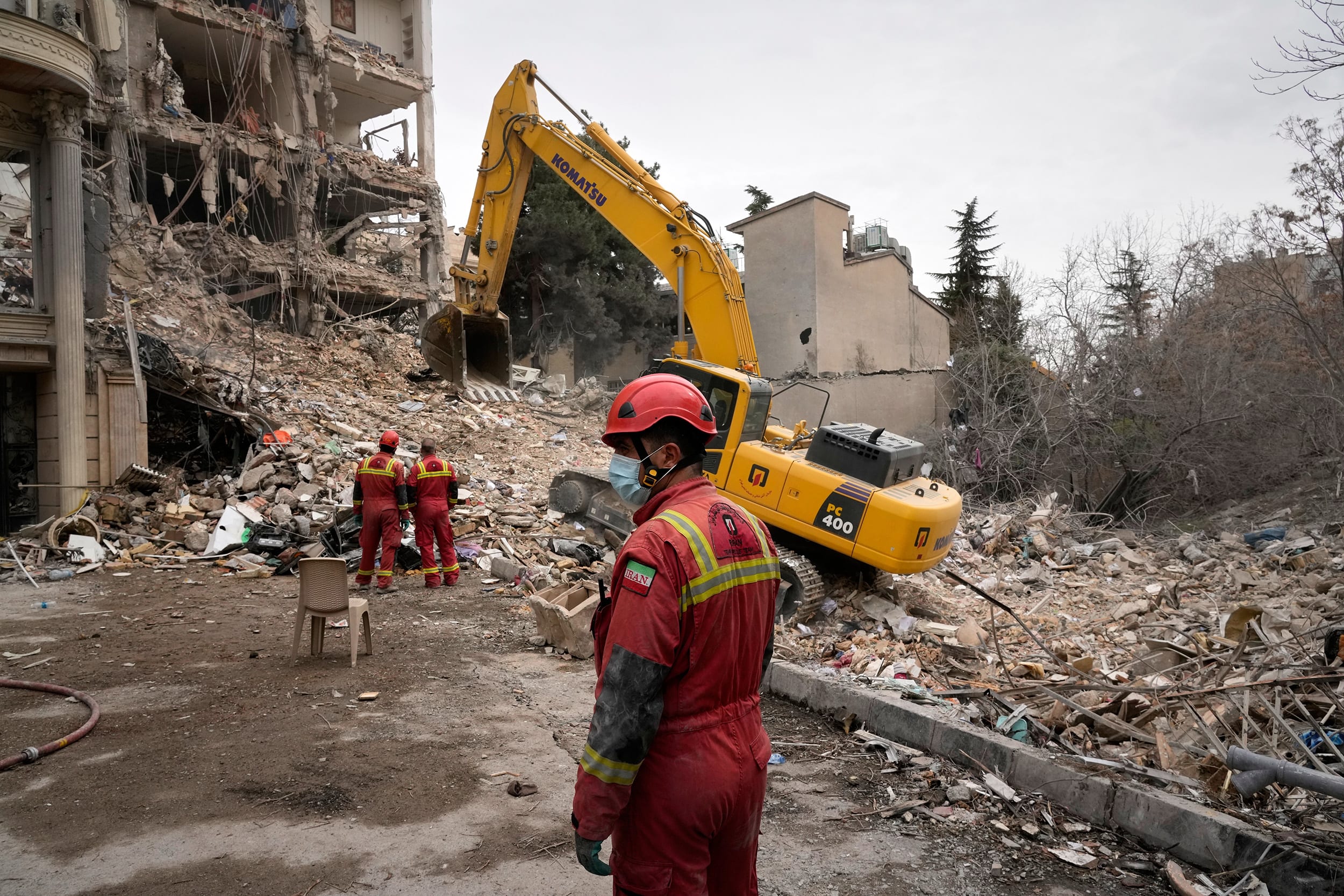
Iranian Red Crescent emergency workers clear rubble from a residential building in Tehran today. Vahid Salemi / AP
In a statement carried by semi-official news agency Mehr News, the ministry said "there is no dialogue between Tehran and Washington."
It added: "Yes, there are initiatives from regional countries to reduce tensions, and our response to all of them is clear: we are not the party that started this war, and all such requests should be directed to Washington."
Israel launches new strikes on central Tehran
The Israeli army said it's currently conducting strikes on Iranian regime targets in the heart of Tehran.
It comes shortly after Trump's announcement that he was delaying his plans to attack Iran's energy infrastructure.
Iranian state media say Trump 'backed down' after its warnings
Iranian state media responded to Trump’s post by saying the U.S. president has “backed down” after Iran’s firm response.
Tehran has not confirmed any talks with the U.S. and previously vowed not to negotiate.
"Trump, fearing Iran's response, backed down from his 48-hour ultimatum," read a graphic on IRIB state television.
“After the Islamic Republic warned that if America attacks Iran’s energy infrastructure it will target energy infrastructure across the entire region, Trump retreats and said he had ordered a delay of the attack,” the semi-official Fars news agency reported.
The semi-official Mehr news agency used similar wording, saying “Iran’s warnings about a swift and powerful response to any potential strike on its energy facilities, led Trump to back down.”
Markets surge, oil plummets after Trump's post
Markets worldwide are surging on Trump’s Truth Social post regarding Iran moments ago.
S&P 500 futures, which were down more than 1% before the post, are now set to open higher by nearly 3%. Nasdaq 100 futures are also set to soar 3% at the open. Dow futures are set to surge 1,000 points when the opening bell rings at 9:30.
Meanwhile, oil prices are plunging.
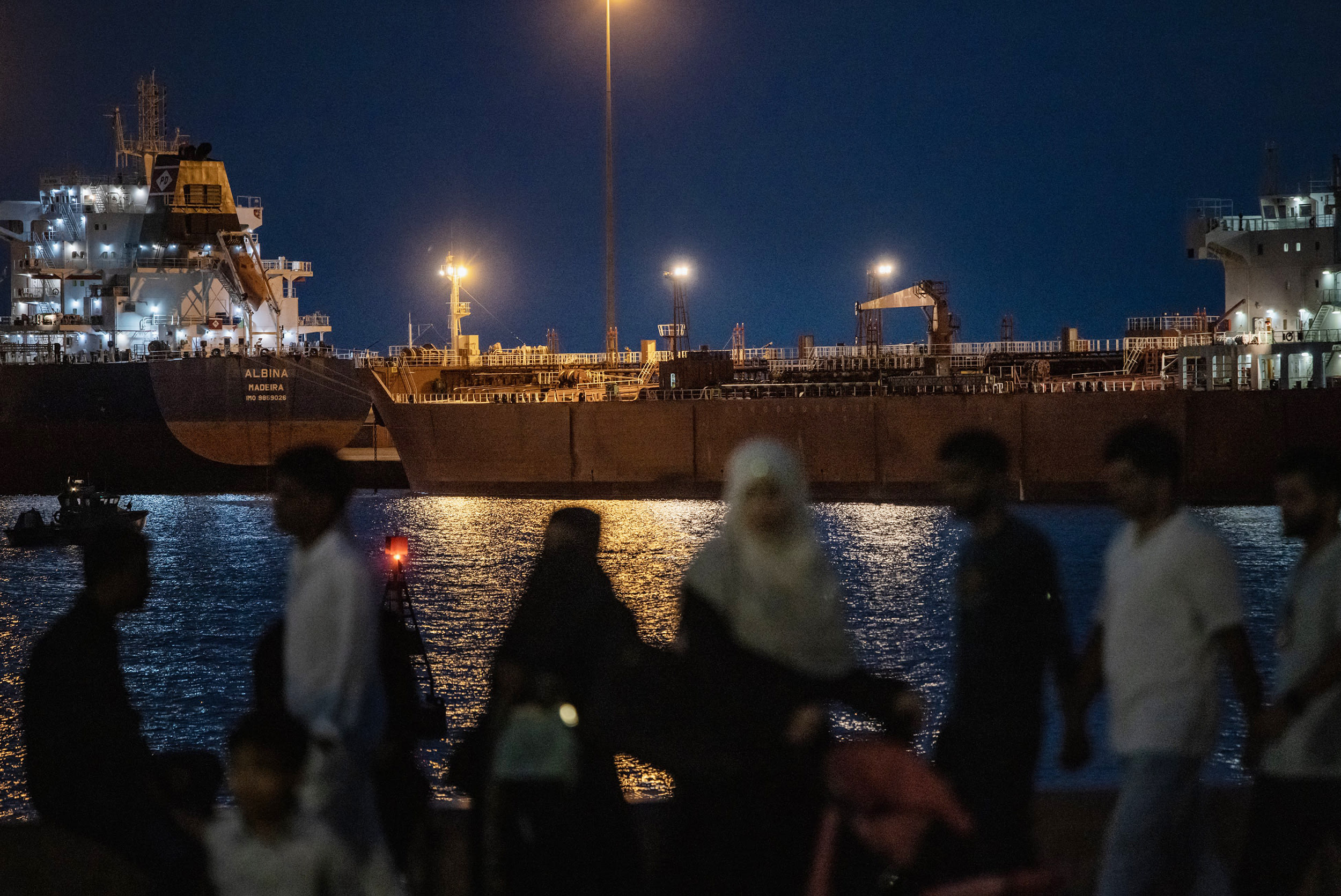
Bulk carriers sit anchored in Muscat, Oman yesterday. Elke Scholiers / Getty Images
U.S. crude oil has fallen below $90, down 10% on the day. International Brent crude oil also sharply fell to around $100, also down about 10%.
In Europe, benchmark indexes in France, Germany, Switzerland, and Spain are now higher by more than 1.5%.
The remarkable moves came after markets in Asia closed sharply lower overnight. Japan's Nikkei stock index closed lower by nearly 4%.
Analysis: Trump's sudden reversal the latest dramatic twist in this war
Talk about breaking news.
It was already a big day but Trump's post shows how quickly things can develop.
All those things we have been talking about, the serious escalation this war seemed to be heading toward with Trump's ultimatum, may now be postponed if he is in fact pulling back from the brink.
Trump says he's postponing power plant strikes for 5 days, citing 'productive' talks with Tehran
In a dramatic turn of events, Trump has announced that the U.S. and Iran have in recent days had "very good and productive conversations" regarding a "complete and total resolution" of hostilities in the Middle East.
He said that the conversations would continue throughout the week, but that he had instructed the Defense Department to postpone "any and all" military strikes against Iranian power plants and energy infrastructure for at least a five-day period "subject to the success of the ongoing meetings and discussions."
It comes just hours ahead of a deadline Trump gave for Iran to reopen the Strait of Hormuz or risk seeing its energy infrastructure destroyed.
Iran had vowed retaliation, saying any attack on its energy infrastructure would be met with a “decisive and devastating” response across the region.
Nonmilitary targets 'must not be attacked,' Chinese envoy says
Nonmilitary targets, including those related to energy, “must not be attacked,” China’s envoy to the Middle East said, as Trump threatens to strike power plants in Iran over the country’s blockade of the Strait of Hormuz.
“This is a war that should never have happened,” the envoy, Zhai Jun, told reporters in Beijing today. “While negotiations were still underway, the United States and Israel suddenly provoked conflict, causing diplomatic efforts to collapse. This has left all those who pursue peace deeply regretful and disappointed.”
Zhai said Arab countries, especially those in the Gulf, had “suffered undeserved calamities.”
“Under no circumstances should the red line of protecting civilians in military conflicts be crossed,” he said. “Nonmilitary targets related to energy, the economy, and people’s livelihoods must not be attacked.”
Zhai called for an immediate halt to all military action and a return to negotiations as soon as possible. He also urged the reopening of the Strait of Hormuz, whose continued closure he said “would bring unbearable consequences.”
Israeli military says own artillery fire killed civilian on northern border
The Israeli military said an Israeli civilian was killed by the IDF’s artillery fire near the northern border with Lebanon yesterday as it expressed regret over what it called a “very severe incident.”
An inquiry into what happened found that Ofer "Poshko" Moskovitz was killed as a result of a fire toward the border community of Misgav Am, conducted to support IDF soldiers operating in southern Lebanon, the military said in a statement on Telegram.
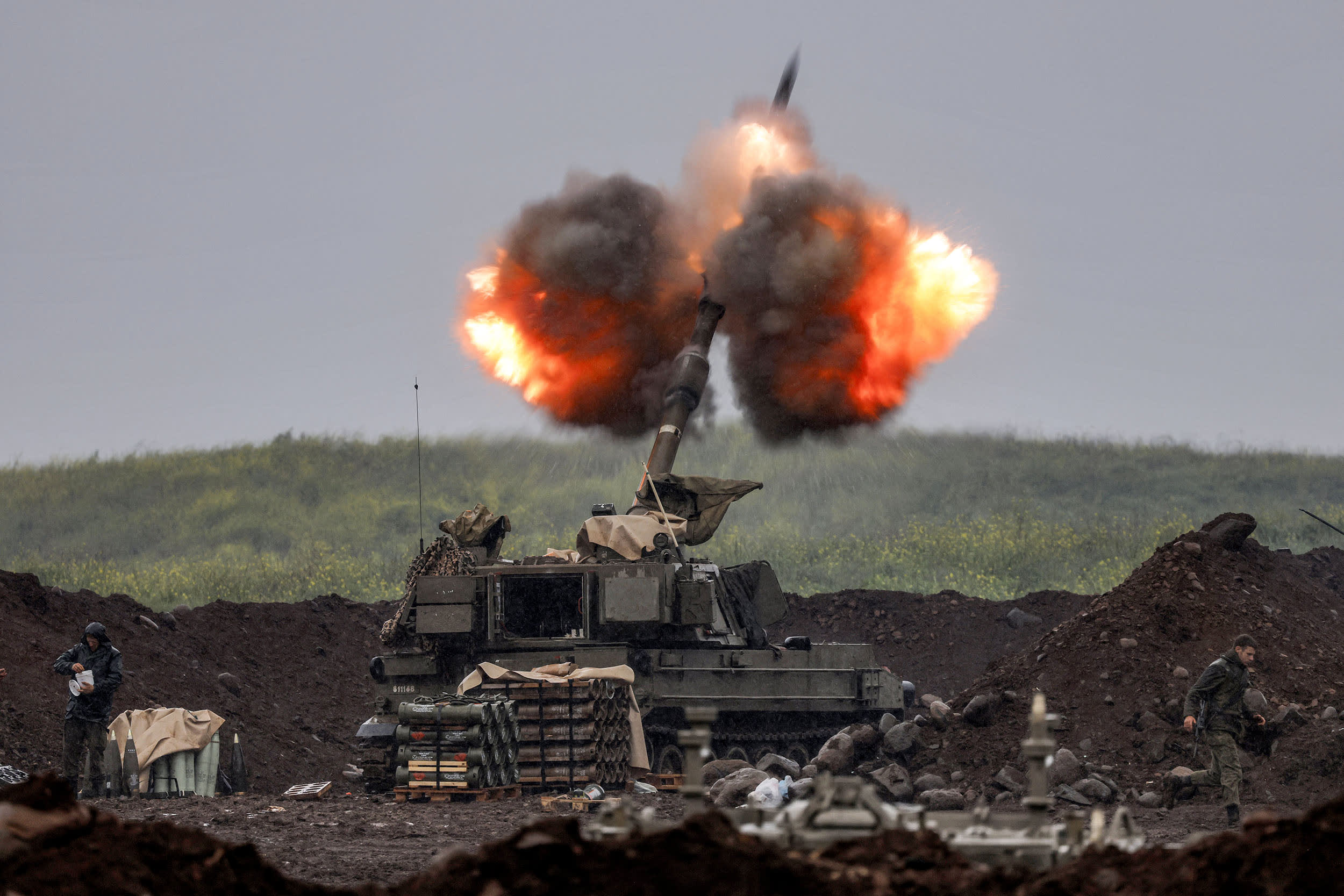
Israeli forces fire artillery toward southern Lebanon from a position in the upper Galilee region Friday. Jallaa Marey / AFP - Getty Images
The commander of the northern command, Maj. Gen. Rafi Milo, concluded that “several severe issues and operational errors” took place during the incident, including both the planning and execution of the fire, it added.
“The artillery fire was carried out at an incorrect angle and did not follow required protocols. As a result, five artillery shells were fired at the Misgav Am ridge instead of toward the enemy target,” the statement said.
At least 15 people have died in Israel since it launched strikes on Iran.
‘If you hit electricity, we will hit electricity,' IRGC says
Iran will retaliate if Trump decides to attack its power network by attacking Israeli power plants, as well as power plants in Gulf countries that provide energy to American bases, the country’s Islamic Revolutionary Guard Corps said.
The IRGC said it was “inhumane” to attack electricity because of the disruptions it causes to humanitarian services such as hospitals, emergency centers, water systems and desalination plants.
“You hit our hospitals, we did not do the same. You hit our relief centers, we did not do the same. You hit our schools, we did not do the same,” it said in a statement. “But if you hit electricity, we will hit electricity.”
“We are determined to respond to any threat at the same level in a way that creates deterrence and we will do this,” the IRGC added.
Trump and British PM agree reopening Strait of Hormuz is essential
Trump discussed the widening Middle East conflict on a call yesterday with Keir Starmer, the British prime minister’s office said.
“The leaders discussed the current situation in the Middle East, and in particular, the need to reopen the Strait of Hormuz to resume global shipping,” it said in a statement. “They agreed that reopening the Strait of Hormuz was essential to ensure stability in the global energy market.”
The statement added that the two leaders had agreed to speak again soon.
Asian markets tumble as Trump threatens Iranian power plants
Asian markets have taken a big hit across the board as a region highly dependent on Gulf oil gets squeezed by U.S. and Israeli attacks on Iran.
The benchmark Kospi index in South Korea, where markets have had some of the biggest drops since the war broke out, ended the day down about 6.5%. Japan’s Nikkei 225 index closed down almost 3.5%.
Shanghai’s Composite Index was down 3.63%, while Hong Kong’s Hang Seng index lost more than 3.5%. India’s BSE Sensex was also trading more than 3.5% lower.
European markets were also sharply lower as the new trading week began, with the pan-European Stoxx 600 down more than 2%. U.S. stock futures were down as much as 0.97%.
Iran threatens to mine 'entire Persian Gulf' if it is invaded
Iran’s Defense Council warned that Tehran would mine all access routes in the Persian Gulf if Iranian shores or islands were attacked.
“In that case, effectively the entire Persian Gulf would, for long periods, take on a situation similar to the Strait of Hormuz and this time, alongside the Strait of Hormuz the whole Persian Gulf would be blocked and the responsibility for this would lie with the threatening party,” the council said in a statement carried by the semi-official Fars news agency.
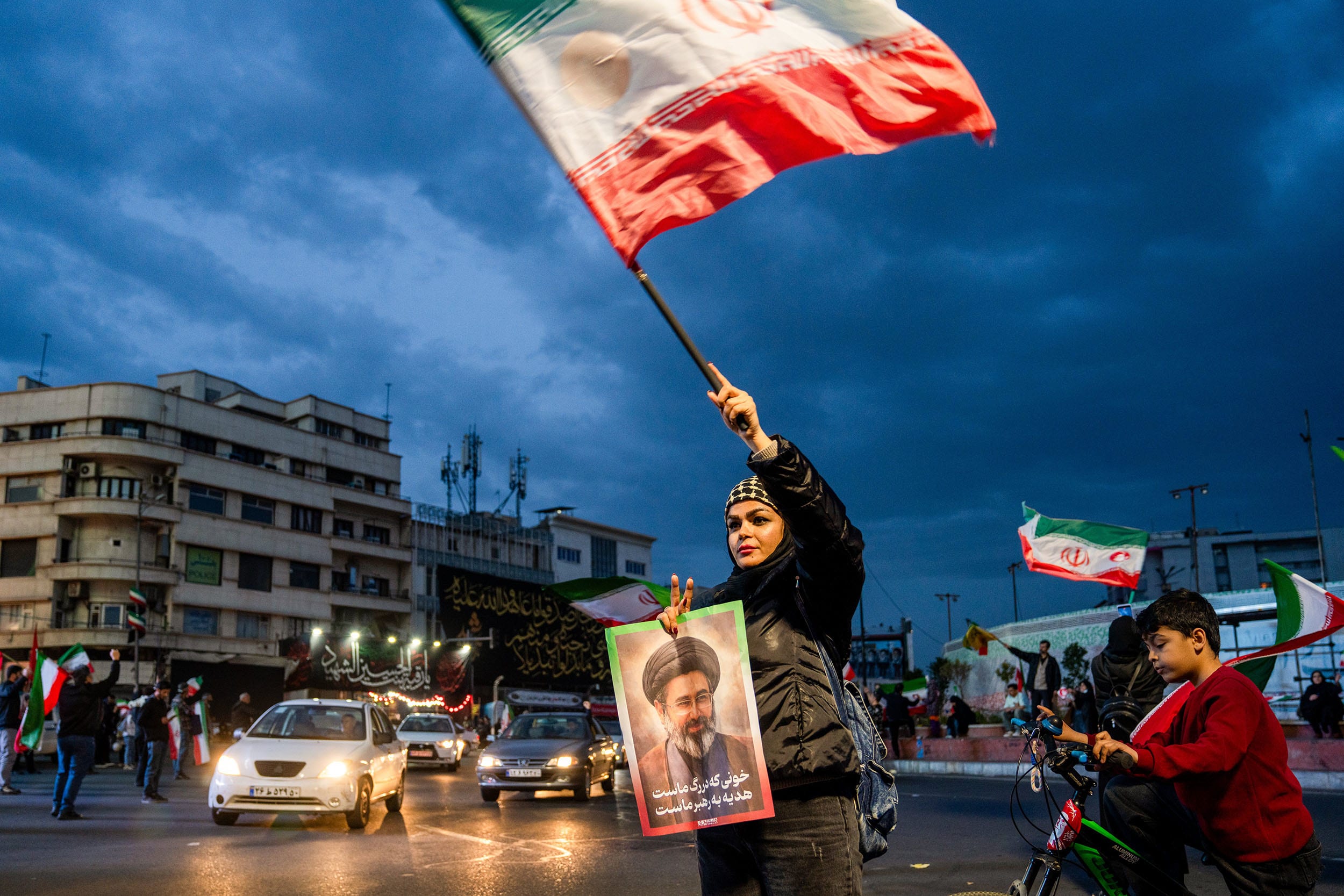
A demonstration in support of the Iranian government in Tehran yesterday. Majid Saeedi / Getty Images
The only way for non-hostile countries to pass through the Strait of Hormuz, it added, is by coordinating with Iran.
The Strait of Hormuz has been effectively blocked by Iran since the breakout of the war in late February, impacting the global flow of oil out of the Persian Gulf, unsettling global energy markets and presenting a tough challenge for Trump.
Japanese national returns home after monthslong detention in Iran
Japan’s top government spokesperson said today that one of two Japanese nationals detained in Iran has safely returned home in good health.
Chief Cabinet Secretary Minoru Kihara’s confirmation came one day after Foreign Minister Toshimitsu Motegi announced the person’s release. Motegi, speaking on a Fuji Television talk show yesterday, said the person had been detained since last year and was released Wednesday. He said the person took a flight from neighboring Azerbaijan.
Kihara, at a regular news conference today, confirmed that the former detainee returned to Japan yesterday in good health.
Kihara said another Japanese national who was arrested earlier this year is still in custody but “we have confirmed that there is no problem with the safety and health” of the person and that Japan is continuing to press Iran for a release as soon as possible.
Bessent defends U.S. military actions in Iran: ‘Sometimes you have to escalate to de-escalate’
Treasury Secretary Scott Bessent defended strikes on Iran’s infrastructure since the U.S. and Israel began their joint war against the country in February, saying “sometimes you have to escalate to de-escalate.”
His comments came just hours after Trump wrote on Truth Social that he was giving Iranian leadership 48 hours to open the Strait of Hormuz or risk U.S. military strikes that “will hit and obliterate their various POWER PLANTS, STARTING WITH THE BIGGEST ONE FIRST!” Bessent defended Trump’s rhetoric, saying it’s “the only language the Iranians understand.”
In an interview yesterday on NBC’s “Meet the Press,” Bessent also addressed comments he made last week about Kharg Island, a critical hub for Iran’s oil production that he said could become a “U.S. asset.”
He did not explain what that would look like but said “all options are on the table,” including sending U.S. troops to secure the island.
Iranian missile strikes injure 115 in Israel, officials say, puncturing air defenses and shocking the public
After three weeks of relatively low Israeli casualties from the raging U.S.-Israeli war with Iran, the explosive impact from an Iranian ballistic missile delivered a grim wake-up call in Arad, a desert town in southern Israel.
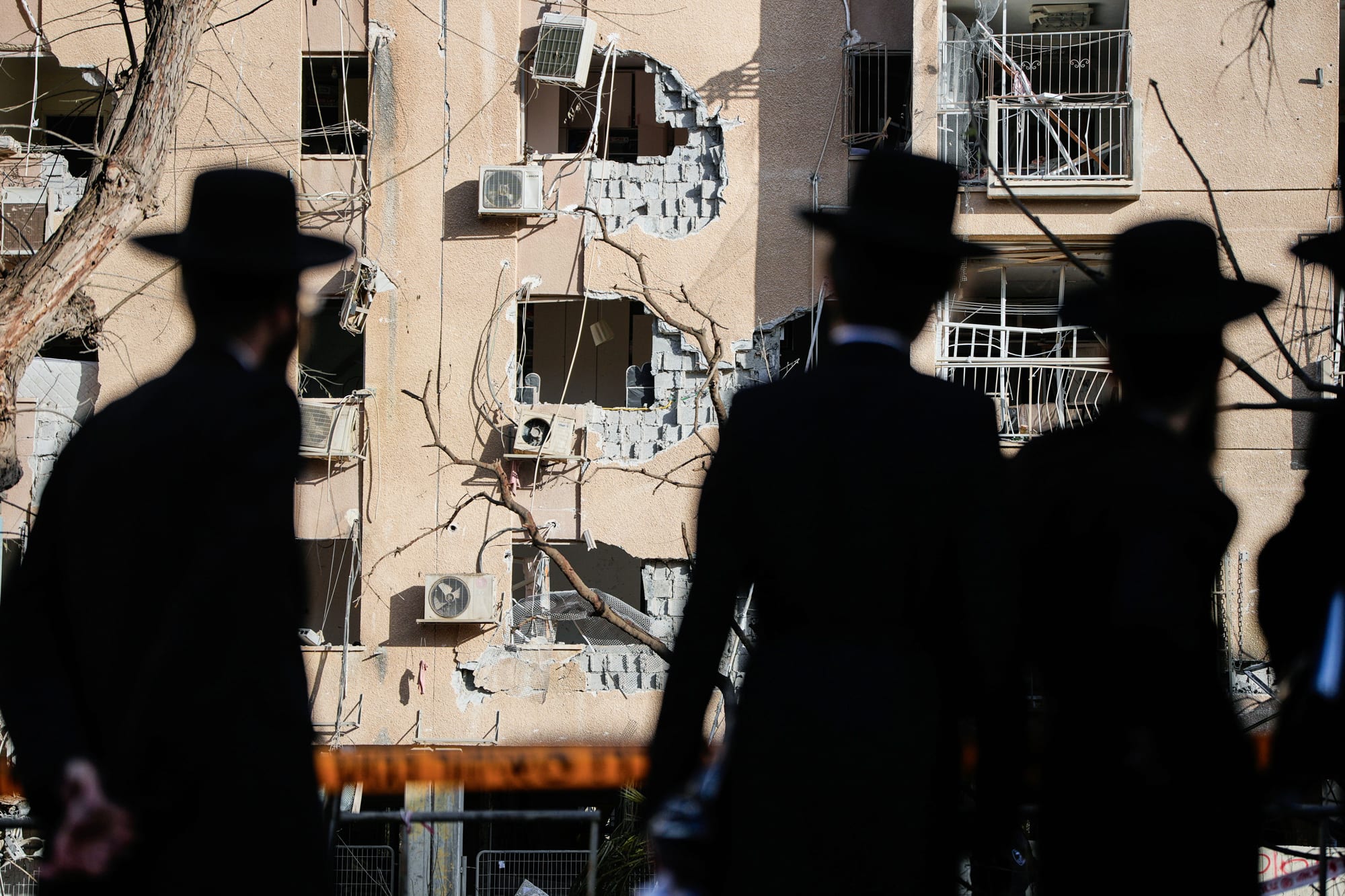
People look at residential buildings damaged by an Iranian missile strike in Arad, Israel, yesterday. Ohad Zwigenberg / AP
“It was a very shocking boom, something that we haven’t heard before,” said David, 39, who gave only his first name. “It was a big miracle here, and thank God there was no killing of people.”
The strike on Saturday sheared the façade off several adjacent apartment blocks and shattered glass for blocks around. No one was killed, but Israel’s emergency services said more than 115 people were injured across the attack and another strike in the nearby town of Dimona.
The missiles startled an Israeli public that has endured comparatively few casualties in recent weeks thanks to the country’s formidable air defenses, frequently tested across many years by rockets from militant groups Hezbollah and Hamas.
Iran unswayed by Trump’s 48-hour deadline and threats to ‘obliterate’ energy infrastructure
Tehran has threatened to escalate strikes on energy infrastructure and target critical water desalination facilities should Trump make good on a promise to “obliterate” the country’s power plants if it does not reopen the Strait of Hormuz.
Trump on Saturday evening gave Tehran a 48-hour deadline to reopen the critical trade route, through which around 20% of the world’s oil passes, threatening in a post on Truth Social to target Iran’s energy infrastructure if the demand is not met.
Iran has effectively blocked the strait since the U.S. and Israel launched their attacks on the country on Feb. 28, sparking swift retaliation from the Islamic Republic and triggering a wider war in the region.
