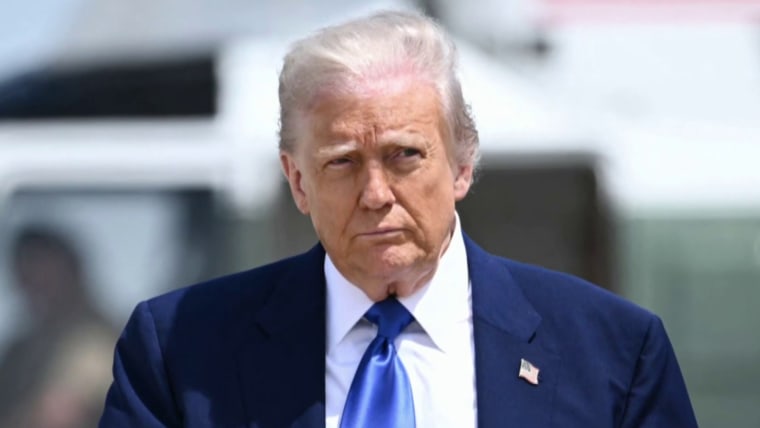
If President Donald Trump does decide to use the United States' largest conventional bomb to destroy Iran’s fortresslike Fordo nuclear enrichment facility, the colossal force of the explosion would likely cause casualties among workers or anyone else still at the site.
But it would not trigger a nuclear explosion or a widespread radiological or chemical spill, according to former nuclear officials and experts.
Sitting to the south of Iran's capital, Tehran, the Fordo plant is used to enrich uranium for the production of nuclear energy or, potentially, a bomb. But although this uranium and its chemical byproducts can be harmful to ingest or touch without protective equipment — they won’t create a wider blast or regional contamination, analysts say.
That would only be the case if Fordo housed nuclear reactors or warheads, which international watchdogs and experts say is not the case.
“If you’re down there and it gets bombed, you’re stuffed,” Hamish de Bretton-Gordon, the ex-commanding officer of the British military’s Chemical, Biological, Radiological and Nuclear Regiment, told NBC News on Thursday.
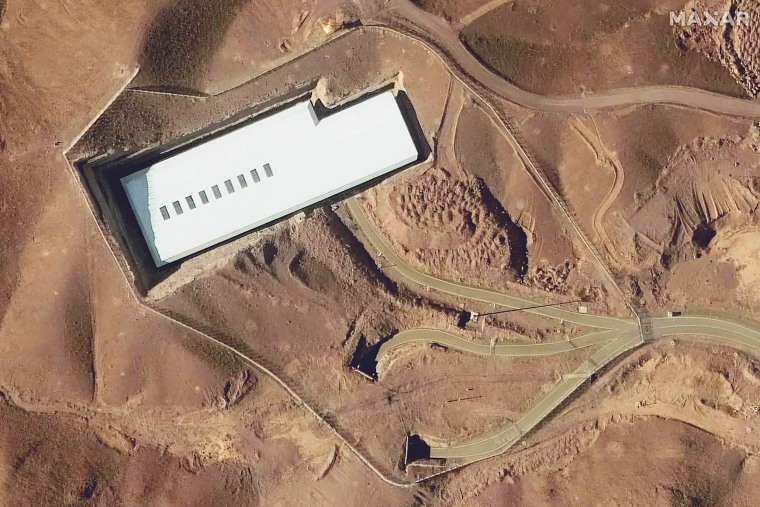
“But that’s because this is a 2,500-kilogram [about 5,500-pound] warhead we are talking about here,” he said, referring to the GBU-57 Massive Ordnance Penetrator (or MOP), the largest non-nuclear bomb in the world, which only the U.S. has.
Less of a bunker-buster and more of a mountain-buster, this is perhaps the only conventional ordnance in the world that could do the job if Trump did decide to bomb Fordo.
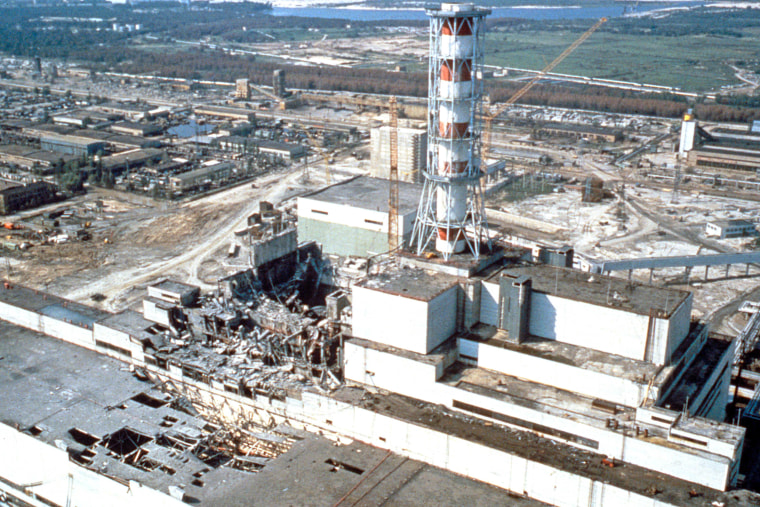
“But if anyone thinks this would be like Chernobyl — absolutely not,” de Bretton-Gordon said. “Blowing up uranium will not create a nuclear explosion; that is a very complex piece of science, which is why it’s so bloody difficult to make nuclear bombs.”
There is also little chance of a wider radiation leak or spill impacting the surrounding area, according to Mark Nelson, founder and managing director of Radiant Energy Group, a research consultancy based in Chicago.
That’s because “the nuclear substances at Fordo are only very weakly radioactive,” he said. Were this a nuclear plant or missile site, there could be “fission products” — the stuff uranium breaks down into during a nuclear reaction — which can cause a wider catastrophe.
Scrutiny has nonetheless sharpened on Fordo as Trump deliberates whether to join Israel's attacks on Iran.
Iran’s most advanced enrichment facility, Fordo was refining uranium to 60%, according to the International Atomic Energy Agency. That’s far more than the 3-5% needed for power plants — and far closer to the 90% required to build a warhead.
Until 2018, Iran had been complying with a landmark deal, formally known as the Joint Comprehensive Plan of Action, that offered Tehran billions of dollars in sanctions relief in exchange for agreeing to curb its nuclear program.
The agreement was sealed by President Barack Obama in July 2015, along with the five permanent members of the U.N. Security Council — the U.S., Russia, France, China and the United Kingdom — as well as Germany and the European Union. Most independent observers said it was successfully limiting Iran's nuclear program.
That effectively collapsed when Trump walked away from the pact three years later.
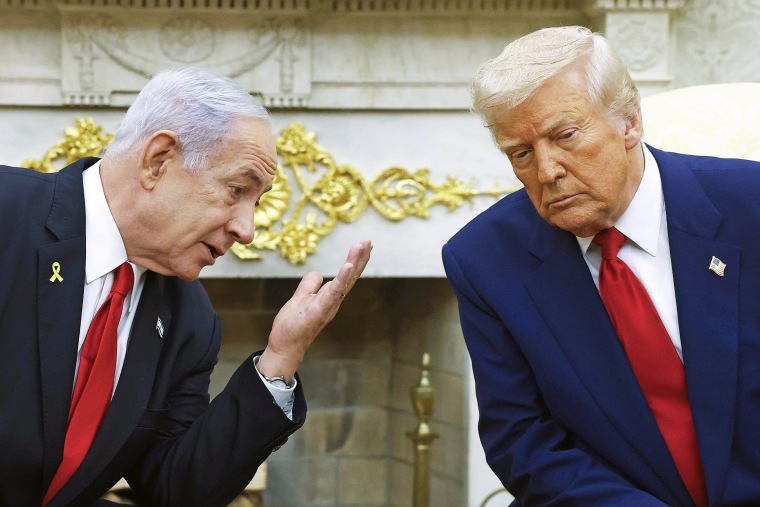
Iran had been back in talks with Trump when Israel started bombing last week. Israeli Prime Minister Benjamin Netanyahu said he had no choice because Iran was racing toward building a bomb, something the International Atomic Energy Agency says it has not been able to confirm.
The watchdog has been nonetheless concerned about Fordo, where uranium’s naturally mined form is turned into a gas and spun at high speed inside centrifuges. That separates its heavier isotope, uranium-238, from the lighter uranium-235 that can be used for civilian purposes or otherwise.
Iran says Fordo was designed to hold 3,000 of these centrifuges, a “size and configuration” that is “inconsistent with a peaceful program,” Obama said in 2009.