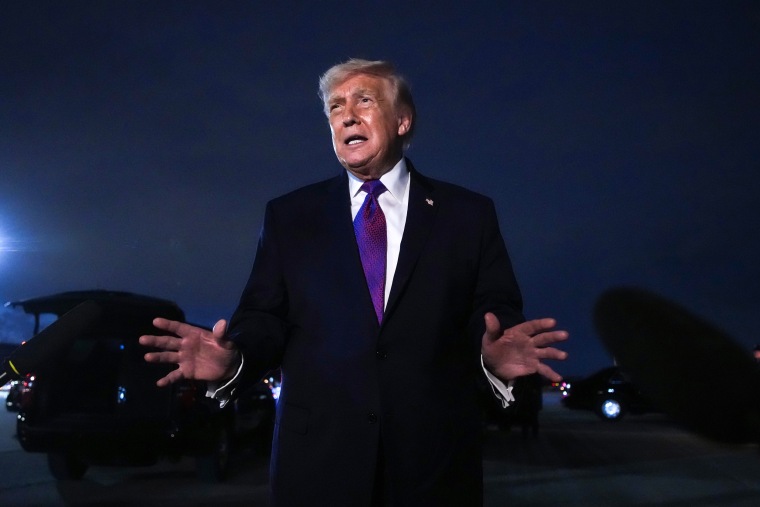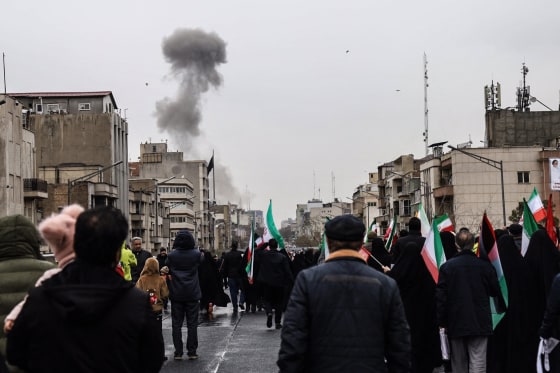
WASHINGTON — Military officials have included options in regular war planning for President Donald Trump to end the conflict in Iran should he decide to do so, six people familiar with the plans told NBC News. So far, he hasn't.
As the conflict widens in the Middle East and the Iranian regime maintains its chokehold on the critical Strait of Hormuz, the stated terms and timeline for ending the war remain in flux. Aides and allies have sought to pull Trump in different directions: Those in favor of an exit strategy have been concerned about global economic instability since the war began, two of the people said, while other aides have focused on the opportunity to erode the regime’s influence in the region.
The timeline for the duration of the war “could change every day,” according to one of the people.
The off-ramps are built into daily war planning, along with options for escalation if the White House seeks to increase the pressure on Iran, according to the six people, who did not go into detail on what those plans look like.
White House press secretary Karoline Leavitt said in a statement that Trump and the Pentagon provided an initial assessment of four to six weeks “to fully achieve the clear military objectives.”
“The U.S. military is doing a tremendous job and this timeline remains true. Ultimately, the operation will end when the commander in chief determines the goals have been fully realized and the threats posed by Iran have been eliminated,” she said.
But exit strategies have taken on a new significance as the administration wrestles with surging oil prices and questions grow on whether Iran will willingly lay down arms and agree to U.S. terms.
Last week, the president told Axios the war will “end soon” while his defense secretary told CBS it was “only just the beginning.” Asked Friday when he would know when the conflict was done, Trump told Fox News: “When I feel it in my bones.”
The president told NBC News over the weekend that Iran was ready to end the war but that “the terms aren’t good enough yet.” He declined to say what those terms would be, but Trump has suggested publicly there should be regime change, “unconditional surrender” and Iran’s nuclear capability should be decimated.
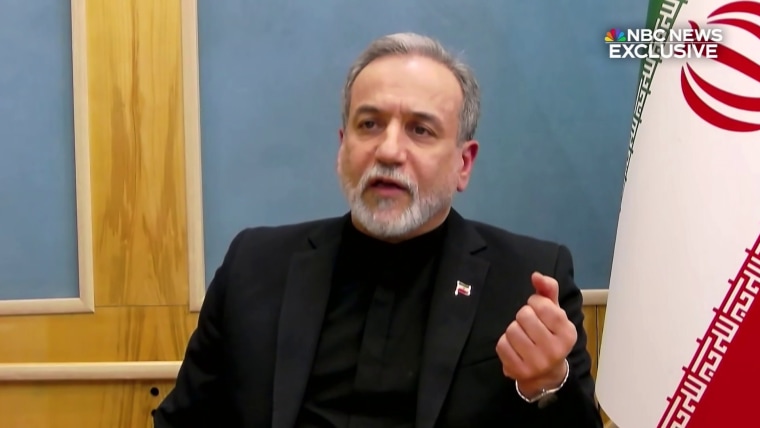
Iranian Foreign Minister Abbas Araghchi on Monday said Tehran did “not request a ceasefire” and would “continue this resistance without any hesitation.”
In a major bombing campaign, the U.S. and Israel struck targets on Kharg Island — home to the main terminal that handles Iran’s oil exports. The president warned that the island’s oil infrastructure could also be targeted.
The Iranian regime had warned that a strike on the island would provoke a new level of retaliation and has attacked other Middle Eastern countries in response to the U.S.-Israel strikes.
Officials in Saudi Arabia, Dubai and Kuwait reported multiple strikes and drone sightings in their countries. A key terminal for oil exports in Oman was reportedly evacuated after tankers anchored off Iraq were attacked. Iraq also suspended operations at its oil terminals.
Iran called for the evacuation of three major ports in the United Arab Emirates — the first time it has threatened a neighboring country’s non-U.S. assets. One of those oil ports — Fujairah — came under a drone attack Saturday and again Monday.
Defense Department officials said Tehran is as weak as it has ever been, decimated from days of heavy bombardment.
“With every passing hour, we know, and we know they know that the military capabilities of their evil regime are crumbling,” Defense Secretary Pete Hegseth said during a briefing late last week.
The U.S. has still not secured the vital Strait of Hormuz, through which 20% of the world’s oil supply travels. It has been effectively shut to tanker traffic after more than a dozen commercial ships were hit by drones. In his first public address, Iran’s new supreme leader, Mojtaba Khamenei, said the strait should remain closed.
Commercial ships have requested U.S. escorts through the strait, but Gen. Dan Caine, chairman of the Joint Chief of Staff, said Friday it was still too complex to see tankers through the waterway.