Donald Trump loves a deadline.
Since taking office last year, the president has repeatedly used rigid timelines as a central tool in his push to broker peace, or at least force movement, in some of the world’s most entrenched conflicts.
He set deadlines for Hamas to respond to U.S.-backed peace proposals in Gaza, imposed a two-month window for Iran to agree to a new nuclear deal and issued multiple prospective cutoff dates for Ukraine and Russia to reach a settlement.
Now Trump has set another one, according to Ukrainian President Volodymyr Zelenskyy, who said the U.S. wants a deal by June to bring an end to the nearly four-year war.
“The Americans are proposing the parties end the war by the beginning of this summer and will probably put pressure on the parties precisely according to this schedule,” Zelenskyy told reporters on Friday.
“They say that they want to do everything by June. And they will do everything to end the war. And they want a clear schedule of all events,” he added.
Neither the White House nor Moscow has confirmed a June deadline independently, and the White House did not immediately respond to NBC News’ request for comment.
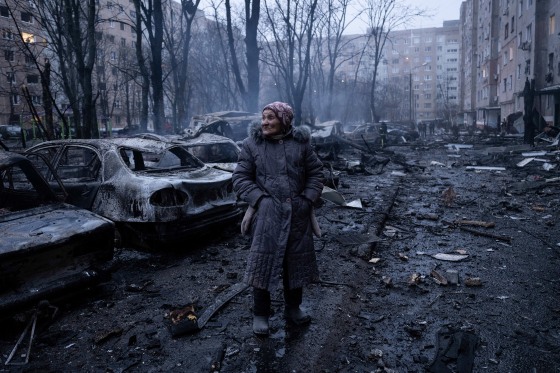
But deadlines alone are unlikely to shift the fundamentals of a war that will soon enter its fifth year, analysts warn, while the core disputes that have stalled previous peace efforts remain unresolved.
Trump has set and reset timelines in the Ukraine war before.
During his campaign, he repeatedly promised to end the conflict within 24 hours of taking office, a pledge he later described as aspirational rather than literal. His special envoy for Ukraine, Keith Kellogg, suggested both sides could reach an agreement within 100 days of Trump’s inauguration, which also did not occur.
Trump has since floated multiple informal deadlines for progress, including fixed windows for Moscow to engage in talks and public time frames for reaching a settlement, none of which have produced a lasting ceasefire or agreement.
An August deadline for a deal, set by Trump last year, passed without any sign of peace, as did hopes of a deal by Thanksgiving. In December, Trump said a draft agreement to end the war was “close to 95% done.”
Ukraine, Russia and the U.S. held their first trilateral talks on a peace deal last month, with further talks set to take place on American soil soon, according to Zelenskyy.
While officials have described the talks as constructive, major obstacles remain, chief among them the future of territory in eastern Ukraine where Moscow has shown little sign of softening its demands.
The Kremlin said Friday that Kyiv’s military would have to pull out of the region, which is still partly held by Ukrainian forces, for any deal to end the war — a condition Kyiv says it will never accept.
The stalemate “could become unstuck by one side really crumbling under the pressure,” said Moritz Brake, a senior fellow at the Center for Advanced Security, Strategic and Integration Studies.
“This is what both sides, in probably their own ways, are hoping for,” he told NBC News, with Ukraine looking to take advantage of a possible “fragmentation of the Russian war effort,” while Russia “is really hoping that they can bring Ukraine down on the battlefield.”
But“time is not on Ukraine’s side,” Michael Bociurkiw, a nonresident senior fellow at the Atlantic Council’s Eurasia Center, said on Sunday.